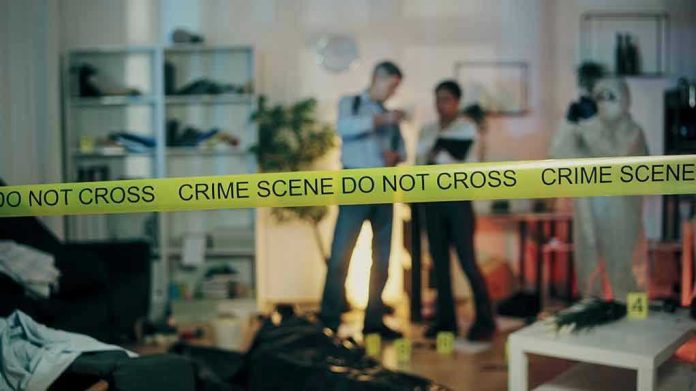
A single cigarette butt smoldering in the sand for two decades became the key to unlocking a brutal murder, transforming cold case investigations forever and proving that justice, though delayed, remains within reach when science and persistence converge.
Quick Take
- DNA extracted from a cigarette butt solved a 20-year-old murder case in a seaside town, demonstrating the power of modern forensic science applied to historical crimes
- Advances in DNA technology, particularly the ability to extract viable genetic material from degraded biological evidence, have revolutionized cold case investigations
- Cigarette butts contain epithelial cells ideal for DNA analysis, making them valuable evidence even after decades of environmental exposure
- The case exemplifies how expanded DNA databases and systematic evidence re-examination bring closure to families and restore community confidence in the justice system
The Cigarette That Changed Everything
For two decades, a woman’s murder in a quiet seaside town remained unsolved, her killer walking free while her family endured endless nights of unanswered questions. The original investigation hit dead ends. Witnesses’ memories faded. Evidence sat in storage, seemingly worthless. Then, forensic scientists reexamined a single cigarette butt recovered from the crime scene, extracting DNA that had survived twenty years of salt air and neglect. That genetic blueprint matched a suspect, transforming an impossible case into a prosecutable reality and delivering what seemed like an impossible outcome: justice.
Why Cigarettes Hold Secrets
Most people don’t realize that every cigarette butt abandoned at a crime scene contains a biological goldmine. The filter and paper trap epithelial cells from the smoker’s lips, mouth, and fingers, creating a DNA repository that persists long after the tobacco burns away. Unlike blood or semen evidence that degrades predictably, cigarette butts can preserve viable DNA for decades when stored properly, making them among the most reliable pieces of physical evidence a crime scene can yield. This overlooked detail has solved numerous cold cases that seemed permanently frozen in time.
The challenge lies in extraction and analysis. Twenty-year-old DNA is degraded, fragmented, and contaminated. Modern forensic laboratories employ sophisticated techniques that can reconstruct genetic profiles from minimal, damaged biological material. Scientists use probabilistic genotyping software that calculates the statistical likelihood of a match, accounting for degradation and contamination variables. What would have been unusable evidence in 1995 becomes a prosecutable fact in 2025, thanks to technological advancement that transforms old crime scenes into new investigative opportunities.
The Technology That Rewrites Cold Case History
DNA fingerprinting emerged in 1984, but early techniques required robust biological material. By the 2000s, scientists developed methods to analyze degraded DNA. The 2010s brought rapid processing capabilities and expanded DNA databases. Today’s forensic laboratories can identify individuals from a single skin cell, extract DNA from environmental samples, and cross-reference matches against millions of profiles. This technological evolution means that evidence deemed worthless decades ago now opens investigative doors that seemed permanently sealed.
Genealogical DNA databases accelerated this revolution. When traditional DNA databases failed to produce matches, investigators turned to consumer genealogy platforms, cross-referencing crime scene DNA with millions of voluntary submissions. This approach solved the Golden State Killer case in 2018 after forty years of investigation, demonstrating that modern databases and advanced matching techniques could resurrect cases that seemed permanently cold. Seaside town murders, particularly those with transient populations and limited witnesses, benefit enormously from this expanded investigative arsenal.
Justice Delayed Becomes Justice Delivered
The victim’s family endured two decades of anguish. Every anniversary brought renewed grief. Every news story about solved murders sparked false hope. Then came the call: DNA evidence had identified a suspect. For families trapped in investigative purgatory, this moment represents more than legal vindication—it represents validation that their loved one’s death mattered, that the system persisted, that closure remained possible. The psychological impact of resolution, even delayed by twenty years, provides measurable healing that closure advocates have documented extensively.
Law enforcement agencies have responded to this demand by establishing dedicated cold case units. Systematic evidence re-examination programs review thousands of historical investigations, applying modern forensic techniques to old cases. Government funding supports these initiatives because they deliver results. A single DNA match can close multiple cases. A prosecutable suspect can resolve family trauma. These units represent institutional commitment to the principle that murder doesn’t expire, that justice delayed is still justice, and that technological advancement should serve victims whose cases fell through investigative cracks.
The Broader Impact on Criminal Justice
Cold cases solved through DNA evidence validate continued investment in forensic science infrastructure. They demonstrate why evidence preservation protocols matter, why DNA databases require expansion, and why law enforcement agencies need dedicated cold case resources. Each resolution generates precedent, influences future investigations, and strengthens public confidence in the justice system’s capacity to deliver accountability even when years pass between crime and consequence. These cases reshape how communities understand justice and closure.
The seaside town murder solved through cigarette butt DNA represents more than a single case resolution. It exemplifies the convergence of scientific progress, investigative persistence, and institutional commitment to justice. As forensic technology continues advancing and DNA databases expand, more cold cases will transition from unsolved mysteries to prosecutable facts. The cigarette butt that solved this murder serves as a reminder that evidence, properly preserved and scientifically analyzed, can speak across decades, transforming grief into justice and silence into accountability.
Sources: