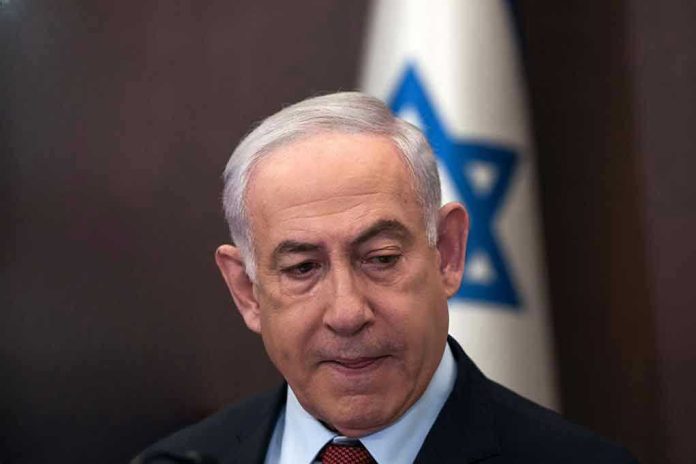
Israel’s Prime Minister Benjamin Netanyahu has just submitted a formal pardon request to President Isaac Herzog, reversing years of public declarations that he would never seek mercy in his corruption cases.
Quick Take
- Netanyahu filed a 111-page pardon petition on November 30, 2025, seeking relief from three separate corruption trials involving bribery, fraud, and breach of trust charges
- This move represents a dramatic strategic reversal from Netanyahu’s previous insistence that he would fight the charges and never admit guilt
- The pardon request aims for a “legal and political rebirth” rather than an admission of wrongdoing, allowing Netanyahu to escape daily court obligations
- President Herzog’s office acknowledged the extraordinary request and indicated it would be carefully considered after gathering all relevant opinions
The Stunning Reversal
For years, Benjamin Netanyahu publicly scorned the very idea of seeking a pardon. He called his trials “ridiculous” and positioned himself as a fighter against what he characterized as political persecution. Yet on Sunday, November 30, 2025, Netanyahu submitted a 111-page petition to President Isaac Herzog requesting exactly that: a pardon from his corruption charges. The shift signals a calculated political move rather than a genuine change of heart about his legal predicament.
What Netanyahu Faces
Netanyahu stands accused of bribery, fraud, and breach of trust across three separate corruption cases. These charges represent the most significant legal challenges ever faced by an Israeli prime minister while in office. The trials have demanded Netanyahu’s daily court attendance, consuming time and political capital that he argues could be better spent governing the nation. The accumulation of legal pressure, combined with the demands of managing a complex political coalition, appears to have forced this strategic recalculation.
The Unusual Nature of the Request
What makes this pardon request extraordinary is Netanyahu’s refusal to admit guilt as a condition. Traditionally, pardons require acknowledgment of wrongdoing. Netanyahu seeks instead to “wipe the slate clean” without such admission, positioning the pardon as a path to political renewal rather than legal accountability. His coalition allies in the Knesset view the pardon as a priority, recognizing that freeing Netanyahu from court obligations would strengthen his political position and effectiveness as prime minister.
The President’s Dilemma
President Isaac Herzog now faces one of the most consequential decisions of his presidency. Herzog’s office issued a measured statement acknowledging the “extraordinary request” and its “significant implications.” The president indicated he would “responsibly and sincerely consider the request” after receiving all relevant opinions. This language suggests Herzog recognizes the gravity of the decision and the need to balance legal, constitutional, and political considerations carefully.
What’s at Stake
If Herzog grants the pardon, Netanyahu achieves his dual objective: freedom from ongoing court proceedings and strengthened political positioning heading into upcoming elections. A denial would represent a significant setback, forcing Netanyahu to continue navigating the court system while managing his coalition and national responsibilities. The outcome carries implications far beyond Netanyahu’s personal fate, touching fundamental questions about the rule of law, executive clemency power, and accountability for political leaders in democratic systems.
The Broader Implications
This moment reflects deeper tensions within Israeli democracy. Netanyahu’s coalition control provides him significant political leverage, yet the ultimate decision rests independently with President Herzog. The precedent set here will influence how future Israeli leaders navigate similar circumstances. Whether Herzog grants or denies the pardon, the decision will reshape conversations about executive power, political accountability, and the relationship between legal systems and political survival in democratic nations.
Sources:
Netanyahu Asks Israel’s President to Pardon Him in Corruption Cases