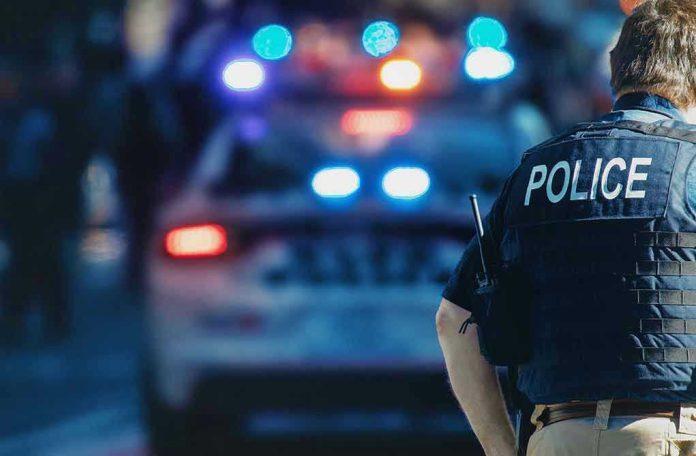
Anti-police sentiment, fueled by social media rhetoric, threatens the well-being of law enforcement officers, demanding urgent policy action.
Story Snapshot
- Anti-police sentiment is on the rise, amplified by social media.
- Law enforcement faces morale and recruitment challenges.
- Congressional hearings focus on threats and mental health support.
- Calls for reforms to counter misinformation and rhetoric-driven violence.
Rising Anti-Police Sentiment and Its Implications
In recent years, anti-police sentiment has intensified, driven by social media, political rhetoric, and public perceptions. This growing hostility has resulted in threats to law enforcement officers’ safety and morale. Officers face doxing, calls for violence, and misinformation, leading to a critical need for policy reforms and enhanced support. The deaths of officers like Gordon Beesley and Dillon Vakoff underscore the dire consequences of this rhetoric.
The role of social media in this narrative is a double-edged sword. While it offers transparency, it also spreads misinformation, directly impacting recruitment crises and public safety. As law enforcement grapples with these challenges, the question remains: what strategies will be implemented to support officers and counteract this “war on law enforcement”?
Historical Context and Current Developments
The roots of anti-police sentiment lie in historical tensions surrounding policing practices, particularly in minority neighborhoods. Aggressive tactics have often led to perceptions of excessive force and racial bias. High-profile cases of police violence have further fueled scrutiny and calls for reform. Since the 2010s, social media has become a “force multiplier” for criticism, complicating efforts to maintain police legitimacy.
As of late 2025, the House Homeland Security Committee has highlighted the rising threats to law enforcement. Chairman Andrew Garbarino and Rep. Gabe Evans, both Republican figures, have underscored the need for mental health support amid this hostility. These developments signal a federal push for backing law enforcement while addressing the normalization of anti-police rhetoric.
Impact on Law Enforcement and Communities
The short-term effects of anti-police sentiment include eroded morale, increased burnout, and recruitment challenges. These issues threaten immediate public safety and create operational risks. Long-term effects further undermine police legitimacy and foster community distrust, particularly among minorities. Such dynamics weaken agency effectiveness and increase security gaps, which criminals may exploit.
Economically, agencies face higher turnover costs, while socially, the amplification of trauma through social media exacerbates anxiety. Politically, this issue continues to fuel partisan divides over reform versus support. Ultimately, the broader effects challenge homeland security missions, altering officer duties and public willingness for reforms.
Sources:
Dissertations on Law Enforcement Challenges
Homeland Republicans Warn of Threats to Law Enforcement
Procedural Justice and Police Legitimacy
Justice or Just Us: Media and Policing
Doctoral Dissertation on Media Bias