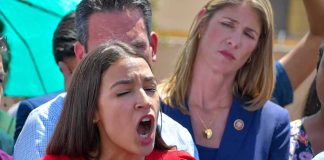


After a fourth terrifying attempt on President Trump’s life, Rep. John James torched the “fake news” culture he says poisons the climate and endangers conservatives.
Story Highlights
- Rep. John James blames incendiary media narratives for fueling hostility toward President Trump [1].
- Polling shows many Americans believe heated rhetoric contributed to the attempt, while most still fault the shooter directly [5].
- Federal Bureau of Investigation (FBI) findings indicate the Pennsylvania attacker acted alone, complicating sweeping claims of coordination [6].
- Public controversy over celebratory or reckless reactions highlights a wider problem with normalized political dehumanization [4][13].
James Targets Media Rhetoric After Fourth Attempt
Rep. John James seized on the latest assassination scare to confront what he called a media-driven climate of contempt toward conservatives. Immediate reactions after a prior attempt captured the mood: Trump allies shouted “This is your fault!” at journalists as the former president was rushed to safety, while Donald Trump Jr. blasted pundits who had likened his father to dictators [1]. James’s critique mirrored that anger, arguing sustained demonization of Trump incubates risk and desensitizes audiences to violence.
Video and press exchanges across recent attempts amplified the charge that commentary crossed a red line. Conservative figures recounted instances where broadcast and social media framed Trump as an existential threat, warning such portrayals predictably inflame unstable individuals [1]. While rhetoric alone does not pull a trigger, James’s point landed with many right-leaning voters who see a pattern: when elites normalize scorn for half the country, lone actors may treat violence as permission rather than taboo.
What Polling Says About Blame And Responsibility
YouGov polling conducted after a prior attempt found most Americans draw a distinction between atmosphere and agency. A solid majority said heated political rhetoric contributed to the attempt, but an even larger share said the shooter bore direct responsibility [5]. That split matters. It undercuts fatalism while bolstering James’s narrower claim: reckless discourse raises risk even if it does not “cause” an attack in a courtroom sense. Conservatives read that as a mandate to dial back demonization without diluting accountability.
This broader pattern has repeated across cycles of political violence coverage: partisans battle to assign moral responsibility either to rhetoric or to the individual perpetrator. Evidence from prior incidents shows the public resists single-cause explanations and instead sees a bundle of drivers—overheated language, social media radicalization, mental instability, and distrust of institutions—interacting with a lone actor’s choices [5]. James’s critique fits that landscape by spotlighting rhetoric as a lever leaders can control now, before the next close call.
What Investigators Have Confirmed So Far
FBI statements regarding the Pennsylvania attack concluded the assailant acted alone and that President Trump’s ear injury resulted from a bullet or bullet fragments fired from the attacker’s rifle [6]. Those findings cut against theories of organized media-linked coordination. They do not, however, address James’s narrower concern about a permissive environment created by years of inflammatory narratives. The investigative record speaks to mechanics and authorship, not to the cultural atmosphere that can incubate copycats or normalize transgressive acts.
John James Goes ABSOLUTELY NUCLEAR on Fake News Media Following Terrifying 4th Assassination Attempt on President Trump: “Trump Derangement Syndrome Is a Communicable Disease” | The Gateway Pundit | by Jim Hᴏft https://t.co/XmWSrg2NsG
— HappyTrail (@HappyTrail48336) May 26, 2026
Because official findings focus on forensic facts, responsibility debates shift to civic judgment. James and other conservatives argue institutions shaping public conversation—newsrooms, universities, and entertainment platforms—must soberly weigh how repetition of dehumanizing tropes travels. Even critics of Trump concede that academic and media reactions celebrating or joking about political violence cross ethical lines; multiple employment cases and disciplinary blowback followed such posts after an earlier attempt [4][13]. That backlash underlines a shared boundary many Americans still recognize.
The Moral Hazard Of Normalizing Dehumanization
Michigan leaders across the spectrum urged cooler rhetoric after a previous attempt, reflecting a tentative consensus that language matters even when legal blame lies with the shooter [8]. James’s warning is sharper: calling political opponents fascists, terrorists, or subhuman teaches audiences to see neighbors as enemies to be “stopped” by any means. A culture that laughs off violent fantasies—or applauds when tragedy nearly strikes—erodes civic guardrails, chills free speech, and invites more danger for candidates, families, and bystanders.
Conservatives balancing free expression with public safety can demand two things at once: unapologetic debate and disciplined language. Media hosts and commentators should retire casual slurs and apocalypse framing; editors should avoid headlines that caricature millions of voters as monsters. Leaders can condemn threats swiftly and consistently, regardless of target. Those steps do not require speech codes or government edicts—just a return to basic standards that protect life, stabilize institutions, and respect the people’s right to choose at the ballot box.
What Accountability Looks Like Going Forward
James’s call is not a quest for censorship; it is a push for responsibility from powerful megaphones. Networks that platform reckless rhetoric should correct it in real time. Universities should hold faculty to codes that reject endorsing political violence while safeguarding genuine scholarship. Campaigns on every side should purge fundraising emails that frame opponents as existential evils. Americans responded to the polling by blaming the shooter most of all [5]; honoring that principle means confronting individual evil while refusing to feed it with careless narratives.
For readers sick of double standards, the test is simple: if rhetoric would be condemned when aimed at your family, it should be condemned when aimed at a political rival. President Trump’s survival—again—should not license complacency. It should stiffen our resolve to defend free speech, uphold equal justice, and insist on civic language that cools tempers. James’s rebuke challenges media voices to stop playing with fire. The alternative is gambling with lives, liberty, and the legitimacy of our elections.
Sources:
[1] Web – ANALYSIS: Trump supporters blame media for shooting
[4] Web – Does academic freedom excuse posts on assassination attempt?
[5] Web – What Americans believe about the attempted assassination on …
[6] Web – Attempted assassination of Donald Trump in Pennsylvania – Wikipedia
[8] Web – MI Leaders Following Attempted Trump Assassination: ‘Tone It Down’
[13] Web – Employees let go following reaction to Saturday’s assassination …