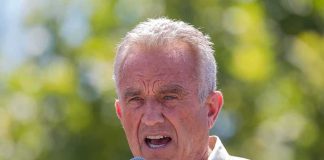
Britain’s Labour leader Keir Starmer is stepping down after his own party lost faith in him, exposing deep cracks inside the left’s flagship government.
Story Snapshot
- Starmer said Labour lawmakers no longer see him as the right leader for the next election [1].
- He will ask Labour’s ruling body to run a swift contest, with nominations opening July 9 [1].
- He plans to remain prime minister during the handover and leave before Parliament returns in September [2].
- Labour still holds a large majority, showing this is a crisis of authority, not arithmetic [11].
Starmer Confirms Resignation and Timeline
Keir Starmer confirmed he will resign as Labour leader and United Kingdom prime minister after hearing his parliamentary party’s view that he is not best placed to lead Labour into the next general election [1]. He said he spoke to the King and would ask Labour’s National Executive Committee to set a timetable, with nominations opening July 9 and the process finishing before the summer recess [1]. He promised a smooth transition and pledged full support to his successor while he remains in office during the contest [2].
Starmer framed the exit as putting the country first and ensuring stability, not chaos [2]. He said a new leader should be in place before Parliament returns in September, and he would stay on only until the handover is complete [2]. The clear schedule aims to avoid the disorder seen in past United Kingdom transitions. He argued the next leader would inherit a “stronger and fairer” Britain than in 2024, a claim that his critics dispute but that sets his preferred legacy line [2].
Party Authority Erodes Despite Big Majority
Labour’s numbers in the House of Commons remain strong, with a simple majority of more than 150 seats and an effective working majority of about 165 votes as of April 2026 [11]. That scale means Starmer did not fall because of lost votes in Parliament. He fell because his own lawmakers judged he could cost them the next election. In the United Kingdom system, a leader can govern while a party organizes a successor, so power often shifts when authority, not math, runs out [11].
That pattern fits a familiar Westminster cycle: leaders survive until elites decide they are a liability, then the story flips from “stable government” to “who replaces them” almost overnight. Recent history with Boris Johnson’s forced exit and Liz Truss’s brief tenure showed how fast discipline can break in London once confidence drains away [20]. Starmer’s choice to accept the verdict and set a timetable signals order, but the trigger still came from inside his party, not from voters at the ballot box [1].
Promises Versus Exit and What Comes Next
Starmer had previously said he intended to serve a full five-year term, which gives critics room to call the resignation a broken commitment [13]. That tension will shape the fight to replace him, as rivals argue they can reconnect with voters better and steady the economy faster. Media and party figures are already casting the race as a referendum on Labour’s direction. The focus will be on who can keep the majority together and manage rising costs, services, and border control.
UK Prime Minister Keir Starmer has announced his resignation as Labour leader, heralding the end of his time in 10 Downing Street. pic.twitter.com/NBjW6etYx4
— Kashmir News Trust༝ (@newsagencyknt) June 22, 2026
For American readers, the bottom line is simple: Britain’s left-of-center project just blinked. Starmer says the handover will be smooth and quick [2]. But the root cause is a crisis of confidence, not a lack of seats [11]. When a leader loses the room, policy drifts, and factions push their wish lists. That is when taxes creep, green mandates return, and border promises fade. Voters on both sides of the Atlantic know this script. Stability now depends on who Labour picks next and what they choose to change.
Sources:
[1] YouTube – UK Prime Minister Keir Starmer says he will resign
[2] Web – Prime Minister Keir Starmer’s resignation speech in full – BBC
[11] Web – Keir Starmer – Wikipedia
[13] Web – The Labour Party leadership election: The Stark model and … – PMC
[20] Web – Liz Truss: A quick guide to the UK’s shortest-serving PM – BBC