On July 4, 2025, Washington quietly lit a political fuse that could reshape America’s energy future far more than any fireworks show.
Story Snapshot
- Trump’s “One Big Beautiful Bill Act” slashes key solar and wind tax credits and puts them on a fast track to end.
- New “foreign entity of concern” rules can strip credits from projects tied to China, Russia, Iran, or North Korea.
- An executive order orders agencies to stop favoring wind and solar and to tighten subsidy enforcement.
- Supporters call this a win for grid reliability and national security; critics say it rigs the game for fossil fuels.
July 4 Bill: How One Law Pulled the Rug Out From Under Clean Energy
President Donald Trump signed the One Big Beautiful Bill Act into law on July 4, 2025, using a budget bill to gut big chunks of the Inflation Reduction Act’s clean energy tax credits. The law targets the technology-neutral credits that wind and solar projects had come to rely on, especially the clean electricity production credit and investment credit. These credits had been the backbone of the renewables boom since 2022, driving billions of dollars into new projects and cutting costs for consumers.
The law now sets hard deadlines that flip the script for developers. To get those production or investment credits, solar and wind projects must either start construction by July 4, 2026 or be fully in service by the end of 2027. Miss both dates and your project gets no credit at all. Lawyers who track energy policy describe this as a “significant rollback” that will sharply reduce the number of new subsidy-backed wind and solar projects after 2027. For many developers, the timeline is simply too tight.
Foreign Entity Rules: Clean Energy Meets Geopolitics
The bill goes beyond timing and into geopolitics with new “foreign entity of concern” rules. These provisions can block tax credits for projects that are owned, controlled, or materially assisted by prohibited foreign entities such as China, Russia, Iran, or North Korea. The idea is simple on paper: American taxpayers should not subsidize energy supply chains that rely on adversaries. In practice, these rules are complex and murky, especially for solar and wind projects that use global supply chains.
Law firms advising energy investors warn that the definitions of foreign control and “material assistance” are broad and may capture more projects than sponsors expect. Starting in 2026, no tax credit is allowed if the taxpayer itself is classified as a prohibited foreign entity. That creates new due diligence costs and legal risk for developers and financiers. For readers who value strong borders and national security, the logic is appealing. The risk is that vague rules can become a blunt weapon, blocking American projects without clearly improving security.
Executive Order: Ending “Market Distorting” Subsidies for Wind and Solar
Only three days after signing the bill, Trump issued an executive order titled “Ending Market Distorting Subsidies for Unreliable, Foreign-Controlled Energy Sources.” The order claims taxpayers have been forced to subsidize “expensive and unreliable energy sources like wind and solar,” and that those projects displace “affordable, reliable, dispatchable domestic energy sources” and harm both the grid and landscapes. This language is tailored to classic conservative concerns: reliability, national strength, and respect for the land.
The order directs the Treasury Department to strictly enforce the termination of clean electricity tax credits for wind and solar, including by tightening rules around when construction is considered to have begun. It also demands quick action to implement the foreign entity restrictions from the bill. At the same time, the Interior Department must review its own rules and strip out any policy that favors wind and solar over “dispatchable” sources like gas, coal, or nuclear. In plain terms, the federal government is told to stop tilting the playing field toward renewables.
Winners, Losers, and the Reliability Argument
Conservative advocates argue this shift is overdue. They say decades of wind and solar subsidies have distorted markets and starved reliable plants of revenue, putting the grid at risk during extreme weather. That view lines up with the order’s claim that ending subsidies is “vital to energy dominance, national security, economic growth, and the fiscal health of the Nation.” From that lens, July 4, 2025 marks a “correction” that should reward steady, on-demand power instead of weather-dependent sources.
Rep. Ted Lieu criticized the Trump administration after Energy Secretary Chris Wright announced an end to subsidies for new wind and solar projects. Lieu argued the move would reduce energy supply and raise costs for Americans, warning voters ahead of November. pic.twitter.com/Oc7VNVenxT
— DYK Todays (@DYKTODAYS) July 3, 2026
Critics answer that the bill does not create a free market; it simply replaces one set of favorites with another. Analyses of the same legislation say the Big Beautiful Bill stripped support from renewables while creating nearly $40 billion in new subsidies for fossil fuels over ten years. That kind of tilt looks less like neutral capitalism and more like picking winners that happen to match the administration’s political base. For taxpayers who care about limited government and fair competition, that is a red flag.
Where This Leaves Ordinary Ratepayers
For everyday Americans, the stakes are simple: reliability, prices, and control. Studies show that energy subsidies, including for fossil fuels, are one of the biggest economic distortions worldwide, running into the hundreds of billions each year even before counting health and climate costs. Real reform would mean trimming handouts across the board and letting the best technologies win on performance and price. Instead, the July 4 package cuts one side while expanding the other, in a way that keeps politics at the center of your power bill.
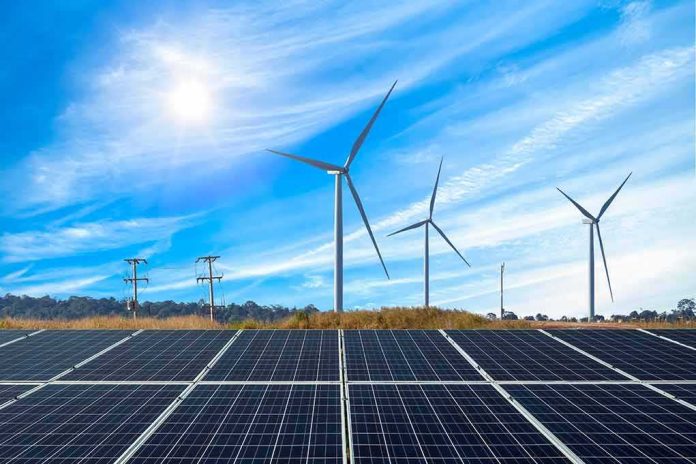
Utility-scale wind and solar often come in as the cheapest new sources of electricity, which helps explain why developers rushed to qualify projects before the new deadlines hit. As the credit window closes and foreign entity rules bite, fewer projects will pencil out, and more regions will lean on older coal and gas plants. That may mean short-term comfort for those who distrust renewables. It also locks in higher pollution and ongoing subsidies for fuels that have enjoyed government support for generations. For a country that prides itself on innovation and competition, that is a strange kind of “energy dominance.”
Sources:
redstate.com, ussif.org, utilitydive.com, usnews.com, reuters.com, canarymedia.com, nytimes.com, earth.org, pbs.org, hks.harvard.edu