At Mount Rushmore, Trump turned a fireworks show into a hard line about language, freedom, and who truly counts as American.
Story Snapshot
- Trump called English “the language of freedom” and tied it to America’s core identity.
- He warned that communism and mass migration threaten the culture, character, and liberty of the United States.
- He praised the Mount Rushmore presidents as guardians of freedom and cast himself as continuing their fight.
- Critics blasted the speech as divisive, factually shaky, and coded against Democrats rather than real communists.
Trump’s English-First Vision Of American Freedom
Trump’s Mount Rushmore speech did not treat English as just a tool for talking. He raised it to a symbol of American freedom itself, calling it “the language of freedom” and saying, “In America, we speak English. This is our culture. This is our character.” That line did more than cheer the crowd. It drew a bright border: speak English, embrace American culture, and you are on the inside of the national story; resist it, and you stand outside.
That framing fits a long pattern in presidential rhetoric where leaders use language to define who belongs. Research on national identity shows that tying culture and speech to “freedom” can rally loyal supporters and signal that globalist, multicultural trends are suspect or dangerous. Trump leaned straight into that energy. He told his audience that American independence, self-reliance, and patriotism live in this English-speaking tradition, passed down from British roots and classical ideas of liberty.
Mount Rushmore, The Founders, And A Battle With Communism
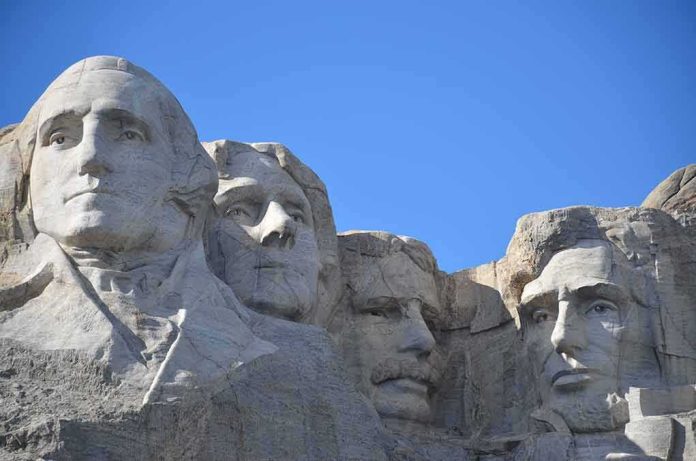
Trump used the stone faces behind him like a giant visual aid. He honored George Washington as the man who declared freedom, Thomas Jefferson as the thinker who defined it, Abraham Lincoln as the leader who saved it, and Theodore Roosevelt as the builder who expanded it. He placed his own presidency in that line, claiming he “saved your Second Amendment,” and arguing that today’s crisis is not a foreign war, but the rise of communism inside and around America.
He described communism as “the greatest threat to our country,” ranking it above World War I, World War II, Pearl Harbor, and even the attacks of September 11. That is a huge claim. Trump went further, saying communists are “illegal immigrants, criminals, and everybody that doesn’t want to work.” That description drew a clear moral picture that matches common conservative worries about open borders and welfare dependence, but he did not give court cases, names, or hard evidence to prove that party membership matches that list.
Big Numbers, Big Promises, And Big Questions
Trump often uses big numbers and bold predictions to show strength, and this speech was no different. He said $19.2 trillion of investment had poured into the United States economy “as of last week,” crediting his policies for a historic wave of money and confidence. Supporters heard that as proof that his America-first agenda works. Yet he did not cite Federal Reserve data, Treasury reports, or an outside audit. Critics were quick to point out that this figure has not been independently verified.
He also claimed, “We beat Venezuela in one day and we knocked the hell out of Iran,” tying his record to crushing hostile regimes. Major outlets and commentators pushed back, noting there is no documented one-day victory in Venezuela, and that global events such as the Ayatollah’s funeral, attended by several nations including Saudi Arabia, show a complex picture of Iran, not a simple knockout. His promise that ending the Senate filibuster and passing a “Save America Act” would keep conservatives from losing elections “for 100 years” also lacked any serious data or legal support.
How Critics Framed The Speech And What The Rhetoric Reveals
Mainstream media and left-leaning commentators did not just disagree with Trump’s numbers. They attacked the whole tone. Outlets like NPR described the speech as a move from traditional American pride toward harsh warnings about a “communist menace,” arguing that he was drawing lines between “real” Americans and his enemies rather than uniting the country on its 250th birthday. The hail, heat, and rough weather at the event even became social media fodder, with some joking that the presidents on the mountain were “crying.”
Trump’s Mount Rushmore speech triggered the media exactly like Reagan’s did — because it boldly celebrated American greatness instead of apologizing for it.
They hate when leaders remind us who we are: a nation of courage, achievement, and unmatched freedom.
The outrage tells…
— Will Sherwood, MA, MSP (@WillSherwood) July 5, 2026
Commentators like MeidasTouch and Harry Sisson called the speech dangerous and fascistic, charging that “communism” had become a coded word for Democrats and anyone backing multicultural or progressive policies. From a conservative, common-sense view, Trump’s focus on freedom, national pride, and border security speaks to real worries about globalism and cultural drift. At the same time, American values also prize truth and accountability. When a leader claims 100 million dead from communism or trillion-level investments, citizens deserve clear sources and honest numbers to match the fiery words.
Sources:
thegatewaypundit.com, instagram.com, youtube.com, pbs.org