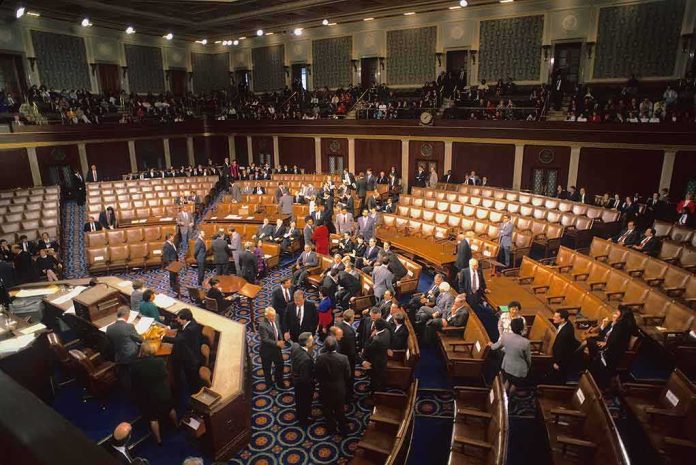
Senate Republicans confirmed Jay Clayton as director of national intelligence after a fight that exposed a sharp test of candor and trust.
Quick Take
- Clayton won confirmation by a 51-47 vote, mostly along party lines.
- He entered the job with high-level legal and regulatory experience, including service as U.S. attorney and Securities and Exchange Commission chair.
- Supporters pointed to bipartisan praise and claims of strong leadership on national security threats.
- Critics focused on his refusal to plainly say who won the 2020 election.
Experience Helped Him Clear the Senate
Clayton arrived at the confirmation fight with a resume that was hard to ignore. Reporting identified him as the United States attorney for the Southern District of New York and a former Securities and Exchange Commission chairman. The White House also said his record included work on terrorism, cartels, and other major national security threats. That background gave supporters a simple case: he had run major federal institutions before, and he knew how to manage pressure.
That case mattered because the office of director of national intelligence sits near the center of the federal security system. It oversees the work of the intelligence community and helps shape the flow of information to the White House and Congress. Backers said Clayton brought broad experience, while Senate coverage noted that some Democrats praised him and showed openness to voting for him. The White House said his nomination drew broad bipartisan acclaim.
The Hearing Turned on Candor
The biggest drag on Clayton’s confirmation was not his résumé. It was his answer, or lack of one, on the 2020 election. During the hearing, he would not plainly say who won, and one report said he answered that Joe Biden was “certified” rather than saying Biden won. For many viewers, that sounded like a dodge. For a job built on trust, that kind of hesitation matters. Intelligence leaders are expected to answer hard questions cleanly.
Clayton also drew scrutiny over the New York Times subpoena matter. He declined to go into detail, citing national security concerns. Supporters can say a nominee should not discuss sensitive matters in public. Critics can fairly answer that the intelligence chief also needs to show respect for press freedom and oversight. The record provided here shows a real tension, but it does not show a full, public explanation that ended the dispute.
Partisan Lines Still Shaped the Outcome
The vote itself showed how politicized the process had become. The Senate Intelligence Committee advanced Clayton on a 9-8 vote, and the full Senate later confirmed him 51-47. That is a narrow margin for a post tied to national security. It also means the fight was not just about qualifications. It was about whether senators trusted him to act independently, especially after a hearing where he did not give clear answers on core constitutional and oversight questions.
Clayton’s supporters can still point to one clear fact: he was not an unknown quantity. He had run a major prosecutor’s office, led the Securities and Exchange Commission, and won praise from some Democrats during the process. But his critics also have a clear opening. They can point to the 2020 election answer, the subpoena issue, and the tense path to confirmation. That mix explains why his confirmation landed as both a win for Trump and a warning sign for skeptics.
Sources:
nypost.com, pbs.org, politico.com, nytimes.com, youtube.com, cbsnews.com, facebook.com, cnbc.com