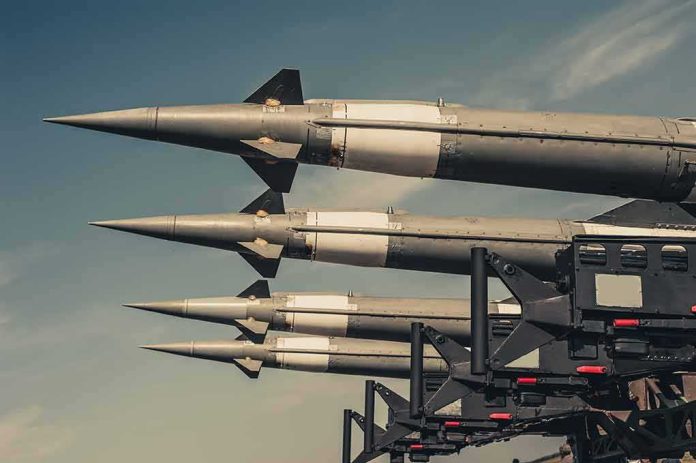
As Iranian missiles streak toward U.S. bases and Anthony Fauci faces new questions in Washington, many Americans are asking the same thing: who is really keeping us safe and honest?
Story Snapshot
- Iranian forces launched ballistic missiles at U.S. troops, which U.S. defenses say they fully intercepted.
- Iran’s retaliation has spread across Kuwait, Bahrain, Jordan, and key shipping lanes, testing a fragile ceasefire.
- President Trump’s stated goal is to crush Iran’s military power and protect trade, while legal experts dispute the “self-defense” claim.
- Claims about Anthony Fauci taking the Fifth and hiding COVID origin details lack any hearing transcript or sworn record in the available evidence.
Missiles, Bases, And A War That Keeps Growing
The U.S. Central Command says Iranian forces launched multiple ballistic missiles from Iran in an “attempted surprise attack” on American troops based in the Middle East. U.S. officials reported that all of those missiles were intercepted, and that American forces remain on high alert. This latest attack did not come out of nowhere. For weeks, the United States and Iran have traded strikes over control of the Strait of Hormuz and nearby bases, with both sides claiming self-defense.
Iran’s response has not focused only on U.S. assets. Reports describe missiles and drones fired at countries that host American bases, including Kuwait, Bahrain, and Jordan. Jordan’s military says its air defenses intercepted multiple missiles launched from Iran, destroying them before impact. Kuwait and Bahrain have also reported shooting down incoming fire and dealing with debris injuries. Every successful intercept is a relief, but each new volley raises the odds that something goes wrong and civilians pay the price.
What Washington Says It Is Doing — And Why Some Experts Push Back
U.S. officials say these strikes are not only payback. They say the goal is to weaken Iran’s ability to threaten ships and bases and to protect global trade through the Strait of Hormuz. Central Command has described attacks on Iranian command centers, air defense sites, missile and drone systems, and naval assets, arguing this “degrades” Iran’s power to hit commercial vessels. President Trump and his team have also tied the broader campaign to stopping Iran’s nuclear and missile programs and cutting its support for terror groups.
The State Department’s legal adviser has framed the wider war as “collective self-defense” of the United States and Israel, saying Iran’s past attacks triggered the right to strike back. But more than one hundred international law specialists have publicly argued that U.S. actions breach the United Nations Charter and go beyond true self-defense. Arms-control analysts also question claims that Iran posed an “imminent” nuclear and missile threat to America, noting a lack of clear public evidence. This clash feeds a deeper worry many Americans share: that leaders sell wars as protection while leaving citizens with the cost and risk.
Ceasefires, Shipping Lanes, And The Fear Of A Wider Collapse
News outlets across the spectrum describe this not as a neat defensive success but as a dangerous spiral. Reports from NPR and others say renewed U.S. and Iranian strikes are threatening interim ceasefire deals and stalling peace talks meant to end the war. Commercial shipping through the Strait of Hormuz has already come under missile and drone attack, and U.S. officials say they are striking coastal defenses and small boats to keep trade moving. Every hit on energy and trade routes lands back home as higher prices and more economic strain for ordinary families.
Regional allies are also getting pulled in deeper. Kuwait, Bahrain, Jordan, Qatar, and Iraq have all reported intercepting Iranian missiles or drones over recent days, sometimes with debris causing injuries on the ground. These governments must balance fear of Iran, dependence on U.S. protection, and anger from their own citizens who see foreign powers fighting battles above their homes. For Americans who already feel the federal government is serving elites and war planners first, the idea of yet another long conflict fed by half-explained “self-defense” claims feels like a repeat of the past.
Fauci Testimony: Real Questions, Thin Public Evidence So Far
At the same time, headlines claim that Anthony Fauci has invoked the Fifth Amendment and misled the public about the origins of COVID-19. Those are serious charges that tap straight into frustration with public-health officials and fears of a “deep state” hiding the truth. But in the material available here, there is no Senate hearing transcript, sworn deposition, or full question-and-answer record to confirm what he said under oath or when.
The research package notes that no Fauci hearing video, committee document, or sworn statement is present to show whether he invoked the Fifth Amendment or to test claims that he lied. That means strong opinions on both the right and the left are, for now, built more on trust or distrust than on accessible records. Many Americans are tired of that pattern. They want hard proof: full transcripts, internal emails, and clear timelines, not filtered talking points. Until those documents are made public, the Fauci debate will stay loud but poorly grounded.
What Happens Next — And Why It Matters To Regular Americans
Looking ahead, two paths stand out. One is more missiles, more strikes, and deeper economic pain as the Strait of Hormuz becomes a shooting gallery. The other is a real push for de-escalation backed by transparent legal and strategic explanations that ordinary citizens can see and judge. Right now, both Washington and Tehran have paused some attacks while talks circle around an interim deal, but those pauses have been brief and fragile. Without stronger checks, another “surprise” launch like this week’s could drag more countries and civilians into harm’s way.
On the home front, the Fauci fight is a reminder that many Americans no longer take official narratives at face value, whether about war, pandemics, or anything that touches their lives. People on the right and left share a core demand: stop hiding behind classified files and closed-door hearings, and show the public the evidence. As Iran fires missiles and U.S. leaders claim both safety and righteousness, the real test is whether our government can earn back trust by matching its words with verifiable facts — abroad and at home.
Sources:
youtube.com, apnews.com, npr.org, latimes.com, reuters.com, cnn.com, cbsnews.com, understandingwar.org, cfr.org