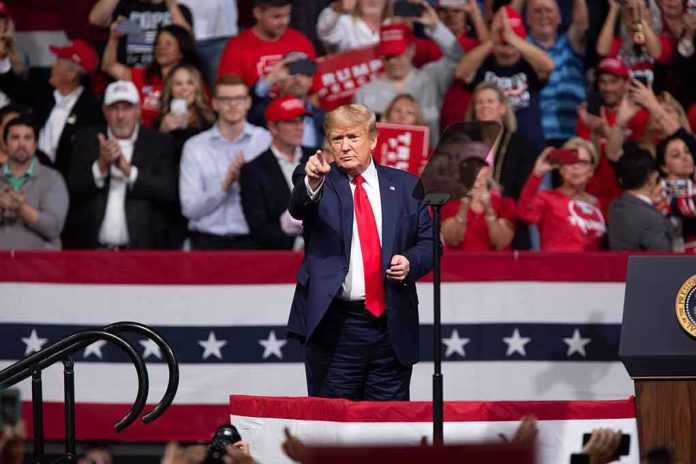
President Trump left the podium at a Long Island police event to hug the parents of 12-year-old Jacob Freytes, whose killing has shaken New York.
Story Snapshot
- Trump stepped off stage to comfort Jacob Freytes’ grieving parents during a Nassau County speech.
- The moment followed remarks about violent crime and support for law enforcement.
- A White House post amplified the scene as an impromptu act of empathy.
- The gesture spotlights rising public anger over crime and a demand for accountability.
What Happened During the Nassau County Event
On Long Island, President Trump paused his speech at the Nassau County Police Academy and walked off stage to meet the parents of Jacob Freytes, a 12-year-old killed by a stray bullet in the Bronx last month. He hugged Jacob’s mother, Migdalia Martinez, and greeted Jacob’s father, retired New York Police Department Sergeant Jesus Freytes, as the audience stood in silence. The scene unfolded during a pro-police address focused on crime and public safety, drawing quick national attention.
Fox News video captured the encounter and showed Trump leaving the lectern to connect with the family near the front of the room. The clip spread fast online, where supporters framed it as simple human decency. The New York Post also described the embrace and set it in the context of a call for tougher action on repeat offenders. The straightforward sequence of events, recorded on camera, anchored the day’s coverage of the stop.
How the White House and Media Framed the Moment
The White House posted that it was an impromptu moment and named both parents, reinforcing that the act was personal and unscripted. The message tied the embrace to the administration’s “Making America Safe Again” push, which officials say centers victims and backs local police. Outlets that support law enforcement highlighted the empathy and the crime focus. Broader coverage kept the attention on the family’s grief and the president’s decision to step away from prepared remarks.
Trump’s speech also referenced crime trends and praised Long Island safety gains, echoing talking points promoted by allied outlets and surrogates. Those messages claimed sharp reductions in violent crime and fewer murders in the last two years, which the president linked to federal and local crackdowns. Supporters argue the policy line and the personal gesture work together: protect families, honor victims, and back officers on the street. The Nassau County setting underscored that theme.
Why This Resonates Across a Frustrated Public
Families who lose children to street violence often say they feel unseen by leaders. A public embrace from the nation’s top official can feel like recognition after months of pain. For many Americans, left and right, the deeper issue is trust: they see a justice system that fails to stop repeat criminals and a government that talks more than it fixes. A direct, human gesture can cut through that noise, at least for a moment, and remind people that victims matter.
Scholars who study political communication note that leaders use nonverbal cues to build common ground, especially in tense settings. Research on Trump’s style finds that visible, high-emotion moments can function as shared signals to audiences, which may help explain why clips like this spread so quickly. Coverage then tends to judge not only what happened but how “authentic” it looked, shaping how different groups receive the same act in real time.
The Policy Stakes That Follow the Viral Clip
The killing that took Jacob’s life reopened debates about repeat offenders, gun crimes, and street safety. Trump and local allies argue that strong policing, prompt prosecutions, and firm sentencing are needed to prevent the next tragedy. Critics of the system, including many urban families, want the same end result: stop the bullets and keep kids safe on their walk home. The shared demand is basic accountability for people who terrorize neighborhoods.
President Trump Walks Off Stage to Personally Comfort Grieving Parents of 12-Year-Old Bronx Shooting Victim (VIDEO) * The Gateway Pundit * by Cristina Laila
Thank you @POTUS for leaving your lifestyle to help the USA. We voted for what you did here too!🙏🏼 https://t.co/PFfTs3qC2h
— HighDesertmark (@HighDesert05) August 15, 2026
What comes next will matter more than any clip. Families want arrests that stick, court dates that do not drift, and sentences that match the harm. Residents want safer blocks without endless spin. Police want clear backing when they face danger. If leaders deliver on those items, gestures at podiums will feel earned. If they do not, even powerful moments will fade, and the anger that crosses party lines will keep growing.
Sources:
thegatewaypundit.com, nypost.com, foxnews.com, facebook.com, youtube.com, time.com