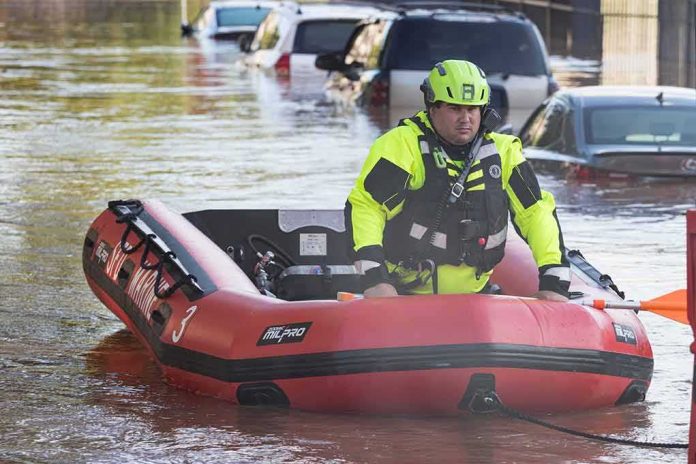
Federal aid was activated as Indiana reeled from deadly floods and wind damage that forced mass rescues and evacuations.
Story Snapshot
- Officials reported at least five storm-related deaths across multiple Indiana counties.
- President Trump approved an emergency declaration, unlocking federal help for the state.
- Indianapolis crews carried out dozens of water rescues as neighborhoods flooded.
- Rivers hit historic crests after 10–12 inches of rain fell in some areas.
Confirmed Deaths And The Areas Hit Hardest
State emergency leaders said at least five people died this week as floods and high winds struck several counties. Officials tied deaths to both raging water in central Indiana and wind damage in the northwest part of the state. A wire report listed fatalities in Jennings, Lake, Porter, LaPorte, and two in Delaware County, reflecting how wide the impacts were. Some cases were still being reviewed by local authorities as responders worked through active rescues and road hazards.
Local outlets described one recovery tied to a river search involving boats, dogs, drones, and aircraft. That operation underscored how fast-moving water turns routine outings into life-threatening events. The mix of flood and wind threats also complicated rescue timing. Downed lines, blocked roads, and fast currents slowed access for first responders. Officials stressed that drivers should never enter water-covered roads. Even shallow, moving water can sweep a vehicle off course in seconds.
Governor’s Actions And Federal Emergency Declaration
Governor Mike Braun declared a statewide disaster emergency and mobilized state and local resources to protect people and property. Braun also deployed the Indiana National Guard to help with evacuations, sheltering, and logistics. The governor sought immediate federal help, citing widespread damage and risk. President Trump approved an emergency declaration for Indiana, allowing federal support to flow as agencies worked to save lives and stabilize critical services. The federal step focused on urgent needs rather than final damage totals.
Emergency declarations under federal law aim to speed aid while storms are still disrupting communities. The Federal Emergency Management Agency (FEMA) coordinates assistance that can include generators, debris removal support, and funding for lifesaving measures. That help complements local and state efforts. It does not wait for a full accounting of losses, which can take weeks. This framework tries to cut red tape during the window when quick action can prevent more deaths and injuries.
Evacuations, Rescues, And Local Safety Orders
The Indianapolis Fire Department reported a surge of water rescues as neighborhoods near rivers and creeks filled. Crews evacuated dozens of residents and pets, moving people from homes and stranded vehicles to shelters. City leaders urged people in flood-prone zones to leave early and warned drivers to avoid closed roads. Video briefings showed boats working near 78th Street and Keystone Avenue and other low-lying zones. Those operations continued as more rain fell and waterways stayed above flood stage.
Local governments opened shelters and directed evacuees to safe sites across Marion and Hamilton counties. Utilities shut down at-risk assets to protect systems from contamination. Travel watches and advisories were issued to keep nonessential traffic off dangerous routes. In Noblesville, the White River crested at levels that broke a record dating to 1913, showing how unusual this surge was for the region. Rainfall totals spiked to 10–12 inches in some areas, overwhelming storm drains and river channels.
Why Floods Turn Deadly So Quickly
Flood experts have long found that many deaths happen in or near vehicles. Drivers misjudge depth or current strength and lose control as water lifts and pushes the car. A national analysis linked about six in ten flash flood deaths to vehicle situations. That pattern is why officials repeat the same rule every storm: turn around, do not drown. If a road is closed, the risk is not theoretical. Moving water can undermine pavement and hide sharp drop-offs.
🚨 TWO MAJOR DISASTERS HITTING AMERICA RIGHT NOW
Indiana: Devastating floods have killed at least 5 people — including a 4-year-old boy — with several still missing. Nearly a foot of rain in places. Entire neighborhoods underwater along the White River. Rescue crews still… pic.twitter.com/JEcDa3v8ap
— Gunther Eagleman™ (@GuntherEagleman) August 16, 2026
Early numbers from any disaster often change as teams complete searches and confirm causes. That shift does not mean the event is unclear; it reflects the pace of rescue work and reporting. In Indiana, the priority has been evacuations, medical care, and power safety. The formal counts will settle as coroners and emergency managers complete their reviews. For now, people in flood zones should follow local orders, check on neighbors, and avoid travel until waters recede.
Sources:
aljazeera.com, indystar.com, reuters.com, abcnews.com, x.com