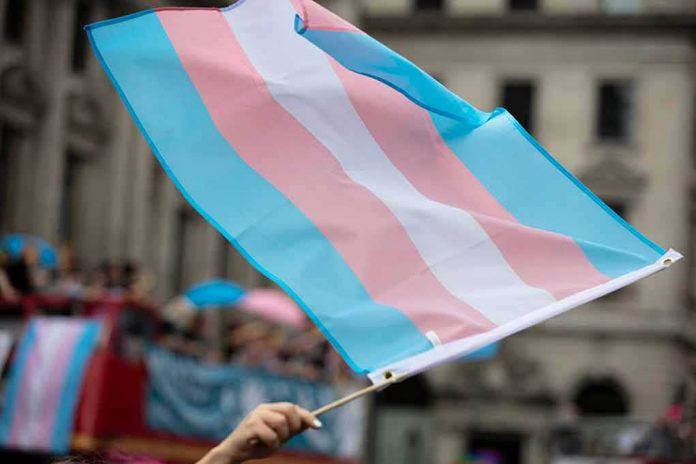
A flagship gay conservative group just dropped transgender advocacy and redrew the map of the culture war overnight.
Story Snapshot
- Log Cabin Republicans voted to focus on lesbian, gay, and bisexual issues only.
- The group tied the change to member input and conservative values.
- Republican support for same-sex marriage has fallen to near four-in-ten.
- Critics call the shift an abandonment of transgender Americans.
What Changed And Why It Matters Now
Log Cabin Republicans announced a formal pivot: no more national advocacy on transgender issues, and a renewed focus on sexual orientation and conservative priorities. The board approved the change after member discussions and framed the group as an LGB advocacy organization going forward. Leadership argued the move aligns with parental rights, fairness in sports, and safeguarding children, noting the decision is not “anti-trans” but a reset to core principles posted on its own materials.
The timing is not random. Polling shows Republican support for same-sex marriage has dropped from a slim majority in 2021–2022 to well under half today. A recent Gallup report put it at 37 percent, with only five percent of Republicans calling gender transition morally acceptable. That shift shrinks political space for a big-tent LGBTQ coalition on the right. A savvy group reads the room and chooses fights it can win, not fights that drain donors and shut doors.
The Political Backdrop Inside The GOP
Conservatives have rallied around clear lines on women’s sports, youth medical care, and school policy. Republican voters now sort those issues apart from adult gay and lesbian rights. That is why the coalition that bound the letters together for decades has frayed. When support for same-sex marriage within the party sinks near four-in-ten, any group linked to broader transgender demands risks losing access and influence in statehouses and on Capitol Hill. Mission focus becomes a survival tool, not a slogan.
Critics say the group pulled the ladder up behind transgender people and betrayed past promises. Commentary framed the move as abandonment, not refinement. That charge lands emotionally but runs into a harder political fact: a coalition that cannot carry its own base will not pass bills or block bad ones. From a conservative lens, you protect women’s fairness, parental rights, and free speech first, then build durable majorities that can defend core liberties for gays and lesbians without importing the most divisive fights.
What The Decision Actually Does
The new stance means national messaging, lobbying, and resources will center on employment, marriage, speech, and association for gays, lesbians, and bisexuals. The group’s statements stress this is about sexual orientation and conservative values, not hostility toward individuals who identify as transgender. Expect sharper engagement on religious liberty frameworks and equal treatment under law for adults, with bright lines on youth medicalization and sex-segregated spaces. That agenda maps to where many Republican voters still land on fairness and freedom.
The Log Cabin Republicans, the largest GOP organization for lesbian, gay, and bisexual conservatives, has voted to stop advocating for transgender issues and rebrand as an “LGB organization.”
President Ross Hemminger explained that the group added the “T” in 2015 based on adult… pic.twitter.com/UBO2Lr7KF1
— Olly 🇬🇧 (@OllyParramore) August 23, 2026
Opponents will argue this cedes ground to the left on definitions of dignity. That view underestimates how movements win. Durable change needs consent from the governed, not just court wins or corporate press releases. When a key constituency has cooled on same-sex marriage itself, broad transgender advocacy becomes a bridge too far inside the party. Trimming the sails may keep the ship upright. If public sentiment rebounds, missions can widen. If not, clarity beats collapse.
What To Watch Next
First, watch donor behavior. If checks increase, the bet paid off. Second, track state-level bills on women’s sports, school notification, and healthcare for minors. The group will likely champion clear age limits, parental rights, and sex-based competition rules while pressing for equal treatment for gay and lesbian adults. Third, track whether national Republicans echo this dividing line. If House and Senate leaders mirror the split, the coalition realigns. If they do not, expect more intramural fights and mixed messages in swing districts.
One risk remains. Narrowing scope can calm storms, but it can also shrink a movement’s moral imagination. The group will need to prove that its new focus protects actual people in daily life, not just principles on paper. That means showing wins on workplace fairness, marriage stability, and free speech for gays and lesbians, while explaining, with data and respect, where guardrails stand for kids and women. That case can persuade the persuadable and keep the base on board.
Sources:
cnn.com, nytimes.com, yahoo.com