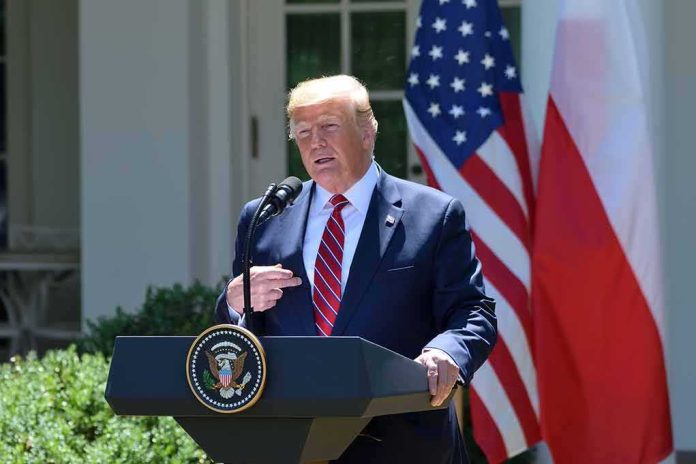
President Trump says Iran asked to keep talking and the United States agreed, even as he vows Tehran will never get a nuclear weapon.
Story Snapshot
- Trump says Iran requested continued talks; the U.S. agreed to engage on strict terms.
- A signed framework set ceasefire terms and reopened oil routes while nuclear issues move to follow-on talks.
- Critics argue the framework gives Iran early benefits without tough nuclear rollbacks yet.
- The White House says the deal keeps America’s red line: no Iranian nuclear weapon, period.
Trump Confirms Talks Will Continue On America’s Terms
President Trump said Iran asked to continue negotiations and that Washington accepted. He stressed that any outcome would block Iran from getting a nuclear weapon. His message aims to pair pressure with an open door. That is a common way to gain leverage while testing the other side’s intent. Reuters quoted Trump stating, “The Islamic Republic of Iran has asked us to continue ‘talks.’ We have agreed to do so”. For conservatives, that means strength first, then talks.
Trump also said earlier that “Iran wants to make a deal” and that no agreement would ever allow a nuclear weapon. That red line matters to U.S. security, Israel’s safety, and global energy flows. It also answers critics who fear any rush to concessions. The administration’s stance is simple: keep maximum pressure, hold firm on the bomb, and use talks to secure better terms, not to appease an adversary.
The Framework: What Was Signed And What Comes Next
In June, the United States and Iran signed a memorandum of understanding that created space to end fighting and reopen vital shipping lanes near the Strait of Hormuz. Pakistan helped mediate. The text is public and shows a series of steps, timelines, and topics for follow-on talks. It is not a final nuclear deal. It is a path to one, with enforcement and negotiations still ahead. The White House framed this as an America First breakthrough.
Reports say the framework eased some pressure to stabilize oil supply and reduce risk while deeper nuclear issues move to the next phase. That trade-off seeks to lower immediate danger without giving up the core U.S. demand. The goal is to use calm and economic leverage to force real nuclear limits. The administration argues this mix protects U.S. interests now and sets tougher talks ahead under American strength.
Critics Say Benefits Came Too Soon; Supporters Point To Leverage
Critics on the right and in the media say the interim steps gave Iran early gains while Washington kept only what it already needed: an open waterway and a promise against nuclear arms. They want faster curbs on enrichment, missiles, and militant proxies. Reuters summarized that case as “significant benefits” for Iran before hard nuclear concessions. That concern is real, and it reflects lessons from past deals that front-loaded relief and back-loaded limits.
The administration pushes back, saying relief is tied to performance and that the red line stands. Officials and supportive statements say the framework ensures Iran will not obtain a nuclear weapon, with U.S. leverage ready if Tehran stalls. The public release stresses American strength, not trust, as the engine of progress. For many conservatives, the test is simple: verify, then reward, and snap back pressure if Iran cheats. The next talks must deliver measurable nuclear steps.
Why This Matters For Security, Energy, And The Economy
Shipping through the Strait of Hormuz moves a large share of the world’s oil. Disruption there spikes gas prices, strains family budgets, and hurts small businesses. Stabilizing that route protects U.S. drivers and farmers. The framework’s steps to reopen lanes and cool the conflict support that aim, even if they are temporary. Reuters reporting linked the talks to a sustained lull in regional fighting and time-bound sanctions waivers designed to hold Tehran to further talks.
A nuclear-armed Iran would threaten Israel and U.S. troops, embolden terror proxies, and spark a regional arms race. Trump’s stated red line targets that danger. The coming weeks must show progress on uranium stockpiles, inspections, and missile limits. Congress and allies will watch closely. If Iran stalls or lies, pressure must return fast and hard. If Iran moves, America should capture gains that make our people safer and our economy stronger—on our terms, not Tehran’s.
What To Watch In The Next Round
Watch for firm timelines on enriched uranium caps, intrusive inspections, and missile restrictions. Look for snap-back triggers that cut off any economic relief if Iran drags its feet. Expect arguments in Washington about sequencing benefits and penalties. The framework created room to bargain, not a final peace. Trump says talks continue, and he insists on the no-bomb rule. The proof will be in verifiable steps that lock Iran down and keep American families safe.
Sources:
insiderpaper.com, aljazeera.com, npr.org, fortune.com, reuters.com, whitehouse.gov