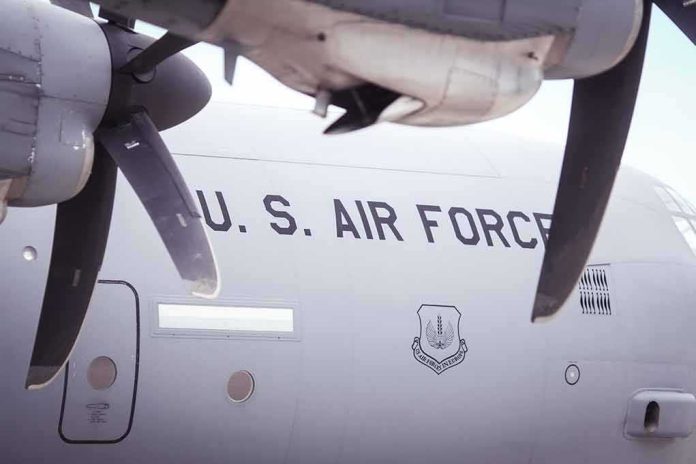
British police declared a “major incident” and evacuated homes after arrests under the Explosives Act near RAF Fairford, a UK base used by the United States Air Force.
Story Highlights
- Police arrested several men on suspicion of Explosives Act offenses near RAF Fairford
- Authorities evacuated residents in Whelford to a nearby leisure centre
- Army bomb-disposal specialists examined several vehicles at the scene
- Media widely reported increased security at the U.S.-used air base
Arrests And Emergency Response Near A Sensitive U.S.-Used Base
Gloucestershire Police said several men were arrested on suspicion of offenses under the Explosives Act near RAF Fairford on Sunday. Officers declared a “major incident,” which triggers extra emergency resources and command protocols. RAF Fairford hosts United States Air Force operations, making any explosives-related alert more sensitive and high-profile. Newsrooms reported tighter security around the base as the police response unfolded, underscoring the seriousness of the situation and the heightened caution around a critical military site.
The police statement did not name the suspects or specify charges beyond suspicion under the Explosives Act. Outlets differed on the number of arrests, using phrases like “several men,” while at least one headline cited five. That count did not appear in the police quote itself. Without formal charges or identifications, the public picture remains limited to the fact of arrests, the legal basis cited, and the emergency posture that followed at and around the village near the base.
Evacuations, Bomb Squad Work, And Local Disruption
Authorities evacuated residents in Whelford as a safety step and directed people to a nearby leisure centre. The Army’s explosive ordnance disposal unit examined a number of vehicles linked to the response. These measures match standard practice when police fear an explosives risk in a populated area. The evacuations and cordons disrupted daily life but aimed to reduce harm while specialists assessed any potential device or materials and while investigators secured relevant locations for evidence.
Police and military specialists often move fast in these cases because the downside risk is high. Quick evacuations buy time to check cars, bags, or locations without putting families in danger. Moving people to a known site, like a leisure centre, helps account for residents and provides updates. That is what played out here, with emergency services visible across the village roads and near the base. Officials signaled caution while they gathered facts and reduced any immediate hazard.
Why “Major Incident” Matters And How To Read Early Reports
Declaring a major incident does not prove a bomb exists. It shows police and partners treated the situation as high risk until experts could rule dangers in or out. United Kingdom cases like this often start with arrests “on suspicion,” wide cordons, and bomb teams on scene. Detailed forensic findings arrive later, sometimes days later. That pattern helps explain why many early stories rely on the same police statement, repeated across several outlets as the first official record of what happened.
THIS MORNING. RAF FAIRFORD. 00:45.
A pensioner called 999. Not MI5. Not GCHQ. A villager spotted three suspicious vans heading toward a US bomber base and dialled 999.
Five men arrested under the Explosives Act, then upgraded to Section 5 of the Terrorism Act: preparation of a… pic.twitter.com/GdVROzs1pV
— Christian (@InTheTrenchesUK) September 27, 2026
For Americans tracking base security overseas, the key point is that local police, the Army’s bomb unit, and base security moved quickly and in sync. The location near a United States Air Force site raised the stakes, and responders acted accordingly. People on the left and right share a basic expectation here: protect communities and protect the base. Clear public updates and timely charge decisions will be the next tests for accountability and trust after this disruptive but necessary response.
Sources:
youtube.com, reuters.com, abcnews.com, aljazeera.com, bbc.com, independent.co.uk, gbcode.rthk.hk