

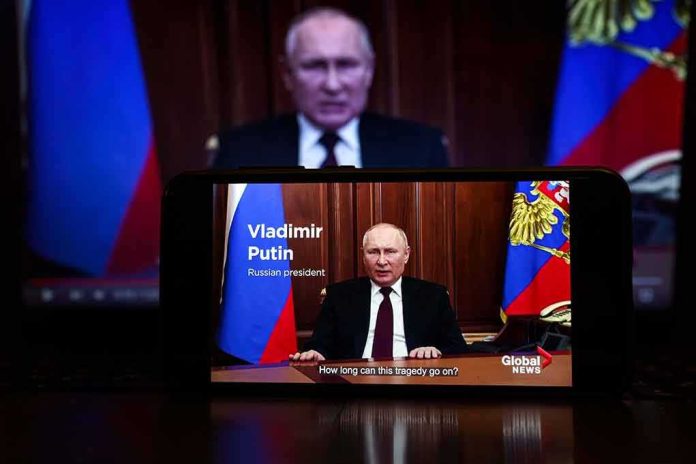
Russia freed American Stephen Hubbard after President Trump asked Vladimir Putin to release him, and a U.S. envoy confirmed the handoff on the ground.
Story Highlights
- President Trump said he asked Putin to free Stephen Hubbard before the release was announced.
- Russia announced Hubbard’s release while U.S. special envoy Steve Witkoff met Putin in St. Petersburg.
- Russian state media and U.S. reporting said the release was not part of a prisoner swap.
- Hubbard had been designated “wrongfully detained” by the U.S. government before Trump took office.
Trump’s Public Appeal Came Before Russia Confirmed the Release
On October 20, at the Oval Office, President Trump said he had been speaking with Russian President Vladimir Putin about Stephen Hubbard and asked for his release. The next day, October 21, multiple outlets reported that Russia freed Hubbard while U.S. special envoy Steve Witkoff was in St. Petersburg for a meeting with Putin. That tight sequence linked Trump’s stated appeal to the timing of the release without making claims about private talks that have not been disclosed.
Russian state media said Putin announced Hubbard had been released and was preparing to depart, and The New York Times reported Putin told Witkoff that Hubbard was at the airport. These reports positioned the Kremlin as the source for the immediate status and showed the U.S. envoy receiving confirmation in person. No document released to the public detailed the negotiation terms. Coverage focused on the announcement, timing, and the U.S. presence in the room when the news arrived.
Envoy Steve Witkoff Served as the Administration’s On‑Site Channel
Special Envoy Steve Witkoff traveled to Russia and met Putin in St. Petersburg as part of a broader diplomatic visit that included Ukraine‑related discussions. Witkoff confirmed Hubbard’s release and told Putin, “Because of you, he’s going home to his family,” according to U.S. press accounts. That line underscored the personal nature of the appeal while showing an active channel tied to the Trump administration. The meeting created a direct line for updates and logistics as Hubbard prepared to leave.
Reports described the release as unilateral and not part of a prisoner exchange. Outlets identified no traded detainee, sanctions relief, or other concession in the immediate coverage. That distinction matters to Americans who oppose “hostage deals” that reward bad actors. It aligns with a clear principle: bring our people home without paying a price that endangers more citizens abroad. Still, press accounts did not publish a detailed terms sheet, so they confined themselves to what could be confirmed on the record.
Hubbard’s Case Was Already a U.S. Government Priority
Before Trump’s request and Wittkoff’s visit, the United States had designated Hubbard as “wrongfully detained,” signaling that Washington viewed the case as political and a priority for action. That status often mobilizes federal resources, including consular support and negotiation channels. It also reflects a troubling pattern used by hostile states. Analysts call it “hostage diplomacy,” where regimes jail Americans to gain leverage in wider disputes. That is why firm policy and patient pressure both matter.
BREAKING: TRUMP ANNOUNCES RUSSIA HAS RELEASED AMERICAN STEPHEN HUBBARD — NO PRISONER SWAP REQUIRED
President Trump announced that Russia has released Stephen Hubbard, a 74-year-old retired teacher from Michigan who was detained in eastern Ukraine in April 2022. Trump says he… pic.twitter.com/UTzsaKgPYI
— Sergeant News Network (@sgtnewsnetwork) October 21, 2026
Some outlets reported small differences in Hubbard’s age and detention length as breaking news developed. Those variations did not change the core facts: a detained American was freed after President Trump publicly asked for his release, and a U.S. envoy received confirmation face‑to‑face with Putin. One fair caveat remains: public reporting cannot show the full private reasoning behind Moscow’s decision. The record as reported points to sequence, active engagement, and a release with no exchange listed.
What This Means for American Power and Families at Home
This outcome shows how clear asks, direct talks, and on‑site envoys can move a foreign government to act. It also highlights a baseline rule conservatives share: government’s first duty is to protect its people. That means bringing Americans home without feeding a trade in hostages. The Trump administration’s approach paired a personal request from the Commander in Chief with a focused diplomatic channel in Russia, and it delivered a result the family can feel today.
American strength works best when it is simple and firm. Ask for what is right. Keep pressure where it belongs. Refuse deals that put more citizens at risk. Hubbard’s release reflects that balance as reported: a presidential push, a clear line to the Kremlin, and no reported swap. That is the standard many readers expect—secure our people, defend our values, and avoid concessions that invite more abuse by hostile regimes.
Sources:
facebook.com, abc7.com, edition.cnn.com, nytimes.com, bostonglobe.com, cnn.com, cbsnews.com, themoscowtimes.com, hawaiipublicradio.org, foxnews.com