

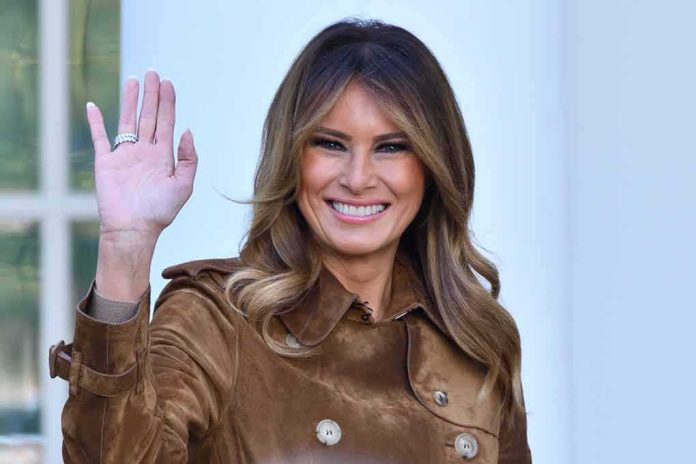
In a rare twist of wartime diplomacy, First Lady Melania Trump hosted Russian and Ukrainian officials at the White House after helping arrange a six-day local ceasefire that let aid and evacuees move through the embattled Oleshky area of Kherson.
Story Highlights
- The White House says Melania Trump initiated contacts that led to a local ceasefire around Oleshky in late October.
- Russia and Ukraine sent human-rights representatives to meet at the White House soon after the pause.
- The pause focused on humanitarian goals: stopping fire, opening aid routes, and moving civilians to safety.
- Officials reported nearly 800 people evacuated during the window, alongside deliveries of basic supplies.
What Happened at the White House Meeting
The White House announced that First Lady Melania Trump convened representatives from Russia and Ukraine to continue discussions tied to a localized ceasefire in Oleshky, a town in the Kherson region of southern Ukraine. The administration said the First Lady began engagement with both sides and helped secure the pause before hosting the follow-on talks in Washington. Media outlets reported that Ukraine’s human-rights ombudsman and Russia’s human-rights commissioner were among those expected to attend the event at the White House.
The meeting came after public statements by the White House laying out basic terms for the pause. Those terms included a halt to military activity in the Oleshky area for a set period, a corridor for humanitarian aid, and a route for civilians to evacuate. The White House framed the effort as a humanitarian step focused on immediate relief rather than a broad political settlement to the larger war between Russia and Ukraine.
Ceasefire Scope, Timeline, and Reported Results
According to outlets tracking the pause, the ceasefire in Oleshky began at about 3 a.m. local time on October 27, 2026, and ran through November 1. Coverage described a narrow geographic scope designed to let aid convoys move and allow civilians to leave under safer conditions. The White House and local outlets reported that nearly 800 people were evacuated during that window, while aid deliveries addressed urgent needs like food and medicine for residents who had been cut off.
The White House highlighted the humanitarian nature of the arrangement and said both sides agreed to stop military actions in the specified zone. Reports described how the limited pause allowed emergency groups to move more freely and reduced risk for civilians along the designated routes. While the pause was time-bound and local, officials stressed its value in easing the most immediate suffering on the ground during those days.
Who Led and Why It Matters
The administration credited Melania Trump as the driving force behind initial contacts and as host of the White House session that followed. The White House emphasized her role in shaping a practical, short-term plan to stop fire in a specific area, open a path for aid, and move people out of danger. Independent reporting confirmed that named officials from both countries were scheduled to attend in Washington, aligning with the administration’s timeline and aims.
Humanitarian pauses like this are not peace deals, but they can save lives fast. Research on ceasefires shows that limited, local pauses are often more achievable than broad agreements in active wars. These arrangements focus on access and safety, not full political terms. They also often need clear communication and monitoring to work well, even for a short time. That pattern fits the narrow scope and fixed dates of the Oleshky pause reported here.
How the Pause Fits the Bigger Picture
The United States has a tradition of first ladies engaging in what scholars call “soft diplomacy.” This type of outreach uses personal relationships and public attention to open doors and reduce tension. The White House’s account places Melania Trump’s efforts in that lane: focused on people’s safety and basic needs, not on writing a full peace plan. The reported results in Oleshky match that humanitarian focus rather than a larger shift in battlefield control.
HAPPENING NOW
First Lady Melania Trump just walked out with officials from BOTH Russia and Ukraine at the White House following her historic Oleshky ceasefire deal to allow humanitarian aide:
"Together, we can create something MORE ENDURING than a temporary ceasefire!"… pic.twitter.com/zCwGJU2Vfj
— Conservative Brief (@ConservBrief) November 5, 2026
For Americans across the political spectrum, the stakes are clear. Families trapped by war need safe exits, clean water, food, and medicine. The Oleshky experience shows that even brief, local pauses can create space to deliver those essentials and move people to safer places. Voters who feel Washington often fails to deliver may see this as proof that targeted actions, clear goals, and visible follow-through can still make a difference when leaders keep the mission simple and focused.
Sources:
whitehouse.gov, cbc.ca, themoscowtimes.com, thehill.com