
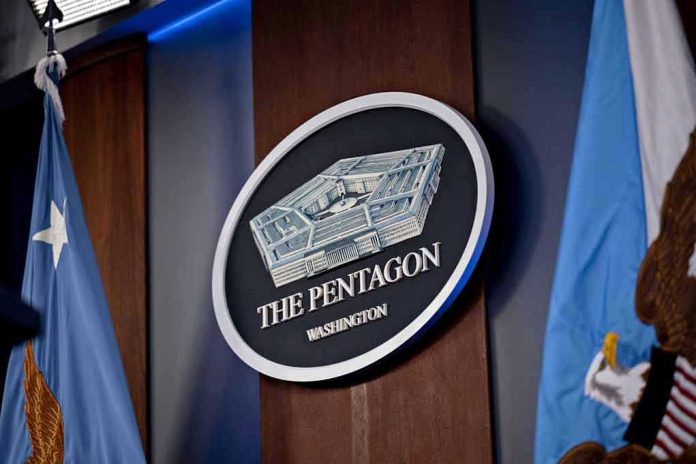
In a rare Pentagon briefing, Defense Secretary Pete Hegseth said no Secretary of War or Defense has ever been impeached for carrying out lawful military operations, as the House moves to vote on eight impeachment articles that challenge whether his actions were lawful in the first place.
Story Snapshot
- Hegseth says history and law back him; Massie’s articles say he broke war-powers rules.
- Eight charges cite Iran and “Operation Rough Rider,” with claims of missed deadlines and no authorization.
- The fight tests Congress’s power to authorize war versus the president’s commander-in-chief role.
- Key legal records and orders remain unseen by the public, fueling distrust across the aisle.
What Hegseth Argued at the Pentagon
On November 10, Defense Secretary Pete Hegseth told reporters that, in 250 years, no Secretary of War or Defense has been impeached for carrying out lawful military operations. He said President Trump directed the strikes and maritime actions at the center of the fight, and he framed the push as a political spectacle over policy differences, not high crimes. He did not release presidential orders or legal memos. That keeps core documents out of public view as the vote nears.
Hegseth also stressed that his actions followed the chain of command and existing law, including during operations linked to Iran and to a mission labeled “Operation Rough Rider.” He argued that impeaching a defense secretary for executing the president’s lawful commands would set a damaging precedent. He warned it could chill future commanders during crises and put a “target” on troops by politicizing battlefield decisions, according to coverage of his remarks.
What the Impeachment Articles Claim
Representative Thomas Massie filed a 34-page resolution with eight articles. The documents accuse Hegseth of waging war in Iran without a declaration of war or specific law from Congress, and of continuing hostilities after both chambers directed removal of forces. The articles also allege violations of the War Powers Resolution’s 60-day and 90-day clocks, and claim “Operation Rough Rider” in Yemen lacked authorization or an imminent threat.
The resolution cites a reported message from Hegseth that the operation “could be paused,” arguing that such language undercuts any claim of an urgent, imminent threat that would justify bypassing Congress. It further alleges failures in war-powers reporting and charges that some actions risked civilian harm by ignoring rules meant to reduce it. Massie argues Hegseth swapped Congress’s judgment for unilateral executive action.
The Core Legal Clash: Who Decides on War?
The Constitution gives Congress the power to declare war, but presidents often use force under their commander-in-chief authority. After Vietnam, Congress passed the War Powers Resolution to force consultation, reporting, and time limits unless lawmakers authorize force. The law aims to share decisions about hostilities and to let Congress demand withdrawal under certain steps. This case is a stress test of that framework in a modern, fast-moving conflict.
Supporters of impeachment say the Iran and Yemen actions passed the law’s limits and ignored a removal directive. Backers of Hegseth say the president can act to defend U.S. forces and interests without waiting on Congress, especially when threats evolve quickly. These are old arguments with new facts. Congress’s own research office has said the statute’s goals have often fallen short in practice, which is why disputes like this keep returning.
Why This Resonates with Voters on Both Sides
Many Americans think Washington protects its own and hides the record. This fight feeds that view. The House has a detailed resolution on paper, but the public has not seen the presidential orders, legal opinions, or full war-powers notices that could settle key claims. That gap drives suspicion on the right and the left. People want proof that leaders follow the law before sending troops into danger or launching strikes overseas.
Massie files 8 articles of impeachment against Hegseth
The 34 page impeachment resolution maintained that Hegseth "directed and caused" US armed forces "to be introduced into hostilities against the Islamic Republic of Iran" without congressional authorization, a declaration of… pic.twitter.com/s9Ga6UkbZj
— Nancy Abdallah🇺🇸🇵🇸🇾🇪🇱🇧🇮🇷 (@NanceAbdallah) November 10, 2026
At the same time, the political timing makes trust even harder. Coverage notes the midterm shifts, the heated debate over the Iran war, and a rare Pentagon briefing after months of quiet. Each side accuses the other of theater. But process still matters: eight written articles and a floor vote give the charges weight; a public defense from the Pentagon gives the pushback weight. The country needs the documents, not just the speeches.
What to Watch Next
Watch for three records. First, any release of presidential directives or Defense Department legal opinions tied to Iran and “Operation Rough Rider.” Second, the complete War Powers Resolution reporting trail, including any classified annexes sent to Congress. Third, any independent assessments on results and civilian harm. These items would not solve every dispute, but they would bring sunlight to claims now driving the vote and the public’s trust gap.
Sources:
facebook.com, npr.org, kmbc.com, opb.org, commondreams.org, dispatch.com, wlky.com, militarytimes.com, senate.gov, congress.gov