

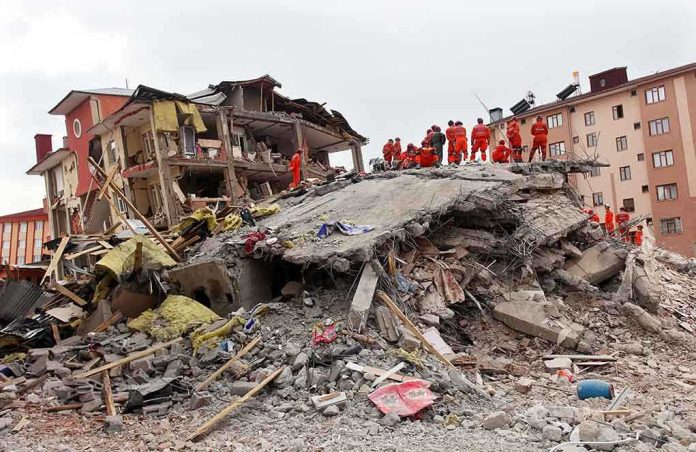
As the death toll passes 600, Nepal has kept search and rescue teams in the field and says the mission is still active.
Story Snapshot
- Nepal says all security and disaster teams remain fully mobilized for search, rescue, and relief.
- Police and international outlets report operations resumed after a brief weather pause.
- Officials report hundreds of bodies recovered and hundreds to thousands still missing, with figures under verification.
- Leaders ordered intensified efforts as damaged roads and fresh flood risks complicate the job.
Government Confirms Full Mobilization On Rescue And Relief
Nepal’s Ministry of Foreign Affairs said security, disaster agencies, local officials, and health services are fully mobilized. The government stated it is using all resources at its disposal for search, rescue, evacuation, emergency medical help, and relief. The update stressed that operations are ongoing and broad in scope, from river searches to medical support and shelter. Officials added that casualty figures remain under verification as teams continue to work in the field.
Nepal Police also underscored that rescue efforts have not stopped. A police spokesperson said the operation is still underway, matching what media on the ground have reported. International coverage shows a large-scale response with army, police, and air assets moving people to hospitals and setting up temporary shelters. These accounts align with the government’s claim that the national response remains active despite dangerous terrain and debris.
Weather Disruptions And Resumption Of Field Searches
Authorities resumed search and rescue after a brief weather-related pause, according to international reporting. Reporters described a fast-moving mission that had to adapt to fresh flood threats and more rain. Officials said they were still looking for large numbers of missing people after the pause. The restart of the operation points to continuity, not a stand down, even as teams face shifting river levels and unstable slopes that limit access to hard-hit zones.
Senior leaders ordered agencies to intensify operations as the toll climbed. A national disaster council meeting directed authorities to speed search, rescue, and relief. Local reports described personnel trying to reach cut-off areas where roads and bridges are damaged. These orders and actions show the government’s public stance: keep searching for survivors, recover the dead, and deliver supplies, while managing fresh risks that may force short pauses but not a full stop.
Casualty Numbers Are Rising And Still Being Verified
The government reported hundreds of bodies recovered and hundreds still missing, while cautioning that counts are being verified as work continues. Other outlets reported higher totals as the week went on, reflecting new recoveries and updated missing lists. Some reports cited totals across both Nepal and China, which can inflate or shift the numbers seen in any single update. This is common in major disasters with cross-border impact and difficult access.
India’s 4th relief flight to flood-hit Nepal is now airborne. An Indian Air Force C-130 aircraft is carrying 11 tonnes of assistance, including rescue equipment and essential relief supplies to support ongoing search-and-rescue operations.#Nepal #NepalFlood #India #SJaishankar pic.twitter.com/CPbBbgSXf5
— India Brief (@IndiaBrief365) August 29, 2026
Reporters on the ground described thousands of rescuers, damaged infrastructure, and airlifts for injured people. These details support the picture of an ongoing campaign rather than a concluded one. Police statements, government updates, and multiple outlets align on the core point: Nepal’s search, rescue, and relief efforts remain in motion, even if weather and terrain change the pace. Officials emphasize that numbers will firm up as lists are reconciled and more families are reached.
Why This Matters In A Wider Context
Glacial floods in the Himalayas are fast and destructive, which strains warning systems and rescue networks. Experts note that remote valleys, unstable slopes, and broken bridges slow both aid and the count of the missing. That means numbers swing as access improves and agencies compare lists. For readers, the signal is clear: when officials say teams are active, and outlets show them working, the operation is real even as the toll evolves with each day.
Sources:
youtube.com, mofa.gov.np, theguardian.com, english.news.cn, english.nepalnews.com, apnews.com, abcnews.com