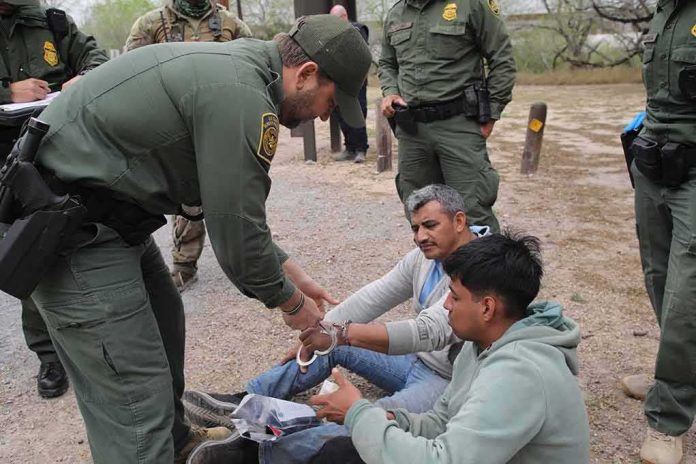
A federal court filing says border officers held an air traveler for more than 28 hours without telling him why, exposing how opaque airport detentions can be.
Story Snapshot
- A habeas petition alleges a 28-hour airport detention with no explanation.
- Customs and Border Protection cites broad search and detention powers at the border.
- Rules limit access to lawyers during primary and secondary inspection.
- Agency standards exist, but real-world transparency remains thin.
What the Court Filing Alleges
A habeas corpus petition filed in federal court states that Customs and Border Protection officers kept “Mr. Doe” in custody at an airport for more than 28 hours. The filing says officers gave no explanation for the detention, despite repeated requests from advocates. The petition asks a judge to order his release or force the agency to explain the legal basis. The claim highlights how hard it is to get timely answers when screening turns into custody.
Customs and Border Protection has unusual power at the border. Congress allows the agency to inspect travelers, search their belongings without a warrant, and detain people to check if they are admissible. These powers flow from long-standing border-search rules. At the same time, constitutional limits still apply. Courts say any seizure must be reasonable, and more invasive actions may need stronger cause. The line between routine and excessive can get blurry in practice.
Why Lawyer Access Is So Limited
Most travelers do not have a right to a lawyer during primary or secondary inspection. Federal rules say that right usually attaches only if a person becomes the focus of a criminal probe or is formally taken into custody. Advocacy summaries and government guidance describe this as standard policy. Officers can allow contact in some cases, but it is not guaranteed. This gap makes long detentions feel like a black box to families and attorneys waiting outside.
Customs and Border Protection has published standards for transport, escort, detention, and search. The document lays out expectations for hold rooms, recordkeeping, safety, and treatment. It is meant to provide structure and oversight for short-term custody. Still, the standards do not on their own answer key questions in any single case. They do not tell a traveler why they are held, how long it will last, or when an officer must share a specific reason for continued detention.
The Larger Tension at Airports
Government watchdogs and legal analysts describe a border system built for speed and control. Officials can direct people to secondary inspection when documents raise questions or random checks flag them. The model assumes quick screening. But when screening stretches into many hours, the lack of clear updates fuels fear and anger. People from both left and right see this as one more sign that agencies operate with little accountability to the public they serve.
Customs and Border Protection says it is committed to civil rights, including a ban on racial profiling. That commitment matters. Yet promises on a website cannot resolve a real-time dispute at an airport desk. The best guardrails are timely notice, documented reasons for extended custody, and preserved records. Courts can then review decisions if needed. Until those steps are routine, marathon detentions will keep sparking bipartisan doubts about who holds power and who answers for it.
Sources:
reason.com, aclu-nj.org, holdcbpaccountable.org, cbp.gov, casemine.com, aclusocal.org