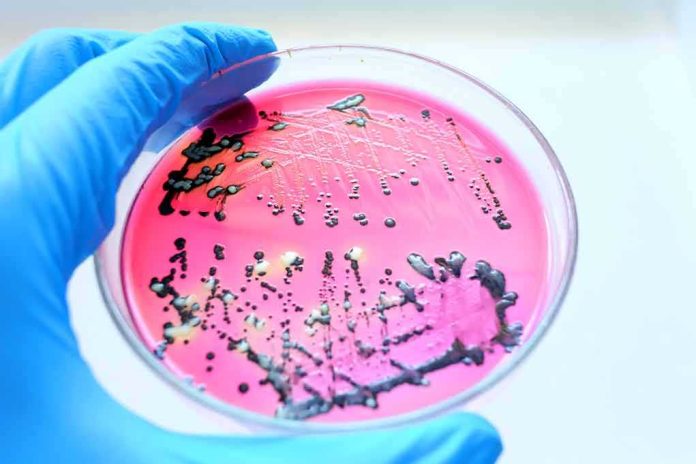
A plate of sweets before antibiotics may tip your gut toward the wrong bacteria.
Story Snapshot
- Higher sugar intake during antibiotics linked to steeper loss of gut diversity.
- Enterococcus faecium expanded under sugar-plus-antibiotic conditions in people and mice.
- Each extra 100 grams of sweets tied to a marked diversity drop in patients.
- Signals strongest in hospitalized and transplant settings; design was observational.
What the researchers tracked and why it matters
Scientists followed hospitalized patients’ meals and stool samples to see how diet interacts with antibiotics. They logged thousands of meals and matched them to microbiome profiles. They found a clear pattern: when people ate more sugar-rich foods while on antibiotics, their gut diversity fell further, and Enterococcus faecium tended to grow. The study team also tested the pattern in mice and saw the same push toward Enterococcus under sugar-plus-antibiotic conditions, which supports a plausible mechanism.
The headline number grabs attention. For roughly each extra 100 grams of sugary food or drink during antibiotic exposure, the drop in total bacterial diversity became about one quarter worse in patients. Media accounts framed that as the hit you might expect from something like a large milkshake. The authors’ report also modeled the change in a standard alpha-diversity measure and found a consistent extra decline with each 100-gram step in sweets intake.
Enterococcus rises when competitors fall
Enterococcus faecium thrives when other gut species get knocked back. Antibiotics thin the field, and sugar may feed what remains. The patient data linked higher sweets intake during antibiotics to Enterococcus expansion. Mouse work using sucrose plus an antibiotic reproduced that bloom. A hematology meeting abstract reported striking fold-changes early after exposure, and even the simple sugars glucose and fructose were enough to push the effect in animals. That echo across settings boosts confidence in the signal.
Enterococcus is not just any microbe. It is a hardy hospital survivor with tools to resist many drugs. Clinical reviews describe its knack for withstanding common antibiotic classes and picking up new resistance traits. When Enterococcus gains ground, it can crowd out helpful neighbors, and in vulnerable patients it can seed infections that are tough to clear. Keeping this opportunist in check is a practical goal, not theory. That is why the diet-antibiotic link deserves notice.
How to read the numbers without missing the point
The human findings come from observational tracking, not a randomized diet trial. That design cannot prove cause on its own. Yet the direction lines up with biology and with the mouse experiments. The strongest effects appeared in hospitalized and transplant-related care, where antibiotics are broad and frequent, and patients are fragile. That is exactly where a simple, low-cost step—skip sweets during and right after antibiotics—could make the most difference while doing no harm.
Slashing sugar intake before antibiotics may save your microbiome https://t.co/Bmw3lqTAws pic.twitter.com/jXRgtdY5Hn
— New Scientist (@newscientist) September 30, 2026
Common sense meets a clear pattern. Antibiotics already stress the gut’s ecosystem. Sugar adds fast fuel that favors hardy strivers like Enterococcus. Conservative health habits say remove easy accelerants when the system is under strain. That means water over soda, yogurt without added sugar, whole foods over desserts for a few days around the prescription. No one needs a lab to choose steak and greens over milkshakes when the stakes are gut stability and infection risk.
What to do the next time a prescription lands
Start the clock as soon as the doctor writes the order. In the two days before you begin antibiotics, and through at least a week after, cut added sugars. Read labels. Swap sweet drinks for water or tea. Favor protein, vegetables, and fiber-rich foods your gut bugs like. If you use fermented foods, pick low-sugar options. Do not skip the antibiotic or change dosing; follow your doctor’s plan. The sugar cut is an add-on that may protect your gut, not a replacement for care.
Sources:
newscientist.com, businesswire.com, journals.asm.org, link.springer.com