

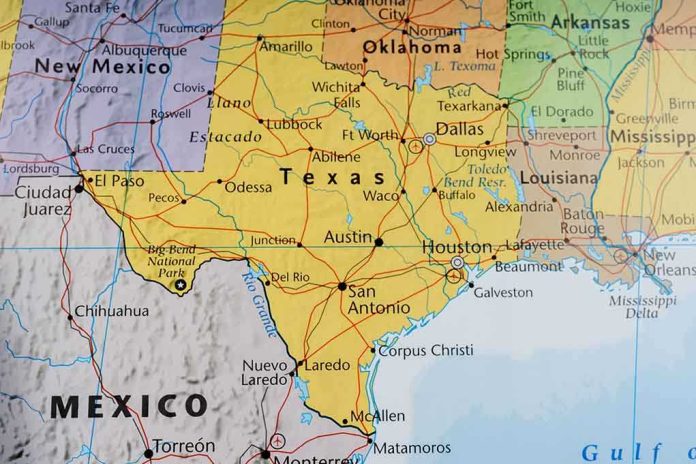
Trump is putting real muscle behind a long‑ignored water treaty, warning Mexico that Texas farmers will no longer pay the price for broken promises.
Story Snapshot
- Trump threatens a 5% tariff on Mexican goods unless long‑owed Rio Grande water is delivered to the U.S.
- Mexico’s deficit under the 1944 water treaty has left Texas farmers short, fueling major crop losses.
- Mexican officials blame drought and limited infrastructure, while admitting they still owe large volumes.
- The fight ties water security, trade leverage, and border politics directly to the fate of Texas agriculture.
Trump Uses Trade Leverage to Enforce a Broken Water Deal
President Trump has drawn a hard line on a problem Texas farmers have felt for years: Mexico falling behind on its water deliveries under the 1944 U.S.–Mexico Water Treaty. According to treaty rules, Mexico must send an average of 350,000 acre‑feet of Rio Grande tributary water to the United States every year, totaling 1.75 million acre‑feet over each five‑year cycle. As the 2020–2025 cycle closed, Mexico reportedly still owed roughly half that obligation.
Trump responded by threatening a new 5% tariff on Mexican goods unless Mexico immediately releases at least 200,000 acre‑feet of the water he says is owed, with the remainder to follow. He framed the move squarely as a defense of Texas farmers and ranchers who have seen canals run low and planting decisions upended. His message is simple: the United States will not keep honoring its side of treaties while our neighbors ignore theirs and cripple American agriculture.
How a 1944 Treaty Became a 2025 Flashpoint
The 1944 Water Treaty was supposed to provide predictability for both nations, assigning the United States firm annual obligations on the Colorado River while requiring Mexico to deliver Rio Grande water over each five‑year cycle. Bureaucrats at the International Boundary and Water Commission track the numbers, but farmers on both sides live with the consequences. In this latest cycle, recurring drought in northern Mexico and the Rio Grande basin made every missed delivery more painful for producers in the Texas Rio Grande Valley.
As deficits mounted, U.S. officials warned that Mexico’s shortfalls were exacerbating water scarcity in Texas and contributing to hundreds of millions of dollars in crop losses. Cotton, citrus, vegetables and livestock operations that depend on irrigation faced tough choices: fallow fields, cut herd size or gamble that promised water would eventually arrive. Earlier in 2025, after Trump halted certain water shipments to Tijuana as leverage, both governments announced a short‑term deal for added deliveries, but by late October the deficit still hovered around 865,000 acre‑feet.
Mexico Cites Drought and Limits, Texans See Broken Promises
Mexican President Claudia Sheinbaum has publicly acknowledged her country’s obligation under the treaty yet insists noncompliance is driven by drought, domestic needs and physical infrastructure limits, not bad faith. She points to pipeline capacity restrictions that slow the movement of stored water to the Rio Grande and notes that northern Mexican states and cities are also struggling with shortages. Her government says rainfall in 2025 allowed increased deliveries this year and promises more before year‑end, but concedes the gap remains large.
Texas farmers hear those explanations against a backdrop of withered crops and rising costs. Many remember past cycles where Mexico ended the five‑year period in deficit, then negotiated make‑up deliveries later while U.S. producers absorbed the risk. For them, hearing that the deficit is “not a matter of ill will” does not restore lost harvests or bank credit. Trump’s tougher stance, including the tariff threat and earlier moves to halt outbound U.S. water, signals to these communities that Washington is finally prioritizing their survival over diplomatic niceties.
Tariffs, Sovereignty, and the Future of Cross‑Border Water
By tying treaty enforcement to a 5% tariff on Mexican exports, Trump is deploying an economic tool he has used before: linking trade access to non‑trade obligations. Mexico relies heavily on the U.S. market for manufactured goods, agriculture and autos, so even a modest across‑the‑board tariff can inflict serious pressure. For many conservatives, this is a welcome shift from decades of globalist trade policy that left American producers exposed while foreign partners dodged their responsibilities.
If implemented, the tariff would likely raise costs for some U.S. importers but also send a clear message that American sovereignty and legal agreements are not optional. The move could encourage faster water releases or push Mexico to negotiate more realistic, enforceable delivery plans under the treaty. It also underscores a broader Trump doctrine: use every lawful tool—trade, sanctions, border control—to defend American workers, rather than relying on toothless diplomatic statements that leave rural communities bearing the brunt of international failures.
Longer term, this clash forces a serious conversation about water security in an age of chronic drought and past fiscal mismanagement. Texas and northern Mexico will both face hard decisions about storage, crop choices and infrastructure, but from a conservative perspective, the starting point must be respect for the rule of law. When a treaty says water is owed, the answer cannot be endless excuses while American farmers go under. Trump’s message to Mexico—and to Washington’s old guard—is that those days are over.
Sources:
Mexico faces new tariff threat from Trump over water debt