Trump just hit pause on a threatened strike that could choke global energy—while Americans are left wondering who, exactly, is steering this war and at what cost.
Quick Take
- President Trump extended a 48-hour ultimatum to Iran, delaying threatened strikes on Iranian power plants by five days as the Strait of Hormuz remains closed.
- Trump says “productive conversations” are underway; Iranian outlets and officials deny any negotiations and portray the delay as a U.S. backdown.
- The war has already killed more than 2,000 people and pushed energy markets into renewed volatility, with the Hormuz chokepoint central to the stakes.
- Behind-the-scenes intermediaries—Turkey, Egypt, and the U.K.—appear to be carrying messages even as public statements clash.
Trump Extends Deadline as Hormuz Remains the Pressure Point
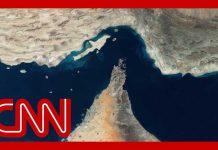
President Donald Trump extended his weekend ultimatum demanding Iran reopen the Strait of Hormuz to international shipping, postponing threatened U.S. strikes on Iranian power plants for five days. Trump announced the extension on Truth Social just hours before the original deadline was set to expire. The ultimatum is tied to the strait’s role as a major artery for global energy, with the ongoing blockade intensifying market and security pressure.
The administration’s messaging has shifted from imminent escalation to conditional de-escalation, with Trump pointing to “very good and productive conversations” and the possibility of a “complete and total resolution.” That pivot matters because power-plant strikes are widely understood to risk civilian blackouts and knock-on water disruptions, especially in a region reliant on stable electricity for basic services. For many Americans watching energy prices, the immediate question is whether the pause reduces risk—or simply delays it.
Conflicting Narratives: “Productive Conversations” vs. “Fake News”
Trump has asserted that U.S. officials are speaking with a “top person in Iran,” framing the extension as a diplomatic window rather than hesitation. Iranian officials and state-aligned outlets have rejected that account, calling reports of talks false and presenting the postponement as proof Washington blinked. The contradiction is not a minor detail: if talks are real, a deal path exists; if not, the extension may function as tactical repositioning while both sides prepare for the next round.
Intermediary activity adds another layer. Reports indicate Iran’s foreign minister engaged Turkey’s foreign minister, and Egypt’s president has delivered messages urging de-escalation and arguing there is no military solution. The U.K. also surfaced publicly, with Prime Minister Keir Starmer and Trump agreeing that reopening Hormuz is “essential” during what was described as a constructive call. None of this independently confirms direct U.S.-Iran negotiations, but it does show active shuttle diplomacy as the war grinds on.
War Context: Infrastructure Threats Raise Civilian and Regional Stakes
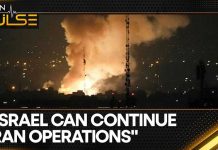
The current conflict is no longer a limited exchange; it is a four-week war that has already included strikes on Iranian gas fields and oil facilities, disruption of air corridors, and threats against critical infrastructure. Iran has warned it could retaliate against regional energy and desalination targets, and it has launched missiles toward Israel’s Dimona nuclear-related site without reported damage. This is the kind of escalation ladder that can run fast—and once infrastructure becomes the target set, civilian harm becomes harder to contain.
Trump has also ruled out sending U.S. ground troops, while reports note Israel has been open to ground involvement. That split matters to Americans who remember how quickly “limited” missions expand when objectives aren’t narrowly defined. The research available here does not provide a finalized war aim beyond reopening Hormuz and seeking a negotiated end, and it does not confirm any binding agreement in the works. What it does show is a strategy mixing deadlines, public threats, and backchanneling—while the battlefield and markets remain unstable.
What This Means for a Frustrated Pro-Trump Base Watching Costs Rise
Trump’s ultimatum strategy is colliding with a political reality at home: many MAGA voters backed him expecting fewer foreign entanglements, not another open-ended conflict in the Middle East with immediate consequences for energy prices. The available reporting ties the strait blockade to roughly 20% of global oil transit, making Hormuz not an abstract talking point but a direct cost driver for families and small businesses. The five-day extension may buy time, but it also prolongs uncertainty.
"Trump postpones deadline to strike Iranian power plants amid hope for peace deal." Very thankful President Trump made this decision. It is important to remember, we should NOT be fighting the people of Iran but the regime. #FreeIran #PrayForPeacehttps://t.co/W5oYgngGSz
— Rev. Patrick Mahoney (@revmahoney) March 24, 2026
From a constitutional and governance perspective, the public back-and-forth underscores how much this conflict is being managed through executive messaging and rapid-response threats. The research provided does not detail congressional authorization, new domestic authorities, or changes to civil liberties. Still, the pattern—deadlines, retaliation threats, and infrastructure targeting—should keep voters focused on clear objectives, clear exit criteria, and transparency about what “resolution” means. If the strait remains closed when the extension expires, the next decision point could arrive fast.
Sources:
US Won’t Strike Iran’s Power Plants for 5 Days, Extending Trump Deadline Reopening Hormuz Strait
PM and Trump have “constructive” call as US deadline to Iran looms