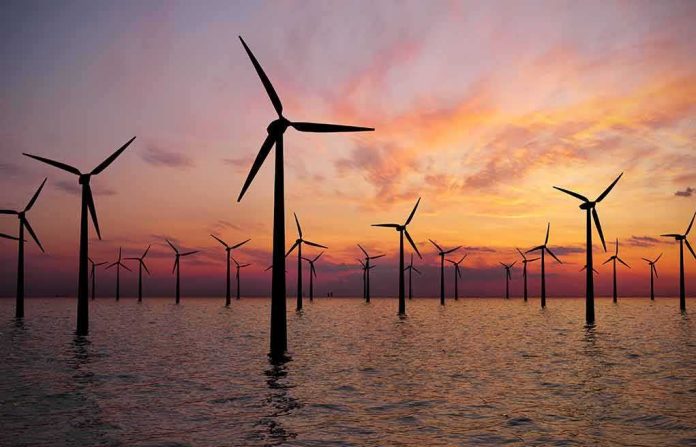
The Trump administration is paying another $1.2 billion to cancel offshore wind projects and steer energy investment back toward what it calls more reliable power.
Story Snapshot
- Trump officials approved a $1.22 billion reimbursement for German firm RWE to surrender three offshore wind leases and invest in U.S. natural gas projects instead.
- This is the fifth such buyout in 2026, pushing total federal payouts to nearly $4 billion to unwind Biden-era offshore wind plans.
- The Interior Department argues offshore wind is costly, unreliable, and bad for national security, and says taxpayers should not fund “ideological subsidies.”
- Seven blue states and Senate Democrats are suing and investigating, claiming the administration misused a settlement fund and is undermining their green agenda.
What This New $1.2 Billion Wind Buyout Actually Does
The latest deal centers on German energy company RWE, which agreed to walk away from three large offshore wind leases in federal waters off New York, California, and Louisiana. The Trump administration will reimburse RWE about $1.22 billion, roughly what it paid for those leases under President Biden. In return, RWE will surrender the leases and settle any legal disputes over them, clearing the books instead of fighting over projects that had little chance of moving forward under current policy.
Under the agreement, RWE also plans to invest about the same amount of money into natural gas projects in the United States. That mirrors earlier arrangements with other developers, where refunded lease payments are redirected into liquefied natural gas plants, gas-fired power stations, or other conventional energy projects. For the White House, that shift is the point: move capital out of subsidized offshore wind that may never get built and into energy sources it argues are proven, controllable, and available when families actually need power.
How This Fits the Trump Energy Strategy, Not a One-Off Deal
This RWE buyout is not an isolated case; it is the fifth major offshore wind cancellation deal the government has struck this year alone. Earlier in 2026, the Interior Department agreed to repay nearly $1 billion to French company TotalEnergies to give up two big offshore wind projects off New York and North Carolina and instead put that money into fossil fuel ventures, including a liquefied natural gas facility in Texas. Similar refunds were arranged for developers Golden State Wind and Bluepoint Wind to abandon leases off California and New York.
In June, officials approved a $765 million package for Chicago-based Invenergy to terminate four additional offshore wind leases off New York, California, and Maine. That brought total commitments to about $2.5 billion at that time, before the RWE deal later pushed the figure close to $4 billion. Each agreement follows the same core pattern: companies voluntarily surrender leases that were in early development and unlikely to advance, and the government effectively unwinds Biden-era auctions by returning what those firms paid to secure the projects.
Why the Administration Calls This ‘Common Sense’ for Taxpayers
Interior officials say these settlements protect Americans from being stuck with higher costs to support an offshore wind boom that never made economic sense. They argue that earlier administrations locked in pricey leases and layered on subsidies for a power source that is intermittent, hard to build, and vulnerable to both weather and international supply chains. From that perspective, reimbursing lease fees now is framed as undoing a bad deal, not handing foreign companies a windfall.
The administration has also tied its broader offshore wind crackdown to national security concerns. It halted federal permitting for offshore wind and scrapped plans to open over 3.5 million acres of new federal waters to wind projects, citing classified reports from the Defense Department about security risks from turbines and undersea cables near key military routes. Supporters say that if a project cannot clear basic national security and reliability tests, it is better to pay to shut the door now than to sink more public and private money into a dead end.
Blue States, Green Groups, and Legal Fights Over the Payouts
Democrat-led states and environmental activists see these deals very differently. A coalition of seven states, led by New York, has sued the administration over the TotalEnergies cancellation, arguing that the Interior Department misused a Treasury “Judgment Fund” that was meant for true legal settlements, not voluntary policy reversals where no lawsuit even existed. Their complaint says the government skipped normal public procedures and instead used taxpayer cash to dismantle offshore wind projects those states were counting on.
🚨 US PAYS $1.2B TO HALT WIND PROJECTS! 🇺🇸💨
The Trump admin just agreed to pay German firm RWE $1.2 billion to cancel ongoing U.S. offshore wind projects.
This massive payout continues a major policy shift away from wind power! 🛑⚡️ pic.twitter.com/WTY2PbaBkh
— Global Insight (@GlobalInsight20) August 7, 2026
Critics also claim the pattern of buyouts is ideology dressed up as fiscal prudence. They point to President Trump’s long public hostility to wind power and note that most of the refunded money is being steered toward oil and gas production, which they say benefits fossil fuel interests. Opinion writers and some analysts argue there is no public cost-benefit study proving that canceling offshore wind and backing gas plants will lower long-term prices or cut blackout risk, and they warn of lawsuits and delays that could stretch on for years.
Sources:
nytimes.com, bloomberg.com, fortune.com, apnews.com, theconversation.com, reuters.com