

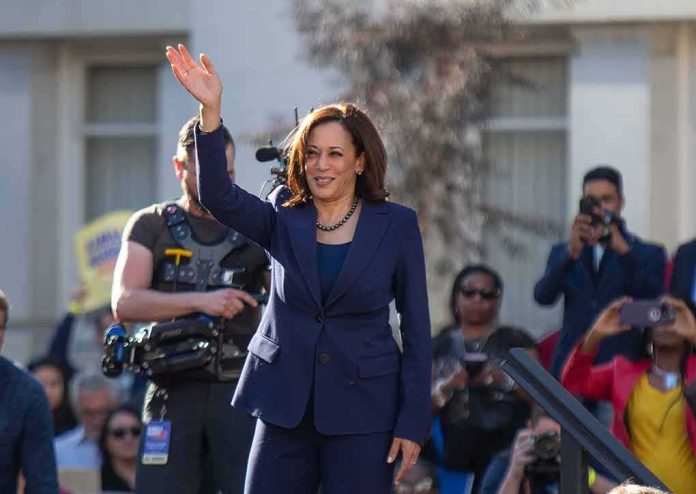
At a New Hampshire event, Kamala Harris urged Democrats to expand the Supreme Court to 13 justices and “be ruthless” in carrying out structural reforms.
Story Snapshot
- Harris called for expanding the Supreme Court to 13 justices and tied it to broader structural reforms.
- She said Democrats should be “ruthless,” defining it as firm accountability rather than cruelty.
- Her agenda also mentioned rethinking the Electoral College, plus statehood for Puerto Rico and Washington, D.C..
- Congress has changed the Court’s size before; the Constitution sets no fixed number of justices.
What Harris Said In New Hampshire
Kamala Harris told a Manchester, New Hampshire crowd that Democrats should expand the Supreme Court to 13 justices, linking the change to “structural work” she wants the party to pursue. She argued that 13 matches the number of federal circuit courts. She paired the Court plan with calls to revisit how the Electoral College works and to make the popular vote matter more. She also backed statehood for Puerto Rico and Washington, D.C., and overturning Citizens United.
Harris also said Democrats need to “be ruthless,” then explained she meant standing firm on accountability and consequences, not cruelty. The remarks came as she campaigned with New Hampshire Democrats. The appearance placed institutional reform at the center of her political case, framing it as action to correct what she views as a system out of balance. Her message targeted voters who feel the rules have been tilted by powerful interests and are no longer fair.
How Court Expansion Could Work In Law And History
Supporters note that the United States Constitution does not set the number of Supreme Court justices. Congress has changed the Court’s size several times in American history, including expansions and contractions tied to growth and politics. That history means expansion can be done through ordinary legislation if a bill passes both chambers and the President signs it. Harris did not present bill text or a step-by-step plan at the event.
Harris’s case for 13 justices cited the 13 federal circuits, but experts point out that this number does not itself require 13 justices. The Supreme Court no longer rides circuit, and the Court’s size has changed for varied reasons in the past. Still, her basic point aligns with legal history: Congress can set the size by statute. If Democrats pursue it, lawmakers would still need to decide timing, nomination order, and how to manage recusals and case loads in a larger Court.
Electoral College And The Popular Vote Debate
Harris urged a fresh look at the Electoral College and said the popular vote should matter, but she did not endorse a specific path. Options range from a constitutional amendment to state-led interstate compacts or changes in how states award electors. Many scholars argue a full amendment remains unlikely in the near term, which leaves states to test other ideas that fit within current law. Harris did not detail which route she would back if Democrats gain power.
The push touches a core national tension: should we change rules when outcomes feel distorted, or keep rules stable to prevent swings in power from rewriting the system? For many voters on the right and left, this fight speaks to larger anger about elites, closed-door deals, and leaders who protect their own jobs. Harris is betting that direct structural moves, not speeches, will speak to that anger. Critics, however, warn that moves like expansion risk deeper partisan escalation.
Sources:
thegatewaypundit.com, youtube.com, newhampshirepoliticalreporter.com