
President Trump signed a new trade framework with Thailand this week that forces Bangkok to drop tariffs on nearly all American goods, a deal his administration is calling a major win for U.S. farmers and manufacturers.
Quick Take
- Thailand agreed to eliminate tariffs on about 99 percent of goods coming from the United States, covering farm products and manufactured goods alike.
- The United States will still charge a 19 percent tariff on many Thai imports, though some products will get a zero percent rate.
- The deal also tackles trade barriers tied to digital taxes, data transfers, and foreign ownership limits in Thailand’s telecom sector.
- Officials signed the framework on October 26, 2025, but both sides say they still need to finish the final agreement.
Thailand Agrees To Drop Nearly All Tariffs
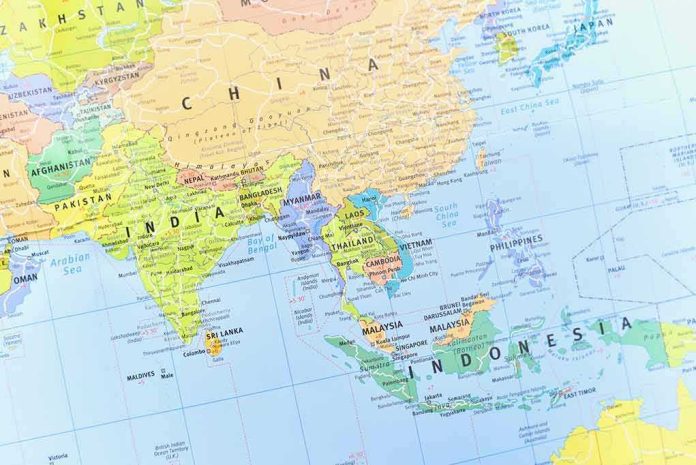
President Trump and Thailand’s leaders put pen to paper on a reciprocal trade framework at the ASEAN Summit in Manila. The deal’s biggest headline is simple: Thailand will wipe out tariffs on roughly 99 percent of goods shipped from the United States. That covers everything from American farm products to industrial equipment, opening up a market that has long protected its own producers with steep import taxes.
For years, conservatives have pushed back against lopsided trade deals that let foreign nations tax American goods while flooding U.S. shelves with cheap imports. This framework flips that script. Thailand is the one opening its market wide, while the United States keeps leverage in place. It is the kind of “America First” trade posture Trump promised voters he would deliver when he returned to office.
America Keeps Its Own Tariffs In Place
The deal is not a one-way giveaway. The United States will hold onto a 19 percent reciprocal tariff rate on many Thai imports, a rate set under Executive Order 14257. Some specific products will get a zero percent rate instead, but the broad tariff stays put. That is a sharp contrast to the “free trade at any cost” deals of past administrations that often left American workers footing the bill.
The framework also goes after non-tariff barriers that have quietly hurt American exporters for years. Thailand committed to addressing rules that blocked U.S. farm and industrial goods from competing fairly. On top of that, the agreement covers digital trade issues like data transfer rules, electronic transmission duties, film screen quotas, and limits on foreign ownership in Thailand’s telecommunications industry.
Built On A Decades-Old Trade Relationship
This is not a deal built from scratch. The United States and Thailand have worked through trade disputes for more than two decades under the 2002 Trade and Investment Framework Agreement. That existing relationship gave negotiators a foundation to build on, rather than starting from zero at a time when trade tensions across Asia remain high.
🚨 BREAKING: By stroke of pen, President Trump signs a trade framework with Thailand where the nation will ELIMINATE ALL tariffs on US exports, remove substantial non-tariff barriers on American vehicles, medical devices, pharmaceuticals, ethanol
pic.twitter.com/BNY1Cgo0QV— one love vegan (@onelovevegan_1) November 17, 2026
The administration’s own fact sheet makes clear this is a framework, not the finished product. Officials say they will keep negotiating in the coming weeks to lock in the full Agreement on Reciprocal Trade. That means the tariff schedules, exemptions, and legal details still need to be worked out before this deal is fully in force.
What Comes Next For American Exporters
American farmers, manufacturers, and tech companies stand to gain the most once the final agreement is signed. Thailand’s commitment to drop tariffs on nearly every category of U.S. goods could open real opportunities for exporters who have struggled to compete in Southeast Asia’s markets. Whether that promise turns into actual sales depends on how fast both governments finish the legal paperwork.
For conservatives who have watched decades of trade deals favor foreign manufacturers over American workers, this framework reads differently. It keeps U.S. tariff leverage intact while demanding real concessions from a trading partner. The real test comes when the final text is signed and American exporters start seeing Thai markets actually open up.