

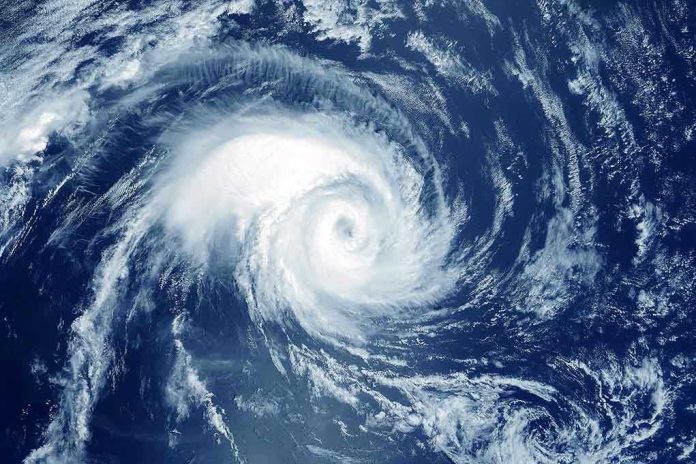
A rare tropical storm in Southeast Asia has left over 500 dead and millions displaced, exposing regional vulnerabilities.
Story Snapshot
- Over 500 confirmed deaths, with hundreds still missing.
- Millions displaced across Indonesia, Thailand, Malaysia, and Sri Lanka.
- Unprecedented regional coordination for disaster response.
- Record-breaking rainfall in Hat Yai, Thailand.
The Path of Destruction
The tropical storm, which formed unusually in the Malacca Strait, devastated Southeast Asia with relentless rain and wind over a week-long period. The storm’s intensity wreaked havoc, particularly in Indonesia, Thailand, and Malaysia, with Sri Lanka also affected by a related cyclone. This rare meteorological event led to catastrophic flooding and landslides, contributing to one of the worst weather-related disasters in the region’s history.
As of November 30, 2025, the death toll reached over 500, with Indonesia reporting 336 deaths, Thailand 170, and Malaysia 2. Sri Lanka faced its own calamity with 153 fatalities from the cyclone. The flooding displaced over 4 million people, bringing about a monumental humanitarian crisis that required swift and effective response measures.
Challenges in Relief Operations
Rescue and relief efforts encountered significant obstacles. The blocked roads in Indonesia’s Sumatra and the mountainous terrains complicated access to remote areas, necessitating aid delivery by the Indonesian Navy’s helicopters. In such situations, the logistical challenges are immense, and the urgency for humanitarian assistance is critical. The storm’s unprecedented scale tested the region’s preparedness and response capabilities, highlighting gaps in infrastructure and emergency management systems.
Simultaneously, regional coordination played a crucial role in managing the crisis. Malaysia evacuated over 6,200 nationals stranded in Thailand, showcasing effective cross-border cooperation. However, the sheer magnitude of the disaster stretched these systems to their limits, underscoring the need for improved regional disaster planning and cooperation.
Historical and Meteorological Context
The formation of a tropical storm in the Malacca Strait is a rare occurrence. This geographical area is not typically known for such atmospheric events due to its unique weather patterns. The storm’s emergence, therefore, suggests potential shifts in climate patterns or exceptional atmospheric conditions. These conditions led to record-breaking rainfall in Hat Yai, Thailand, which recorded 335 mm in a single day—the highest in 300 years.
The historical context of this event is significant as it challenges existing infrastructure and preparedness systems, which were not designed to withstand weather events of this magnitude. As climate change continues to affect global weather patterns, understanding these rare events becomes crucial for future planning and resilience building in vulnerable regions.
Impact and Future Implications
The immediate aftermath of the storm has left over 4 million people in urgent need of humanitarian aid, including shelter, food, and medical assistance. The extensive displacement and infrastructure damage pose long-term challenges for rebuilding and recovery. The potential for disease outbreaks in crowded evacuation centers adds another layer of complexity to the crisis.
Looking forward, the economic and social impacts are profound. The region faces significant reconstruction costs, disruptions to agriculture and commerce, and psychological trauma for survivors. This disaster has exposed vulnerabilities in regional preparedness and infrastructure, prompting a re-evaluation of disaster response strategies and climate adaptation policies. The need for resilient infrastructure and effective regional cooperation has never been more apparent.
Sources:
Tropical Storm Deaths Cross 500 in Southeast Asia, Over 4 Million Affected