

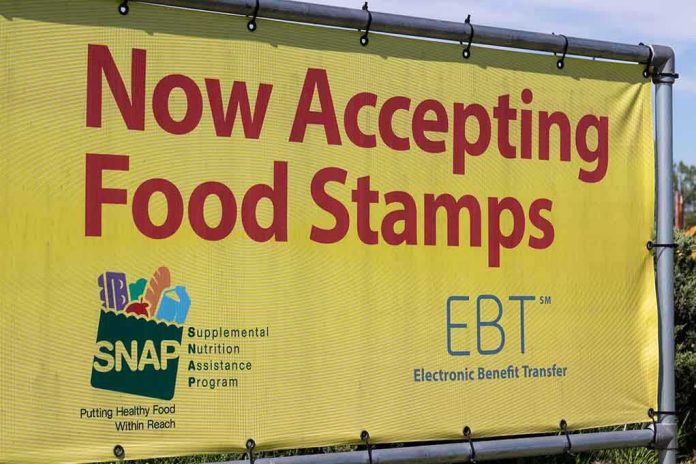
The Trump administration’s bold move to withhold SNAP funding from Democratic states over data demands reveals a deeper, potentially contentious battle over federal authority and state compliance.
Story Snapshot
- USDA plans to halt SNAP funds to Democratic states refusing data submission.
- Action challenges a federal court ruling prohibiting funding denial.
- 42 million Americans reliant on SNAP benefits face uncertainty.
- Conflict highlights tensions between federal oversight and state privacy rights.
Federal-State Tensions Over SNAP Data
The Trump administration, led by USDA Secretary Brooke Rollins, announced it would cease federal support for SNAP administration in states resisting data submission. This decision targets states governed by Democrats that have refused to comply with a directive issued in February 2025. Rollins argues that acquiring detailed recipient data, including immigration status and Social Security numbers, is critical to curbing fraud and waste in the program, a view Republican-led states support.
Democratic-led states countered by filing a lawsuit, asserting that the USDA’s demands breach privacy and could facilitate mass deportation. Despite a federal judge’s October ruling preventing funding denial due to non-compliance, the USDA’s latest announcement defies this injunction. Rollins emphasizes fraud findings, citing examples of deceased individuals and duplicate beneficiaries, as justification for the aggressive stance on data collection.
Legal and Political Ramifications
The federal court ruling in October granting a preliminary injunction against the USDA’s funding threats underscores the judiciary’s role in balancing federal demands and state rights. Yet, the administration’s decision to proceed with funding cuts illustrates an aggressive stance, challenging the limits of federal authority over states. The looming deadline of December 8 for states to respond to the USDA’s letter adds urgency to the matter, setting the stage for potential legal escalations.
Democratic leaders, including New York Governor Kathy Hochul, criticize the administration’s priorities, suggesting a potential increase in food insecurity among vulnerable populations. The House Agriculture Committee’s Angie Craig accuses Rollins of disregarding legal frameworks, highlighting the political tensions and the broader implications for federal-state relations.
Potential Impacts on SNAP Recipients
The threat to halt SNAP administrative funds could have significant repercussions for the program’s 42 million beneficiaries. States losing federal support may struggle to manage SNAP operations, leading to processing delays and increased state budget pressures. The administration’s broader legislative efforts, such as the “One Big Beautiful Bill,” aim to shift administrative costs to states, potentially altering the program’s financial structure and impacting long-term participation rates.
The administration argues that data collection is essential for fraud prevention, yet the conflict raises concerns about the use of such data for immigration enforcement. Advocacy groups warn that heightened administrative burdens and state cost-sharing could deter eligible individuals, especially within immigrant communities, from participating in the program, exacerbating food insecurity and economic disparities.