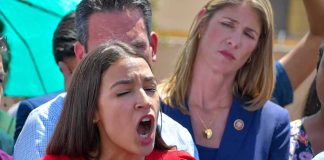
A single two-word slogan—“believe survivors”—just collided with the oldest political reflex in America: deny, lawyer up, and wait for the news cycle to move on.
Quick Take
- Rep. Eric Swalwell, running for California governor, faces sexual assault allegations from a former staffer involving two alleged incidents years apart.
- Swalwell denies the claims as false while his attorney issued cease-and-desist warnings tied to online allegations.
- A video response that included an apology to his wife for unspecified “mistakes” widened the political opening for critics arguing hypocrisy.
- Endorsement withdrawals and internal campaign turmoil turned a legal dispute into a fast-moving electoral crisis weeks before the primary.
How a Campaign Went From Rumor Control to Full-Scale Damage Control
Eric Swalwell’s problem isn’t only the allegations; it’s the sequence. Online rumors about inappropriate behavior with staffers swirled, his side pushed back, and then a cease-and-desist message went out accusing an unnamed recipient of spreading defamatory claims. Within a day, reporting elevated the story from internet chatter to a former staffer’s account of alleged assaults in 2019 and 2024, with references to supporting texts and people aware at the time.
That escalation matters because voters tend to forgive a politician’s bad week more than they forgive a politician who looks like he’s managing information rather than confronting it. The shift from “unverified allegation” to specific dates, settings, and alleged incapacitation reframes the question from political optics to consent. Even without a police report, the narrative becomes sticky when contemporaneous communication is discussed and multiple outlets amplify variations of the claims.
The Central Contradiction: Total Denial, Partial Confession
Swalwell’s public posture draws a sharp line: the allegations “never happened” and are “flat false.” That type of denial is clear and, if true, appropriate. The confusion enters with his separate message to his wife and family—an apology for past “mistakes” that he frames as private. Politics doesn’t allow privacy when the subject is misconduct allegations. Voters instantly ask whether “mistakes” means infidelity, reckless behavior, or something closer to what’s being alleged.
From a common-sense perspective, that ambiguity is self-inflicted. If a candidate denies assault and simultaneously hints at wrongdoing, the public fills in the blank, and opponents do it for them. Conservatives tend to value directness and accountability: either the conduct occurred or it didn’t. Leaving a rhetorical escape hatch—“mistakes” unspecified—looks like message-testing. It may satisfy a family conversation, but it invites political prosecutors who treat vagueness like an admission waiting to be weaponized.
Why Anonymous Accusations Still Carry Weight in Power-Imbalance Jobs
The accuser in the central report remains unnamed publicly and reportedly did not file a police report, citing fear of not being believed. That choice triggers predictable skepticism, especially in an election window. Yet the workplace context matters: staffers rely on references, party networks, and reputations controlled by powerful officeholders. A conservative lens can hold two truths at once—due process matters, and power asymmetry is real. Fear of career retaliation is not a fantasy in political offices.
Reporting also described texts reviewed by journalists and references to corroboration from people the accuser told. That doesn’t prove a crime, but it changes the credibility calculus from “anonymous internet claim” to “documented contemporaneous communication,” at least as presented. The responsible standard for readers is restraint: don’t convict on headlines, don’t dismiss on partisan instinct. Demand specifics, timelines, and verifiable records, because elections create incentives for both smears and selective leaks.
Endorsements Don’t Wait for Verdicts—They Run From Risk
The fastest consequences didn’t come from a courtroom; they came from allies. When endorsements get pulled—especially by prominent Democrats and organized interests—it signals a cold political assessment: keeping distance costs less than standing firm. Endorsers don’t need to determine guilt; they need to manage association. That dynamic frustrates Americans who want clear standards, but it’s how modern coalitions behave. They treat allegations as reputational contagion, not as claims requiring adjudication.
Reports of campaign instability and resignations add fuel because they imply insiders saw enough smoke to exit early. Staff departures don’t prove wrongdoing, but they often reveal a confidence collapse: donors hesitate, strategists fear opposition research, and surrogates stop returning calls. In a crowded primary, a candidate doesn’t need to be convicted to be finished; he only needs to become the candidate everyone must answer questions about at every event.
The “Believe Survivors” Standard Meets the Reality of Partisan Self-Protection
The hypocrisy critique lands because “believe survivors” was marketed as a moral clarity tool, not a situational guideline. When the accused sits inside the same ideological tent that championed the slogan, the response frequently shifts to legalisms, timing arguments, and character testimonials. Timing can matter; elections attract dirty tricks. Still, the public sees a familiar pattern: principles applied aggressively to opponents and cautiously to friends. That perception corrodes trust faster than any single allegation.
Conservative voters have their own history of circling wagons, so this isn’t a lecture from a clean balcony. The difference is that voters over 40 have watched this movie for decades and can spot the script: deny, blame the timing, outsource defense to lawyers, and hope the base treats it as an attack. The enduring question is whether voters will accept slogans as governance standards or demand a consistent rule—investigate, substantiate, and apply consequences evenly.
What to Watch Next: Evidence, Process, and the Primary Clock
The next phase hinges on what becomes verifiable. If additional accusers go on the record, if communications are authenticated, or if formal complaints emerge, the story hardens. If claims stay mostly anonymous and no further documentation surfaces, Swalwell’s denial may regain traction among voters who distrust election-season revelations. Either way, the primary calendar acts like a vice: campaigns must decide quickly whether to defend, replace, or isolate a candidate before ballots lock in outcomes.
Believe Survivors? Swalwell Ripped for Denying Assault Claims, Then Apologizing to Wife for ‘Mistakes’ https://t.co/wrAU4zMC97
— 🍊🍊🍊PatriotPureblood🍊🍊🍊 (@PatriotPureblo1) April 11, 2026
Americans should insist on two standards at once: fairness to the accused and seriousness toward allegations involving intoxication and consent. The public also deserves clarity from a candidate seeking executive power in the nation’s largest state. If “mistakes” are unrelated, say so plainly. If they relate, explain. Voters can tolerate bad news; they rarely tolerate fog machines. The story isn’t only about what happened—it’s about whether leadership tells the truth under pressure.
Sources:
Swalwell’s attorney sends out cease-and-desist notice over unverified sexual assault allegation
Eric Swalwell denies new sexual assault allegations
Swalwell campaign imploding amid sexual assault allegation