
A passenger jet can survive a lot, but a hobby drone at 3,000 feet on final approach is the kind of small mistake that can trigger very big consequences.
Quick Take
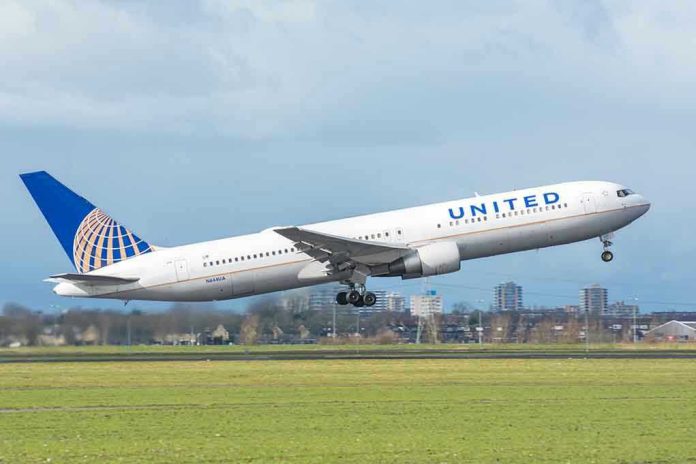
- United Airlines Flight 1980, a Boeing 737-800 from San Francisco to San Diego, reported a drone strike during descent into San Diego International Airport.
- The pilot described the object as small, red, and shiny, and reported the impact at about 3,000 feet during a critical phase of flight.
- No injuries were reported, and early reporting indicated no immediate signs of damage, but the strike highlights a serious gap in airspace discipline.
- Recreational drones typically operate under strict altitude and controlled-airspace limits; 3,000 feet near an active arrival corridor signals an unauthorized operation.
The Moment That Matters: A Strike on Short Final Near San Diego
United Airlines Flight 1980 was doing what thousands of flights do every day: descending into a busy airport, managing speed, altitude, spacing, and instructions from air traffic control. Then came the report no airline wants to make—contact with a drone. The crew described the object as red and shiny, and the impact occurred around 3,000 feet during the approach into San Diego International Airport, around 7 a.m. local time.
United Airlines flight reportedly hits drone at 3,000 feet over San Diegohttps://t.co/6UHJ8JSaU3
— Bodoxstocks (@bodoxstocks) April 29, 2026
That altitude is the detail that should bother you. A drone down low near a park is a nuisance; a drone at 3,000 feet inside a commercial arrival path is a systems problem. It suggests either deliberate rule-breaking or someone so careless they lost track of where their aircraft was and what it was doing. Either way, the result is the same: a commercial cockpit forced to process an unexpected impact at the exact moment pilots have the least time to improvise.
Why 3,000 Feet Changes the Entire Conversation
Drone rules exist for a reason, and the most basic one most people have heard is the recreational ceiling: keep it below about 400 feet unless specifically authorized. At 3,000 feet, this reported drone wasn’t flirting with the line; it blew past it. That height also places the object squarely where airliners routinely fly when they configure for landing—slats, flaps, gear, and steady descent—when the margin for distraction narrows fast.
People who shrug and say “it landed fine” miss how aviation safety really works. Aviation doesn’t measure risk by whether the last flight survived; it measures risk by how close a chain of events came to producing tragedy. A drone strike doesn’t need to punch a hole in a fuselage to be dangerous. It can damage a windshield, dent a leading edge, hit an engine inlet, or create a vibration that forces an immediate change in procedures close to the ground.
From Bird Strikes to Drone Strikes: Hard Objects in the Wrong Place
Bird strikes are familiar hazards, and the industry has decades of data, design choices, and operating playbooks built around them. Drones don’t behave like birds, and they don’t “give” on impact the same way. Batteries, motors, and dense components can turn a small device into a concentrated удар at high closing speed. Early reporting noted no injuries and no immediate signs of damage here, but the point is the exposure: a preventable object got into the funnel where airplanes must fly.
Confirmed collisions between drones and aircraft have historically been rare, but reports of close encounters have grown as drones have spread into everyday life. That pattern should sound familiar to anyone who has watched other areas of public safety: once the tool becomes cheap and common, the outliers multiply. Most drone owners are responsible; the system still has to handle the handful who aren’t, because a single bad decision near an airport can disrupt hundreds of flights and endanger lives.
Enforcement and Detection: The Weak Link Nobody Wants to Admit
Authorities can write rules all day, but enforcement is the hard part. Small drones are difficult to detect reliably in cluttered urban airspace, especially near airports surrounded by buildings, highways, and coastal weather. Even when detection exists, attribution is harder: finding the operator quickly enough to matter. The incident reporting also noted uncertainty about the operator and whether the drone was ever recovered. That’s the frustrating reality—impact can be obvious; accountability often isn’t.
Air traffic control can separate airplanes from airplanes because both sides cooperate: transponders, radar returns, procedures, compliance. A rogue drone doesn’t cooperate. That asymmetry should drive policy toward practical deterrence—serious penalties for proven violations, faster tools for locating operators, and better public understanding of controlled airspace. Conservative common sense applies here: freedom to fly a gadget ends where it puts families on a 737 at risk, and government’s core job is protecting the public in shared spaces.
The Broader Signal: Crowded Skies, More Close Calls, Less Patience
This San Diego strike also lands in a season of heightened attention to near-misses and airspace complexity. Reporting compared it to another recent United incident near John Wayne Airport involving a near-miss with a Black Hawk helicopter that forced a landing to be aborted. The theme isn’t that aviation is suddenly unsafe; the theme is that the margins are being tested by more objects, more operations, and more people who treat rules as optional when nobody is watching.
The unanswered question is the one that keeps safety professionals awake: how many more “no damage reported” events does the system tolerate before one becomes “loss of control,” “engine failure,” or “injury on landing”? The public will focus on the viral audio and the shock value of “we hit a drone.” The harder lesson is quieter: controlled airspace only stays controlled when violations become rare, detectable, and meaningfully punished.
Sources:
United 737 Hit a Red, Shiny Drone at 3000 Feet as It Landed in San Diego
United Airlines Flight San Diego Hits Drone; Viral ATC Clip, Pilot Reaction: Watch