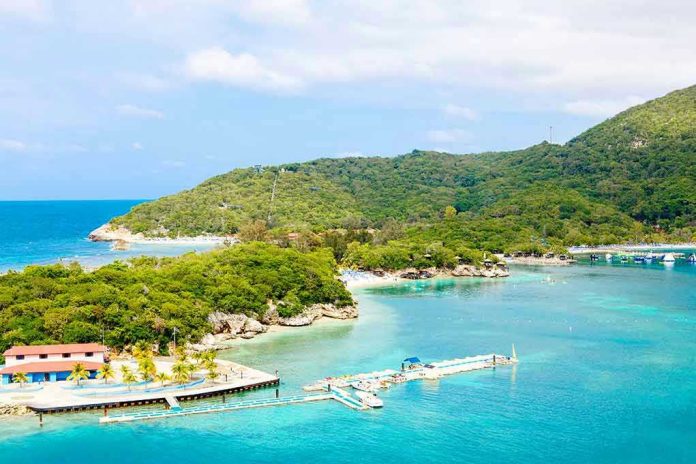
Three murdered women, a resort town built on postcard perfection, and an investigation that dares to whisper “serial killer” without saying it out loud.
Story Snapshot
- Three women in their early 30s were found dead in separate areas of Puerto Vallarta within weeks, all investigated as suspected homicides.
- Authorities admit they are testing a possible single-offender pattern while publicly stopping short of the “serial killer” label.
- Tourism, politics, and fear are shaping how much the public is told—and how fast.
- The case fits a familiar Mexican pattern: early whispers, late forensics, and a tug-of-war between reality and reassurance.
A postcard-perfect city now shadowed by three bodies
Puerto Vallarta sells itself as sunsets, cobblestones, and margaritas; not as a place where three women are dumped dead in out-of-the-way corners of the city within a few short weeks.[1] Authorities say the women were all believed to be between 30 and 35, and each body turned up in a different, relatively secluded area of the city, from a dirt road near Parque Las Palmas to other isolated sites.[1] That combination—same sex, similar age band, separate dump locations—triggered the question detectives hate and tourists fear: is someone hunting?
Local investigators have confirmed they are reviewing whether a single suspect could be responsible or whether the similarities are coincidental.[1] They have opened the files under homicide and femicide protocols after at least one victim reportedly showed clear signs of violence.[1] Forensic teams are comparing evidence, camera footage, and police reports from each scene to see if the same unseen hand threads through all three cases.[1] That is not social-media hysteria; that is how professionals test a serial-offender hypothesis without jumping to conclusions.
What investigators see that the headlines do not
Detectives do not call someone a serial killer because three deaths feel eerie. They work patterns: victimology, method, timing, and geography. Here, they have three women, roughly the same age range, all found partially undressed and initially unidentified, with no relatives or acquaintances stepping forward right away.[1][2] Authorities are also exploring whether the victims might have been killed elsewhere and transported before being abandoned around Puerto Vallarta, which would explain the spread of locations while preserving a single-offender theory.[1] That kind of transport-and-dump behavior shows up repeatedly in known serial cases in Mexico.[2]
The challenge is that the public record is thin where it matters most. The reporting confirms forensic review but gives no detail on DNA matches, wound-pattern comparisons, ballistics, or synchronized time-of-death estimates.[1][2] Without that, ordinary readers get the drama of “possible serial killer” but none of the lab work that either proves or buries the narrative. From a common-sense, conservative standpoint, that should provoke caution: serious accusations demand serious evidence, not just demographic coincidence and rumor.
Silence, tourism, and the politics of calling it “serial”
Authorities have been explicit about one thing: they have not formally labeled these killings as serial homicides and say the investigation is in an early stage.[1] That restraint fits a wider pattern seen in other Mexican serial cases, where officials sometimes downplay or delay the label because of pressure to protect a city’s image and avoid panic.[2] Puerto Vallarta’s economy leans heavily on American and Canadian tourism; every headline that combines “serial killer” with “beach destination” lands like a body blow on that brand.[2]
This is where politics collides with public safety. If officials talk too openly, they risk spooking visitors and inviting national scrutiny. If they speak too cautiously, locals and tourists may feel misled—or assume the worst anyway. Prior cases in Mexico, from the arrested “Little Old Lady Killer” Juana Barraza to high-profile suspects hoarding victims’ bones in Mexico City, show how long authorities sometimes wait before admitting they have a pattern on their hands.[2][3] That history understandably makes residents skeptical when they hear, “We are investigating, but nothing is confirmed.”
Serial-killer narrative or three unconnected tragedies?
The uncomfortable truth is that both possibilities remain open. On one side, similarities in age, sex, state of dress, and disposal in out-of-the-way locations justify serious scrutiny.[1][2] On the other, investigators themselves acknowledge that the parallels might be coincidental and that no single-offender conclusion exists yet.[1] No suspect has been named, no arrest made, and no public description of a vehicle, weapon, or signature behavior has surfaced. For now, the “serial killer in paradise” narrative rests more on early pattern recognition than on hard attribution.
Report: Police in Puerto Vallarta investigating whether a serial killer is responsible for the deaths of 3 women found in less than 2 weeks https://t.co/Div6SWIOMm
— SIAdvance (@siadvance) May 26, 2026
For anyone who cares about both justice and basic order, the path forward should be clear. Authorities need to finish the unglamorous work: full autopsies, scene-to-scene comparisons of trace and biological evidence, reconstruction of each woman’s last known movements, and a search for other unsolved cases that match the same victim profile and disposal style.[1][2] Citizens and visitors should demand transparency about results, not hashtags. Real security comes from competent investigation and honest communication, not from either denial or sensationalism.
Sources:
[1] Web – Puerto Vallarta authorities probe link between murders of 3 women
[2] Web – Case of serial killer demonstrates Mexico’s weakness in crime …
[3] Web – Suspected Serial Killer Detained in Mexico – Banderas News