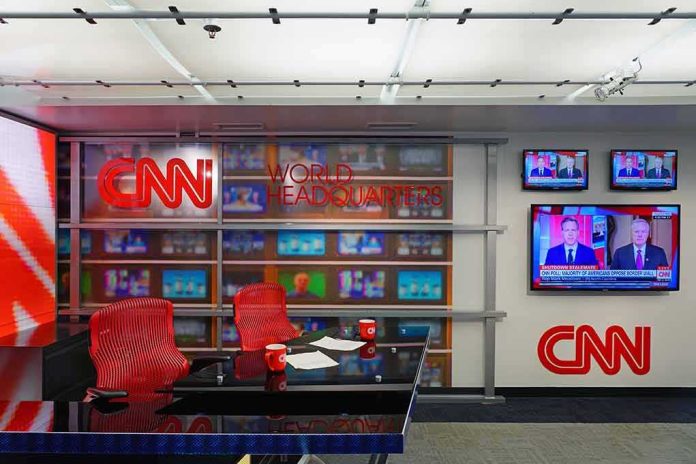
President Trump agreed to a future interview with Jake Tapper, saying he wants CNN to “go on a normal path,” signaling a direct test of the network’s bias narrative.
Story Highlights
- Trump agreed to speak with Jake Tapper in a future interview, aiming to push CNN toward “a normal path”.
- Jake Tapper has admitted that media bias can be seen at times in campaign coverage.
- Tapper has pushed back on Trump’s claims before, including polling disputes and “treason” rhetoric.
- No official transcript or press release confirms the phone call details yet, leaving documentation gaps.
Trump Seeks a Reset With CNN Through a Tapper Interview
President Trump agreed to a future interview with Jake Tapper and framed the move as part of an effort to nudge CNN back to “a normal path” in its coverage. The reported pledge came during a phone call described in media coverage. The interview has not yet happened, and no official transcript has been released. The step signals a willingness to confront critics and take the case directly to a network many conservatives say leaned left for years.
Trump’s push follows years of sharp clashes with CNN. In 2016, Jake Tapper pressed Trump hard over comments about a federal judge’s heritage, marking an early flashpoint in their public confrontations. Since then, Trump’s base has viewed CNN as unfair, while CNN personalities often defend their reporting. This history sets a tough stage, but a face-to-face exchange could give millions a clear look at both sides, without filters or spin.
Tapper’s Mixed Record on Bias and His Pushback on Trump’s Claims
Jake Tapper has acknowledged that at times “you can see a sort of media bias” in campaign coverage, a notable admission from a leading CNN anchor. At the same time, he has been quick to rebut claims he sees as false. Tapper flatly rejected Trump’s charge that CNN misreported Republican approval numbers, saying “nope,” and pointing to data that showed a decline from 48 percent to 35 percent. Expect that posture to shape any upcoming interview.
Tapper also answered Trump’s hard language about “treason” by defending the press’s role. He argued that reporting on sensitive national security matters, including war-related news, is the job of newsrooms and not disloyalty. In March 2026, Tapper said coverage of fallen United States service members in the Iran war is “the news,” pushing back on administration complaints. That stance shows he will not soften reporting to please elected leaders, even as he admits bias can creep in.
What We Know, What We Do Not, and Why It Matters to Viewers
Media reports say Trump agreed to an interview and framed it as urging CNN to act more like a straight news outlet. There is no official CNN announcement or released transcript of the call, which leaves a documentation gap for now. The interview has not happened yet, so there is no record to judge whether CNN’s tone or approach will shift. Until those records appear, the “normal path” goal remains a statement of intent.
President Trump ended his interview with Jake Tapper by saying he wants to see CNN return to a “normal path.”
Tapper didn’t like the remark one bit.
TAPPER: “Well, I know you don’t want to talk about any other issues out of respect for Lindsey Graham, but we would love to have… pic.twitter.com/Z3XM1ah8qd
— Overton (@overton_news) July 12, 2026
For conservative viewers, a Trump-Tapper interview is a chance to demand fair treatment on air. If Tapper keeps a firm but balanced line, and Trump lays out clear facts, the audience can judge with their own eyes. If the network slips into loaded framing, that will be obvious too. The goal should be simple: ask tough questions of everyone, present facts cleanly, and let Americans decide. Transparency and equal standards earn trust; double standards lose it.
Sources:
mediaite.com, siriusxm.com, cnnpressroom.blogs.cnn.com, thehill.com, cnn.com