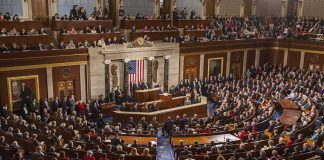

House Republicans passed the SAVE America Act to require proof of citizenship and photo ID for federal voting, and Democrats admit it could be “hard for any Democrat to win” if it becomes law.
Story Highlights
- House passed the SAVE America Act 218-213; the bill now faces a Senate blockade.
- Bill requires documentary proof of citizenship to register for federal elections.
- Bill adds a national photo ID requirement to vote; GOP cites broad public support.
- Democrats and allied groups call the bill voter suppression and vow to stop it.
House Vote Sets Up Senate Showdown Over Election Rules
House leaders approved the SAVE America Act on February 11 by a 218 to 213 vote, sending a sweeping election bill to the Senate amid fierce party-line debate. The legislation would tighten federal voter registration by requiring documentary proof that an applicant is a United States citizen. Republicans say these steps align with common sense and reflect what most voters already expect at the polls. Democrats frame the package as a barrier to voting and are united against it in the Senate.
Senate Republicans report around 50 votes for the bill but lack the support needed to break a filibuster, leaving the measure stalled for now. Backers argue the Senate should hold a vote and let the public see where each member stands on election integrity. Opponents continue to brand the bill as “suppression,” promising legal and political fights if it advances. The next steps will hinge on floor time, pressure from voters, and whether any Democrats cross the aisle.
What the Bill Actually Does to Verify Citizenship and Identity
The SAVE America Act amends federal law to require documentary proof of United States citizenship when registering to vote in federal elections. Acceptable documents include items like a United States passport or other specified records under the bill text. The measure also requires voters to present an eligible photo identification document before voting, creating a uniform national floor for identification at the polls. Supporters cite polling that 83 percent of Americans back photo ID, including strong backing across party and demographic lines.
Republicans argue that proving citizenship and showing photo ID are basic protections that uphold one person, one vote. They note many states already require some form of identification and that a clear national standard can boost trust in close races. County officials and administrators would need to adjust systems to verify documents and process registrations under the updated rules. Backers say the tradeoff is worth it if it prevents illegal voting and deters errors in the rolls.
Why Democrats and Activist Groups Are Trying to Block It
Democrats and civil rights groups say there is no evidence of widespread noncitizen voting and warn the documentation rule could burden eligible voters who lack ready access to passports or birth certificates. They label the bill discriminatory and argue it will make online and mail registration much harder or impossible in many cases. They also call the photo ID provision “Jim Crow 2.0,” claiming it will chill turnout among low-income and minority voters. These groups plan court challenges if the bill passes the Senate.
Conservative lawmakers counter that the bill’s focus is narrow and targeted: prove citizenship to register and show photo ID to vote, the same as many everyday tasks. They argue that confidence in elections is a civil right too, and that clear standards protect legal voters by keeping ballots secure. Republicans also stress that the measure does not change who can vote; it enforces long-standing citizenship rules with tools that are easy to understand and apply.
The Political Stakes: Trust, Turnout, and 2026 Midterms
Republicans say a secure system encourages turnout by assuring voters their ballot counts, while Democrats warn new paperwork will discourage participation. Analysts note that thirty-plus states already use some form of identification at the polls, though not all require a photo ID. If the Senate advances the bill, states would need time to update training, forms, and voter outreach before the 2026 elections. Any delays could feed confusion, so clear guidance would be critical for local offices.
For conservatives, the core issue is simple: only citizens should decide America’s future, and the system should prove it. The House has acted. The Senate now faces a choice between tighter rules that most voters support and the status quo that leaves gaps in verification. If senators block a vote, the public will still judge in November. Election integrity, once again, will be on the ballot.
Sources:
redstate.com, politico.com, roy.house.gov, majorityleader.gov, naco.org, northjersey.com, en.wikipedia.org, michwomen.com, congress.gov, docs.house.gov, aclu.org, brennancenter.org, facebook.com, bipartisanpolicy.org, academic.oup.com