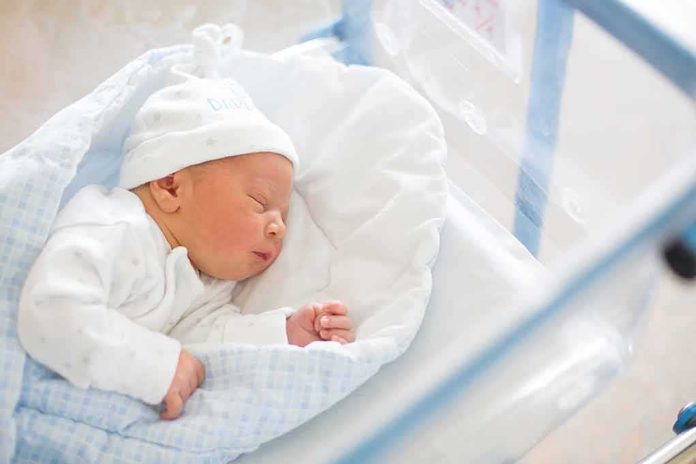
A new baby in the vice president’s family is making history and highlighting the Trump team’s push for strong, traditional families.
Story Snapshot
- Vice President JD Vance and his wife Usha welcomed their fourth child, a son named Alec Neel Vance.
- The baby was born at Walter Reed National Military Medical Center, and both mother and child are reported happy and healthy.
- Alec’s arrival is the first birth to a sitting vice president in more than 150 years, since Schuyler Colfax in 1870.
- The growing Vance family fits a wider Trump-era trend of openly embracing big families and pro-birth, pro-life values.
A Historic Birth in the Vice President’s Family
Vice President JD Vance announced on X that his wife, second lady Usha Vance, gave birth Sunday morning to their fourth child, a baby boy named Alec Neel Vance. In that post, he said Usha and the baby are “happy and healthy” and shared that their older children are excited to meet their new little brother. The couple thanked the doctors and staff at Walter Reed National Military Medical Center in Maryland and the White House Medical Unit for their care during the birth.
Multiple outlets confirmed the details of Alec’s arrival, including the baby’s name, the Sunday morning timing, and the Walter Reed location. Reports note that Alec joins siblings Ewan, Vivek, and Mirabel, giving the Vance family four children. This is not just personal news. According to Associated Press reporting cited by major networks, Alec’s birth makes JD Vance the first sitting vice president to have a child while in office in more than 150 years, going back to Vice President Schuyler Colfax in 1870.
Trump-Era Focus on Family and Children
The Vance family’s new baby fits into a larger pattern in the Trump administration, where senior figures are openly building large families and talking about it. Coverage has pointed to a small “baby boom” among top Trump staff, including press secretary Karoline Leavitt and aide Katie Miller, who also welcomed children while serving in high-profile roles. That wave reflects a political culture that treats marriage, children, and faith as public goods, not private quirks, and encourages Americans to see big families as something to celebrate.
Commentary from critics frames this trend as “pronatalism,” meaning a push to raise birth rates, especially among conservatives. But research shows that voters often favor leaders who are parents, especially those with more than one child. Other studies find that major political wins, like Donald Trump’s earlier victory, were followed by more births in Republican areas. For many readers, those facts simply confirm what common sense already says: leaders who live out family values at home are more believable when they talk about protecting families in policy.
Media Reactions and the Question of Priorities
Most mainstream reports on Alec’s birth stuck to the basics and noted the historic nature of the moment. Yet some media voices tried to pull the story toward criticism, tying it to past coverage about alleged “special treatment” for the Vance family, including claims that Secret Service agents were frustrated by personal requests such as a proposed helicopter trip for a golf lesson. Those pieces do not challenge any facts about the baby’s birth; instead, they aim to shape how people feel about the family’s use of government resources.
For many conservative readers, that media reflex is familiar. When a right-leaning leader has good news that highlights faith, marriage, or children, some outlets quickly look for a negative angle, even if it is only loosely related. At the same time, online critics have tried to argue that a busy vice president cannot be an involved father, suggesting that public service and family life must clash. The Vances’ choice to welcome a fourth child while serving pushes back on that idea and sends a different message: it is possible to lead the country and still put family at the center of life.
What This Moment Means for Conservative Families
Alec Neel Vance’s birth lands in a country still wrestling with low birth rates, high costs of living, and years of cultural pressure against traditional family life. Studies show voters are more drawn to candidates who have children and that family status can influence election outcomes. Other research finds that new parents often feel overwhelmed and less likely to vote, especially when a birth falls near an election day. Those patterns matter to conservatives, who see strong families and civic duty as linked responsibilities.
For Trump supporters watching from home, the picture is simple. The second family is living out many of the values they talk about: faith in marriage, openness to life, and gratitude toward the military doctors who helped deliver their child. There are no policy changes tied to this birth yet. Still, this moment underlines why many conservatives back the Trump–Vance ticket: they want leaders who treat children as blessings, not burdens, and who understand firsthand why protecting family budgets, religious liberty, and the next generation truly matters.
Sources:
cbsnews.com, theguardian.com, abcnews.com, reuters.com, nbcnews.com, people.com, straitstimes.com, youtube.com, en.wikipedia.org, theatlantic.com, econweb.ucsd.edu, home.uni-leipzig.de, tandfonline.com