

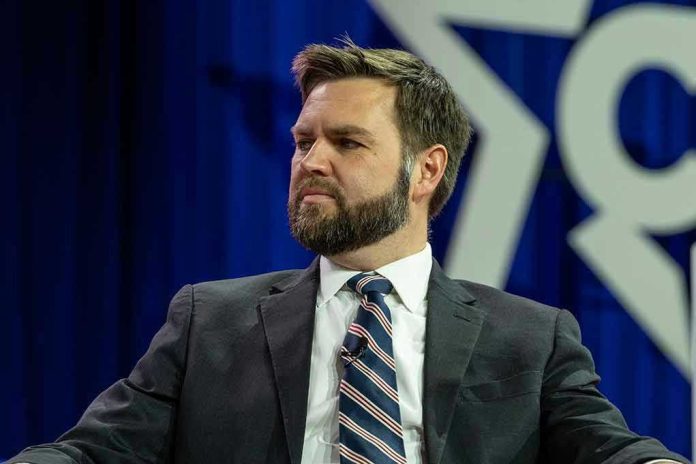
Vice President JD Vance just told America why Republicans got crushed in the 2026 midterms — and President Trump admitted his number two is “largely” right.
Quick Take
- Vance says the Iran war, not turnout or messaging, cost Republicans the House and Senate.
- Trump called Vance’s explanation “largely true” but says he would strike Iran again.
- Senator Ted Cruz points instead to gas, grocery, and insurance prices as the real culprit.
- The split exposes an early and public fight over who leads the GOP into 2028.
Vance Says the War Cost Republicans Congress
Vice President Vance posted on X on November 4, 2026, laying blame squarely on the Iran conflict for the Republican midterm wipeout. “The reason we lost is the war,” he wrote. “The president himself said so last night.” Democrats regained control of both the House and Senate in the 2026 midterms, according to CBS News and ABC News reporting on the results.
Vance said he talked to pollsters after the loss. He claimed many people who voted for Trump and Vance in 2024 switched to Democrats this year. He also framed the stakes in blunt terms, writing that anyone who still thinks the war was worth it has to accept losing the Senate for six years as the price.
Trump Backs Up Vance, But Won’t Back Down
President Trump did not dismiss his vice president’s diagnosis. He told reporters Vance’s explanation was “largely true,” while insisting the strike on Iran was necessary and that he would order it again. That combination puts Trump in an odd spot: agreeing the war hurt Republicans at the ballot box while refusing to treat it as a mistake. Analysts say that tension could make a full internal review of what went wrong harder to pull off.
Cruz Points to a Different Culprit: Your Grocery Bill
Senator Ted Cruz offered a competing explanation on his podcast, and he backed it with a number. Cruz said 30.6 percent of voters named cost of living, energy, and groceries as their top issue, more than any other concern. He pointed to rising gas prices, home and car repossessions, and record weekly plasma donations as signs families were financially stretched thin.
Cruz did not let the war off the hook entirely. He said Trump’s tariffs and the Iran conflict made the affordability problem worse, pushing frustrated voters toward Democrats. But his main message to the party was about economics, not foreign policy. “We need to listen and respond,” Cruz said. “We need to champion economic policies that make a real difference in working people’s lives”.
A Party Looking Toward 2028
Both men are widely seen as possible 2028 presidential contenders, and that context shapes how their explanations are being received. Coverage from the BBC noted that Vance’s public break from Trump’s war is rare for a sitting vice president and reads as an early move in the race to lead the party after Trump. Cruz, meanwhile, is fighting his own battle back home after what reporting called a “blue tsunami” that turned even Texas competitive.
Pete Hegseth is beginning to look like Donald Trump's sacrificial offering following the Republican midterm catastrophe. With JD Vance openly blaming the Iran war for the defeat, the political temptation is obvious: dismiss the Defence Secretary, blame the execution of the war… pic.twitter.com/CwimUJFpCr
— Mark Lambert (@sitsio) November 6, 2026
Neither man has released the underlying data behind his claim. Vance has not named his pollsters or shown the numbers behind his claim that 2024 voters flipped to Democrats. Cruz’s 30.6 percent figure comes from his own podcast commentary rather than a published, independently reviewed poll. Voters deserve to see the full picture before Republicans settle on one explanation.
History says both men could be partly right. Wartime elections have hurt incumbent parties before — researchers estimate the Iraq War cost Republicans roughly 31 percent of the two-party vote in 2004, far more than Vietnam-era losses in 1952 and 1968. Political scientists also generally treat midterms as referendums on the president’s overall record, including the economy, not single-issue verdicts. Iran and inflation likely both played a role.
For conservative voters frustrated by years of rising prices and overseas entanglements, the debate matters beyond 2028 ambition. If Republicans misdiagnose why they lost Congress, they risk repeating the same mistakes in 2028. Getting the real answer — whether it’s war fatigue, kitchen-table costs, or both — will decide whether the party can win back the voters it just lost.
Sources:
facebook.com, bbc.com, politico.com, wsj.com, people.com, cbc.ca, afp.com, podcasts.apple.com, cleveland.com, ca.news.yahoo.com, independent.co.uk, foxnews.com, columbia.edu, presidency.ucsb.edu, news.gallup.com