A new State Department report warns that a Cuba-linked activist network is now preparing protests at U.S. military bases and Immigration and Customs Enforcement offices on American soil.
Story Snapshot
- The State Department cites a publicly posted protest plan targeting U.S. bases, Immigration and Customs Enforcement sites, and federal buildings.
- Officials link the National Network on Cuba to a sanctioned Cuban government entity at the center of a global anti-American influence network.
- Justice Department and Treasury Department investigators are reviewing more than 100 U.S. nonprofits for possible coordination with Cuban officials.
- The National Network on Cuba denies the accusations, calling the report’s claims about terrorism and subversion “untrue.”
State Department flags Cuba-linked protest plan on U.S. soil
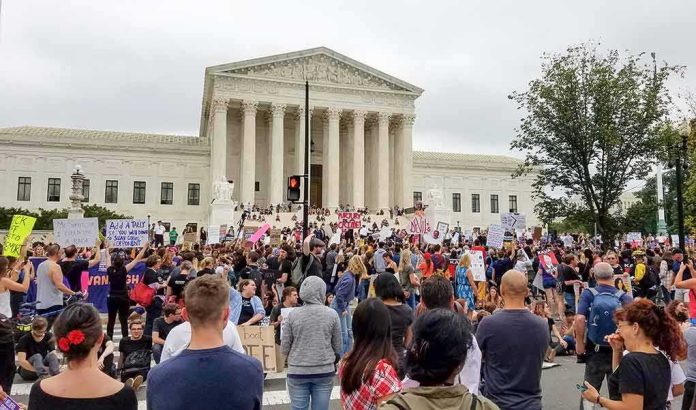
The new State Department report says Cuba has spent years building an activist network inside the United States that can be turned against American policy when needed. As one example, the report points to a “National Rapid Response Plan” posted in June by the National Network on Cuba, a coalition of more than 60 U.S.-based groups. That plan urges protests at U.S. military bases, Immigration and Customs Enforcement offices, and federal buildings if Washington moves toward military action against the Cuban regime. The document calls for a 24-hour rapid mobilization, with activists coordinating messaging and street actions across the country.
According to an investigation cited in the coverage, the National Network on Cuba developed this rapid response strategy to make any U.S. military intervention in Cuba “politically and materially costly.” The plan directs affiliated organizations to target Immigration and Customs Enforcement sites, U.S. bases, and key federal buildings, while pushing unified slogans and media outreach. For many conservative readers, that means foreign-linked activists are not just chanting on college campuses; they are openly planning to swarm the very institutions that protect our borders and house our troops. The report treats this plan as a case study of how Cuba-linked networks can quickly pressure U.S. decision-makers.
Cuban government ties: ICAP and the National Network on Cuba
The State Department does not treat the National Network on Cuba as an isolated protest group. Instead, it links the coalition to the Cuban Institute of Friendship with the Peoples, known as ICAP, which it calls a core Cuban government influence arm. ICAP is a state entity that the Trump administration sanctioned in June 2026 for supporting Cuban intelligence activities and subversive anti-American operations. The department’s fact sheet describes ICAP as part of the regime’s “violent revolutionary network,” responsible for cultivating more than two thousand solidarity organizations in over 150 countries.
The report argues that ICAP’s relationship with the National Network on Cuba makes the U.S.-based coalition a pathway for Cuban government outreach into American nonprofits. It highlights six organizations inside this broader network, including Code Pink, The People’s Forum, and the National Lawyers Guild. One section notes that a quarter of Code Pink’s funding since 2017 has come from entities tied to Neville Roy Singham, a funder also linked in congressional work to foreign regimes hostile to the United States. Another section points out that People’s Forum leader Manolo de los Santos has traveled to Cuba for years and appears often in official regime media. The National Lawyers Guild, for its part, adopted a 2026 resolution promising to work closely with the National Network on Cuba and the wider Cuba solidarity movement.
Investigations and limits of the current evidence
Alongside the State Department report, Fox News Digital and local outlets say Justice Department and Treasury Department officials are investigating about 145 nonprofits and activist groups for alleged coordination with Cuban officials. These probes reportedly look at lobbying, fundraising, messaging, and organized delegations that may serve a foreign influence campaign rather than independent activism. For conservatives who watched foreign regimes exploit protests in recent years, this fits a broader pattern: hostile governments using American groups to push their agenda and weaken U.S. institutions.
At the same time, the government’s own documents admit some limits. The report says it is not yet clear exactly how deeply each highlighted organization took part in the rapid response plan. It does not present direct orders from Cuban intelligence officers for specific protests at bases or Immigration and Customs Enforcement facilities, nor does it release detailed money trails from Havana to U.S. street actions. That gap matters. It means officials are pointing to overlapping travel, funding, and partnerships as warning signs, not yet as courtroom-ready proof of operational control. The investigations will have to fill in those missing links if prosecutors want charges that stick.
How activists and media allies are pushing back
Leaders in the National Network on Cuba strongly reject the State Department’s framing. In a published statement, they call the claims that Cuba supports terrorism “untrue” and say Cuba has an “unequivocal rejection of terrorism.” They describe their work as solidarity with the Cuban people and opposition to U.S. sanctions, not foreign-directed subversion. Supporters frame the National Rapid Response Plan as a legitimate anti-war strategy, aimed at making a U.S. attack on Cuba politically expensive through coordinated protest rather than violence.
State Department Report: Cuba-Linked Activists Now Planning Protests at US Bases, ICE Siteshttps://t.co/nHk22kKKib
— RedState (@RedState) July 20, 2026
Major media and academic voices are also skeptical. Coverage notes that some outlets and scholars see the report as part of a broader Trump administration push to force regime change in Havana. They argue that officials are blurring the line between foreign influence and ordinary dissent, and worry that branding left-wing activism as terrorism could be used to chill speech and protest. Cuban state media and aligned platforms go further, calling the report propaganda and insisting that Washington is inventing threats to justify more pressure on the island. That counter-narrative, repeated often, aims to muddy the waters and make it harder for Americans to sort real foreign interference from domestic political spin.
Sources:
redstate.com, foxnews.com, en.cibercuba.com, state.gov, raceandequality.org, mltoday.com, prokerala.com, reuters.com, adncuba.com, whitehouse.gov