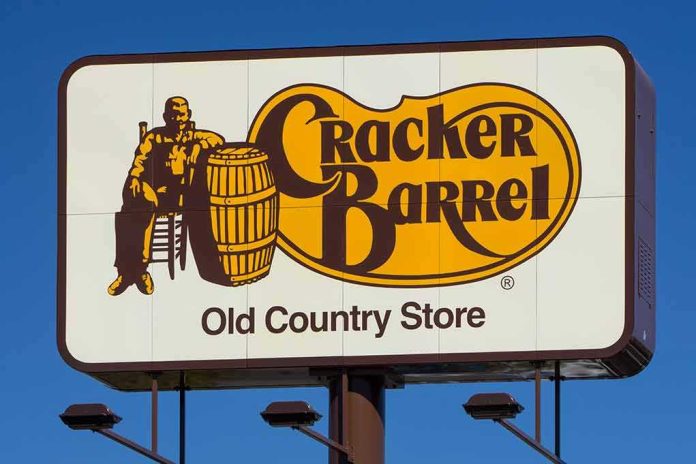
Cracker Barrel’s failed attempt to “modernize” its homespun image has now claimed its chief executive, turning a family restaurant chain into the latest symbol of how out-of-touch leadership can feel to everyday Americans.
Story Snapshot
- Cracker Barrel CEO Julie Felss Masino will step down after a harsh backlash to a $700 million modernization push.
- The rebrand removed the beloved “Old Timer” logo and vintage décor, sparking anger from loyal customers and criticism from President Trump.
- After stock losses and social media outrage, the company quickly reversed course and restored its traditional look.
- Shareholders later kept Masino but ousted a diversity-focused director, then the board moved to replace her with industry veteran David Deno.
CEO Exit Tied to Rebrand Backlash
Cracker Barrel said Chief Executive Officer Julie Felss Masino will step down this summer after less than three years in the job, ending a rocky tenure defined by a controversial redesign of the chain’s country-themed restaurants. The company announced that longtime restaurant executive David Deno, the former head of Bloomin’ Brands, will take over as chief executive on August 10. Masino’s departure follows a year of turmoil in which her modernization push drew fierce criticism, political attention, and questions about the company’s direction.
Masino’s overhaul aimed to update Cracker Barrel’s look and operations across more than 660 locations, backed by roughly $700 million in planned spending on remodels, menu changes, and brand refreshes. As part of that plan, the chain rolled out a new, simplified logo that dropped the familiar image of an older man in overalls leaning on a barrel and removed the words “Old Country Store.” The redesign also stripped many vintage trinkets and nostalgic décor items from dining rooms that fans saw as part of the restaurant’s identity.
Modernization Push Meets Public Outrage
When the new logo appeared in August 2025, the public reaction was swift and brutal, especially online. Longtime customers accused Cracker Barrel of walking away from its roots and mocked the logo as generic and “woke,” turning what was meant as a business refresh into a cultural flashpoint. Critics framed the changes as part of a broader elite push to erase traditional symbols, and the company’s attempt to declutter dining rooms was seen by many as stripping away the charm that made the brand feel like a slice of old America.
President Trump weighed in as well, attacking the redesign and warning Masino not to “mess with” a beloved piece of heartland culture. His comments helped move the fight from restaurant trade circles into national politics, amplifying anger among conservative customers who already felt big companies were pushing modern tastes on people who never asked for them. At the same time, some progressives cheered modernization but still shared a deeper worry: a sense that corporate leaders chase trends while ignoring the everyday financial and social struggles of workers and diners.
Rapid Rollback and Shareholder Flashpoint
Facing boycotts and viral mockery, Cracker Barrel reversed course within about a week, restoring the old logo and stopping store renovations. The company posted a message telling guests “Your Old Country Store is Here to Stay,” admitting the new design “missed the mark” with loyal customers. Masino later said she felt “fired by America,” explaining that she believed she was revitalizing the brand but found out that many people saw the changes as an attack on something they loved and trusted.
The backlash carried real financial pain. One report described the logo rollout and remodeling plan as a $100 million “gaffe,” tying the controversy to sharp drops in store traffic and a single-day stock plunge of roughly $94 per share. Activist investor Sardar Biglari pledged a proxy fight to remove Masino, sharpening the sense that leadership had lost touch with both diners and owners. Yet when shareholders finally voted, about 75 percent supported keeping her as chief executive, while diversity marketing executive Gilbert Dávila was pushed off the board in what looked like a direct response to the rebrand crisis.
Heritage Brands, Culture Wars, and Public Trust
Her struggle reflects a bigger trend in American business: older, “heritage” brands trying to chase new, younger customers without alienating the people who kept them alive for decades. For Cracker Barrel, the logo and décor were not just design choices, but identity markers for families who grew up stopping at the chain on long drives and saw its old-time look as a rare escape from modern life. Changing those symbols, especially in a rushed way, felt to many like a top-down decision by distant executives rather than a careful response to what customers actually wanted.
Cracker Barrel CEO Julie Masino steps down following criticism from consumers over the restaurant’s "modernization" push.
— Boston Avionics (@bostonavionics) July 27, 2026
Masino’s exit and Deno’s arrival signal that the board still wants some kind of turnaround, but now knows that any future changes will be judged not just on sales, but on whether they respect the brand’s roots. For many Americans watching this story, the lesson goes beyond one restaurant chain. It reinforces a growing belief on both left and right that powerful corporate and political leaders remake institutions to fit their own ideas, then only listen to the public when the backlash threatens their bottom line. In this case, diners forced a reversal—but only after trust took another hit.
Sources:
facebook.com, nypost.com, wsj.com, dailymail.com, finance.yahoo.com, foxbusiness.com, apnews.com, independent.co.uk