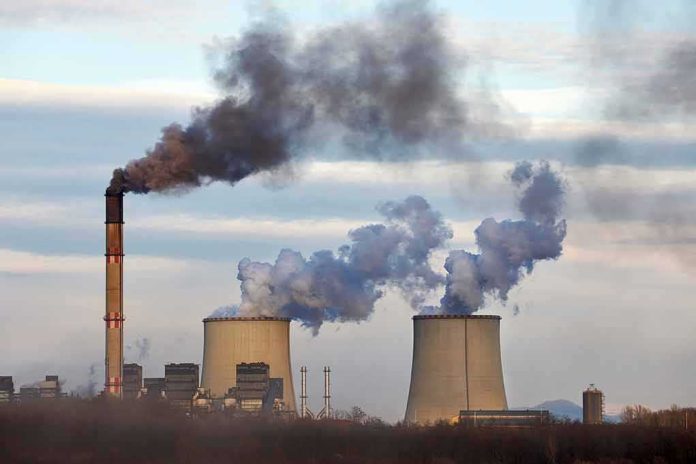
The Environmental Protection Agency moved to erase federal carbon limits for power plants, not tweak them.
Story Snapshot
- EPA proposed repealing all greenhouse-gas standards for fossil-fueled power plants.
- The plan targets rules for both new and existing plants nationwide.
- The administration also revoked the 2009 endangerment finding that underpinned climate rules.
- EPA already finalized repeal of a related mercury-rule update for utility units.
What the EPA actually did, in plain terms
The Environmental Protection Agency proposed to repeal every federal greenhouse-gas standard for coal and gas power plants. The text filed in the Federal Register states the agency’s intent clearly and includes rules for existing plants, not just new builds. This is a wide policy swing, not a line-edit. It signals a reset away from climate mandates and toward agency restraint after the Supreme Court limited sweeping “generation shifting” measures under the Clean Air Act.
The repeal push sits inside a larger legal shift. The administration revoked the 2009 endangerment finding that said greenhouse gases endanger public health and welfare, which served as the legal backbone for climate rules across vehicles, power plants, and more. Removing that foundation narrows the path for future carbon limits. This is not a procedural skirmish; it resets how Washington claims authority to police carbon from the grid.
What stays, what goes, and what it means for plants
EPA’s proposal would cancel carbon standards for fossil-fuel plants across the board, including existing coal steam units. EPA also completed a separate repeal that unwound a Biden-era update to the Mercury and Air Toxics Standards for utility boilers, with the final repeal published in February 2026 and effective in April 2026. Together, these moves reduce near-term federal compliance duties and likely delay some retirements, especially at coal units that run during peak seasons.
The record so far does not contain a full cost-benefit case for the repeal. The filings describe what the agency plans to remove, but they do not quantify how much electricity prices might fall, which jobs could be saved, or what reliability gains would follow. That absence leaves room for both sides to claim the economics. A final regulatory analysis, if issued, will matter for courts and for ratepayers watching bills.
The fight lined up fast — and will move to court
Environmental and health groups argue the rollback will raise pollution and harm public health. Some cite expected increases in mercury and other hazardous pollutants if protections weaken, and they have already sued over related actions. State coalitions have also urged EPA to withdraw the proposal, calling it a sweeping rollback that erases the basis for power-plant limits. These challenges paint a simple picture for the public: less federal control equals more pollution.
The administration frames the move as right-sizing Washington’s reach and restoring affordable, reliable power. That claim fits with American conservative values of limited government, energy independence, and grid stability. The legal posture is bolder: by revoking the endangerment finding, the administration aims to close the door on broad climate mandates at the source, rather than argue plant-by-plant details. That approach invites fierce litigation but offers a clearer regulatory map for operators if it stands.
The policy whiplash problem the grid cannot ignore
Power-plant carbon rules have swung with each administration for a decade. The Clean Power Plan never took effect. The Affordable Clean Energy rule came and went. The Supreme Court narrowed the Environmental Protection Agency’s tools in West Virginia v. EPA. Every swing forces utilities to hedge, which wastes capital and clouds retire-or-refuel choices. A stable rulebook matters more than a perfect one when planning thirty-year assets and multi-state grids.
🚨BREAKING: Trump’s EPA is about to put the final nail in the coffin— killing federal power plant carbon limits and trying to make sure no future administration can ever bring them back.
The agency is expected to announce Monday that it will repeal limits on greenhouse gases… pic.twitter.com/5SSwwPPDr8
— Reich-Wing Watch (@ReichWingWatch) September 14, 2026
Here is the practical filter: Will this repeal lower near-term costs and shore up reliability without offloading health risks onto communities? The current record proves the repeal intent and the legal gambit, but not the economic payoff. If the administration produces a rigorous analysis showing avoided capital costs, fewer emergency outages, and stable rates, the argument strengthens. If not, opponents will own the narrative on health harms and lost momentum on emissions cuts.
Sources:
washingtonpost.com, nrdc.org, theguardian.com, phelps.com, federalregister.gov