

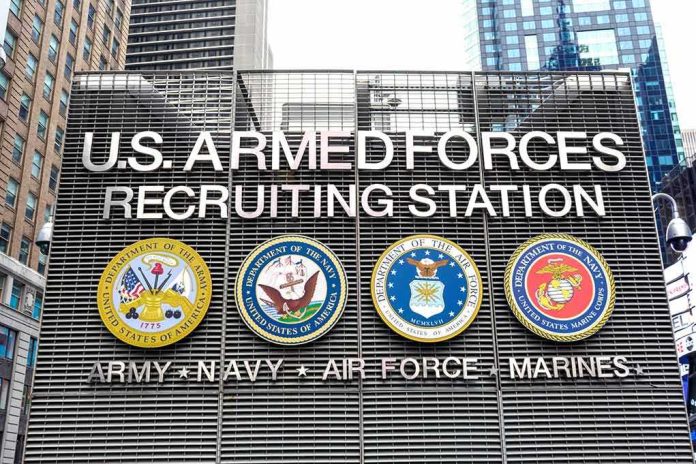
A former Army recruiter pleaded guilty to bank fraud and aggravated identity theft after using seven recruits’ identities to seek about $266,000 in loans and credit cards.
Story Snapshot
- Former Sergeant First Class Jane Crosby admitted bank fraud and aggravated identity theft in Newark federal court.
- Prosecutors said she used seven recruits’ personal data to try to obtain about $266,000 from a credit union.
- The plea ties the identity theft count to one named victim; the bank fraud count covers all seven.
- The agreement includes nearly $18,150 in restitution to the credit union and carries steep penalties.
Guilty Plea and Charges in Newark Federal Court
Federal prosecutors said Jane Crosby pleaded guilty in Newark to one count of bank fraud and one count of aggravated identity theft. The court accepted the plea, which resolved charges that she misused recruits’ personal information to open accounts and apply for loans and credit cards. The government said the scheme sought about $266,000 in total. The aggravated identity theft plea is tied to one identified victim, while the bank fraud plea covers all seven recruits named in the case.
Prosecutors said Crosby used access gained through her recruiter role to collect personal data, then used that data to open Navy Federal Credit Union accounts, deposit fraudulent checks, and seek credit. The plea deal includes restitution of nearly $18,150 to the credit union, reflecting identified losses. Reporting said the bank fraud charge carries up to 30 years in prison, and the identity theft charge adds a mandatory two-year term. A judge will set the sentence after reviewing the record.
How Insider-Access Fraud Exploits Trust
This case highlights a growing pattern of insider-access fraud. People with legitimate access to sensitive data use it to unlock money flows they should not control. Federal cases often pair bank fraud with aggravated identity theft, since the conduct targets both a financial institution and a real person’s identity. Prior federal cases show similar structures when insiders at banks or trusted roles use their access for fraud, drawing the same charge mix from prosecutors.
Insider-access fraud cuts across politics because it lives in the space where trust should be strongest. Families expect recruiters, bank staff, and public servants to protect private information. When that trust fails, people feel exposed and powerless. The Crosby case shows how one insider can turn routine identity checks into a path for theft. It also shows why banks and agencies build layers of verification that can slow service but aim to keep accounts safe.
What This Means for Recruits, Banks, and the Public
Recruits and job seekers often hand over their most sensitive data. They do it to move forward in life. This case is a reminder to ask how data is stored, who can see it, and how long it is kept. Individuals can freeze credit, use account alerts, and check credit reports after sharing data with any organization. These steps do not fix broken systems, but they can cut the damage window if a trusted insider goes rogue.
Jane Crosby, 35, of Jersey City, N.J., is charged with bank fraud for using seven recruit names to apply for credit union loans and lines of credit. https://t.co/LRJhTLgsno
— Military.com (@Militarydotcom) August 7, 2026
Banks and agencies face a hard trade-off. They must serve people fast, yet they must prevent fraud by insiders and outsiders. Prosecutors said the credit union here faced both fake deposits and loan applications. That mix is common in modern fraud rings, which can move stolen identities across many institutions. Stronger audits, access logs, and real-time anomaly checks can help. But these tools need funding, skill, and oversight that the public can verify.
Sources:
military.com, stripes.com, secretservice.gov