

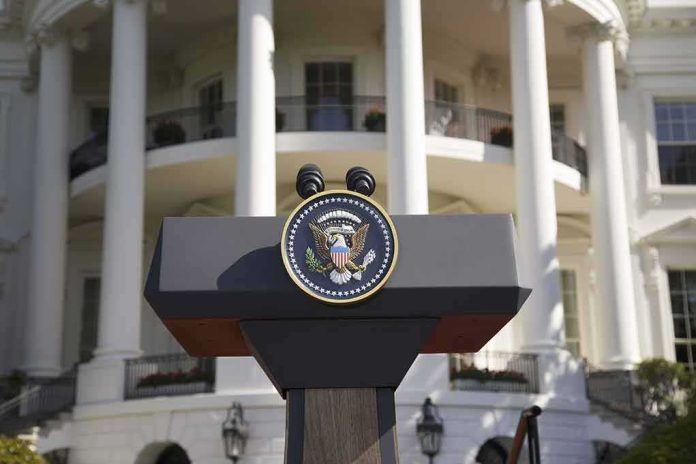
President Trump removed White House Press Secretary Katie Zacharia after only five days, following a rocky debut that raised questions about readiness and fit.
Story Highlights
- Katie Zacharia exited as press secretary after five days on the job.
- Her first briefing lasted 14 minutes before she urged reporters to ask Trump directly.
- Trump publicly suggested she reconsider the role before her departure.
- Her tenure ranks among the shortest for any modern press secretary.
What Happened And When
White House officials said Friday that Katie Zacharia would be moved out as press secretary after her first week. Reports described the decision as final by the end of the day. News of the shift followed a brief and strained first briefing, held earlier in the week. President Trump had praised Zacharia when appointing her, but by Friday he indicated she should rethink the position. Media outlets reported her removal soon after those remarks became public.
Associated Press coverage of her debut noted the session ran only 14 minutes. During it, Zacharia directed reporters to ask questions of President Trump instead of pressing through the briefing. That move signaled an unusual approach to a role built on extended exchanges with the press. The moment drew swift attention, given how the press secretary sets tone and pace for daily messaging. The short briefing became the snapshot that framed the week.
Why The Role Is Hard To Fill
The press secretary must speak for the president, manage the press room, and coordinate messages across agencies. Those duties are demanding even for veterans. Historical data show dozens have served since the post was created, with modern presidents cycling through several during their terms. The job rewards discipline and quick command of facts, because each briefing shapes public understanding of policy and priorities.
Turnover itself is not unusual across administrations. Presidents Bill Clinton and George W. Bush each had multiple press secretaries, and President Barack Obama had three over two terms. Short tenures do occur, though five days stands out as rare. That makes Zacharia’s exit notable in the history of the office, even as the broader pattern shows frequent change in this high-pressure seat.
How Zacharia’s Tenure Ranks
Local and national outlets compared the timeline and found Zacharia served five calendar days, from October 12 to October 16, 2026. That duration places her among the briefest holders of the office in modern records. The near-immediate end underscores how quickly a press operation can reset when the fit is not there. It also highlights how early stumbles at the podium can shape perceptions that are hard to reverse.
The New York Times reported that President Trump told reporters he advised Zacharia to reconsider the job. That comment landed just before confirmation of her exit. The sequence suggests a performance and alignment judgment, not a policy change. In fast-moving White House communications, presidents often act to keep the message sharp and the team matched to the moment’s demands.
What Conservatives Should Watch Next
White House messaging matters for policy battles on the border, energy, spending, and protecting constitutional rights. A strong press secretary can amplify wins, defend lawful executive actions, and counter media narratives that undermine conservative priorities. The next pick must command the facts, push back on slanted questions, and keep focus on results for families, public safety, and the economy. Effective briefing room leadership helps the administration cut through noise and keep faith with voters.
Five days. One press briefing. Katie Zacharia is leaving as White House press secretary, officials tell NBC News and CNBC. The exit follows scrutiny of her legal credentials and Trump's suggestion that she reconsider the job. follow @TheRawWire for LIVE updates…
— The Raw Wire 🚨 (@TheRawWire) October 16, 2026
The White House is expected to move quickly on continuity. Recent history shows President Trump values message discipline and loyalty, but also measurable results at the podium. The successor will inherit a clear mission: explain policies in plain language, confront media spin, and stay accountable to the public. That approach can steady the press operation and keep attention on border security, lower energy costs, and fiscal restraint that fights inflation.