

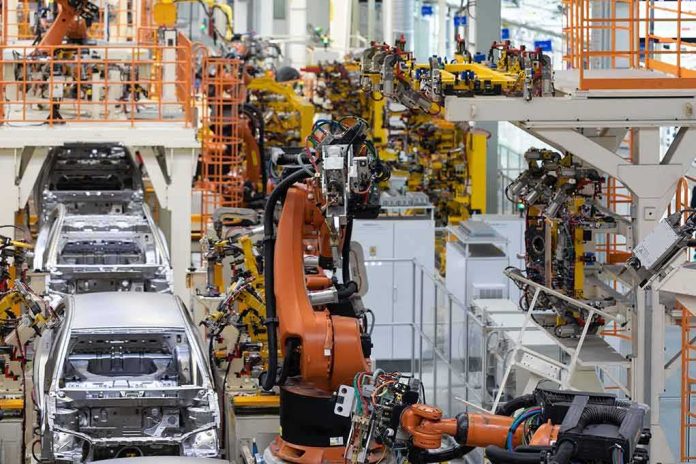
At a Georgia rally with President Trump, Audi confirmed a $4 billion U.S. factory that promises 4,500 jobs and up to 200,000 SUVs a year.
Story Highlights
- Audi will build its first U.S. plant in Georgia, investing about $4 billion.
- The project targets about 4,500 jobs and up to 200,000 vehicles in annual capacity.
- Audi’s chief said large premium SUVs will be built in Macon after appearing with Trump.
- Georgia detailed the Middle Georgia Megasite timeline toward full production in 2031.
Audi Confirms First U.S. Factory, Ties to Bigger American Strategy
Audi announced its first U.S. production site in Georgia, citing plans to invest around $4 billion and hire approximately 4,500 workers. The company said the plant is part of a push to build a stronger Audi business in America through local production. Audi stated the factory is designed for an annual capacity of up to 200,000 vehicles, with site work starting in 2027 and production ramping in the early 2030s. Georgia officials described the location as the Middle Georgia Megasite near Macon.
Gernot Döllner, Audi’s chief executive, appeared with President Trump at a Perry, Georgia rally and said Audi plans to bring its biggest, most premium sport-utility vehicles to be built in Macon. National outlets reported the same core details following the event: roughly $4 billion in investment, about 4,500 jobs, and a plant sized for up to 200,000 vehicles a year, with production targeted for the early 2030s. These reports align with the company and state announcements.
What Georgia’s Timeline Says About Jobs and Production
The Georgia Department of Economic Development said the facility will be at the Middle Georgia Megasite, with grading planned in 2027, building construction in 2028, and full production in 2031. The state described an annual capacity of 200,000 vehicles and around 4,500 jobs tied to the project. These figures match Audi’s headline numbers on investment, capacity, and employment, and give a clearer phase-by-phase picture of how the site will develop over time.
Audi’s own release states construction is scheduled to begin in 2027 and that production is planned for the early 2030s. That language tracks with Georgia’s outline when considering grading, build-out, and ramp-up. Audi framed the move as part of a long-term United States growth plan, with local production meant to strengthen its market position. The company’s chairman said Audi has much greater ambitions for America, underscoring a sustained strategy rather than a short-term bet.
Why This Matters for American Manufacturing and Energy-Sector Families
Locating high-value auto manufacturing in the United States helps workers, suppliers, and local schools that benefit from steady tax bases. Building premium sport-utility vehicles here means more paychecks earned in American towns instead of overseas plants. The announced plan fits a broader push to re-shore production, cut dependence on global supply shocks, and keep advanced industry anchored in our country. That is a win for families who value stable jobs and a stronger national economy.
Public announcements often lead real-world jobs by several years, as hiring follows site work, construction, tooling, and training. The employment number is an estimate tied to the project’s current design and goals, not a final headcount today. The same is true for the up to 200,000-vehicle capacity, which reflects planned capability, not verified output. The state’s phased schedule, along with Audi’s timeline, shows how this type of complex project moves from paper to paychecks over time.
How Trump’s Stage Moment and Policy Context Framed the Rollout
President Trump hosted the announcement moment in Perry, giving the project a national spotlight and linking it to his policy approach that favors strong domestic production. Media coverage noted Döllner’s on-stage appearance with Trump and highlighted the plan to build large SUVs in Georgia. While reporters emphasized the politics of the rally setting, the substance of the investment, jobs target, location, and capacity remained consistent across company, state, and national reports following the event.
Bottom Line for Readers
Audi and Georgia publicly set the stakes: about $4 billion invested, roughly 4,500 jobs, and capacity for up to 200,000 premium sport-utility vehicles each year, with site work starting in 2027 and full production targeted for 2031. The company’s chief tied the move to a bigger United States push, and the rally stage with President Trump underscored the return of high-end manufacturing to American soil. The plan is announced; execution now moves through site work, build-out, and hiring.
Sources:
youtube.com, cnbc.com, georgia.org, independent.co.uk