

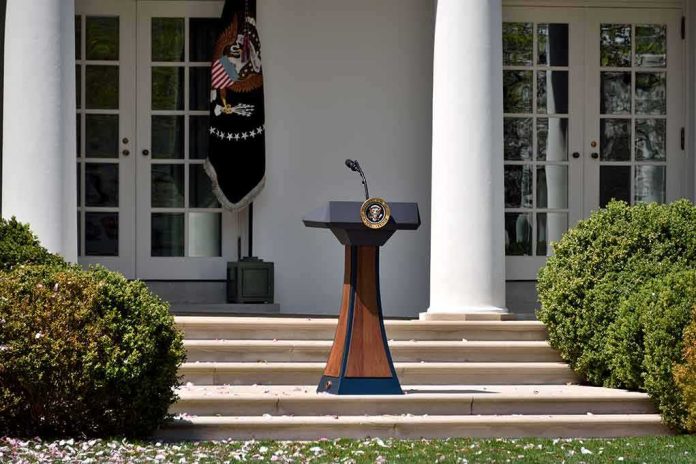
President Trump said he “would love to run again” in 2028, intensifying a real fight over what the Constitution allows and what voters can decide.
Story Highlights
- Trump voiced interest in a 2028 bid while noting constitutional limits use “exacting” language.
- Supporters point to the word “elected” in the Twenty-Second Amendment as a possible opening.
- A House resolution would allow up to three presidential elections, but it faces a steep path.
- Legal scholars dispute any “loophole,” and courts have not ruled on a third-term route.
Trump Signals 2028 Interest And Flags Constitutional Hurdles
President Trump said he “would love to run again if I had the chance,” then added the Constitution’s language is “very exacting,” acknowledging a hard legal road while keeping the option alive. His comments revived a debate that blends text, history, and voter choice. The Twenty-Second Amendment says no person shall be elected president more than twice. That word “elected” drives most arguments on both sides, because it raises questions about ballots versus later service.
Trump also said there are “methods” that could permit a path and agreed a vice-presidential succession idea is one possible route, while suggesting others might exist. Reporting describes this as contested ground with no decisive court ruling. The vice-presidential path must also clear the Twelfth Amendment, which says anyone ineligible to be president is also ineligible to be vice president. That conflict sits at the center of today’s constitutional tug-of-war.
Textual Debate: “Elected” Versus “Serve,” And Why It Matters
Backers argue the Constitution bars a third “election,” not service through succession, which could matter if a president resigns or if the vice president moves up. Critics answer that two wins mean the person is functionally ineligible, closing both the ballot and the back door. Fact-checkers report most scholars reject a loophole, saying the plain purpose of the amendment is to prevent more than two terms, however reached. That clash shows why courts may need to decide.
Some commentators note a narrow reading of the amendment creates tension with its broader aim after Franklin Roosevelt’s four wins. They warn that clever maneuvers could erode trust and set bad norms. Others counter that narrow reading protects voter choice and follows the actual text. Until a judge rules, both sides will cite the same sentence and reach different ends. The absence of a ruling leaves parties, states, and citizens bracing for challenges.
Legislative Route: A Formal Amendment Is On The Table
Representative Andy Ogles filed a House Joint Resolution to amend the Constitution and allow up to three presidential elections, creating a clear, lawful path if adopted. The Article V process demands two-thirds support in both chambers and ratification by three-fourths of the states. That is a very high bar in a polarized era. The filing still matters, because it gives voters and lawmakers a straight choice, not a workaround. It also signals ongoing grassroots energy.
President Trump says he is fighting communism with everything he has and would love to run again in 2028.
If he gets the chance, would you vote for Donald Trump for a third term? pic.twitter.com/9xANZjIDA0
— Godly Nation (@GodlyNations) November 1, 2026
Conservative readers want clarity, order, and fidelity to the Constitution. That means two things at once. First, respect the current text while courts decide what “elected” covers. Second, if Americans want a third term option, pursue the amendment process rather than rely on legal gray zones. That path defends the rule of law, checks activist judges, and keeps power with the people and the states, not unelected bureaucrats or media gatekeepers.
What To Watch Next: Ballots, Lawsuits, And Party Decisions
The next moves will likely come in three places. State election officials may face filings or challenges over primary ballots. Party leaders may weigh in on nomination rules. Federal courts may see suits asking for a clear reading of the Twenty-Second and Twelfth Amendments. Legal analysts already dispute any vice-presidential proxy plan, but none of these questions are settled by a binding ruling yet, which means strategy, timing, and facts on the ground will matter.
For citizens trying to cut through the noise, stick with these anchors. Trump has expressed interest while acknowledging legal limits. Supporters see a textual opening in “elected”. Lawmakers have proposed a transparent fix through amendment. Many scholars flatly dispute a loophole and expect courts to shut it down if tested. That honest map respects the Constitution and lets voters judge leaders on results, not spin, while this issue moves toward a real answer.
Sources:
mediaite.com, npr.org, nationalsecurityjournal.org, the-independent.com