
Four out of five people who served or stood by someone who did say the country is leaving them behind.
At a Glance
- Roughly 79% of veterans, service members, and military families feel left behind.
- The survey included 731 respondents and carried a ±4% margin of error.
- Americans still show high trust in veterans as leaders, creating a sharp gap.
- Closing the gap demands action on care, careers, and family stability, not slogans.
What The Poll Found And Why It Landed With Force
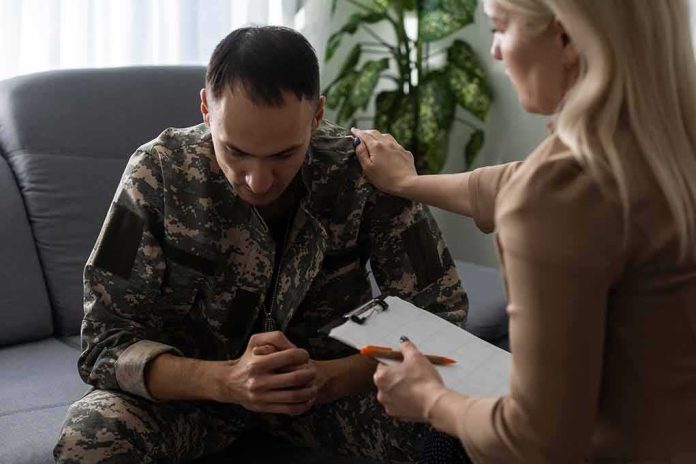
Common Defense Civic Engagement ran a late-September survey of 731 veterans, active-duty members, and immediate family. About 79% said politicians and society are leaving veterans and military families behind. Almost half strongly agreed, and only 15% disagreed. Military.com reported a margin of error of about four points. The snapshot gave a blunt view from inside the foxhole. People who wore the uniform, or loved someone who did, feel talked about but not taken care of.
The survey’s timing matters. The country asks more from fewer who serve. Veterans navigate long waits for care, uneven job transitions, and family stress during back-to-back deployments. These are not new complaints. What is new is how hard the perception has set in. When nearly eight in ten say leaders are missing the mark, that is not a fringe gripe. That sounds like a verdict. Policymakers should treat it as such and move fast on practical fixes.
The Trust Paradox: Admired, Yet Unheard
Americans still trust veterans at high levels. Gallup, working with With Honor, found broad confidence in veterans and strong voter openness to candidates with military service. Another Gallup measure shows a clear edge for military service as a winning credential when voters choose among candidates. So the public salutes the character and steadiness of those who served. Yet many of those same veterans say the system shrugs when they ask for help. Respect without responsiveness is a hollow honor.
That contradiction is not hard to explain. Symbolic support is easy. Concrete support is hard. Yard signs and standing ovations come cheap. Faster claims decisions, honest mental health access, family childcare during deployments, and steady pathways to good jobs take work and oversight. University research also shows trust links to performance and professionalism as people experience them in real life. If performance lags where veterans live, trust in institutions does too—no matter how warm the public rhetoric sounds.
Where The Gap Shows Up First
Health care showing up late hurts most. Veterans want care that is close, timely, and accountable. Claims backlogs and referral loops turn simple needs into months of waiting. Families carry that burden. The job market comes next. Many employers admire service but still do not map military skills to civilian roles. Translation gaps cost good wages and delay careers. Then comes family stability. Spouses need portable licenses. Kids need continuity in schools. Military families are resilient, but resilience is not a policy.
My responded to Community Note:
When You Are Allowed to Wear the UniformFederal law (10 U.S. Code § 772) and Department of Defense regulations (DoD Instruction 1334.01) strictly limit uniform wear for former service members:
• Immediately after discharge: You may wear the… pic.twitter.com/TyWdy7LNgE— Texian4Ever (@R6K5S) November 2, 2026
Elections add a final twist. Studies show veterans and military family members can raise public trust when they help run elections, including as poll workers. That is real service after service. It proves veterans still step up for the country. The country should step up back. Hiring more veteran caseworkers, speeding claims with clear deadlines, expanding skill translation tools, and protecting family stability would close the loop between praise and proof.
What Leaders Should Do Now
Congress should demand hard timelines for claims and publish local scorecards people can see. Agencies should expand direct-hire authorities for veterans into fields that match real skills, not generic slots. States should pass interstate compacts so spouses can carry licenses across moves without delay. Schools near bases should get stable funding for tutoring and counseling to smooth new starts. Private employers should treat military experience like any top-tier apprenticeship, with credit on day one, not after six interviews.
These steps reflect American conservative values and common sense: keep promises to those who served, cut red tape, reward work, and put families first. Voters already trust veterans to lead. Now leaders must earn veterans’ trust back with results they can feel. The poll did not reveal a mystery. It revealed a mandate. Respect is the headline; responsiveness is the job. Close the gap, and that 79% will fall on its own.
Sources:
military.com, peaceandplanetnews.org, soaa.org, naturalnews.com