
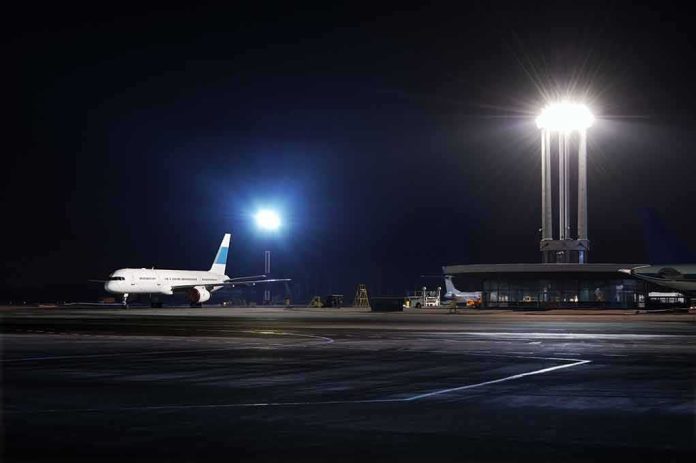
Two commercial jets clipped each other on a Miami taxiway, injuring two people and spotlighting a preventable safety gap in America’s crowded airports.
Story Snapshot
- Officials say a Copa Boeing 737’s wingtip struck a UPS Boeing 767’s nose on a Miami taxiway.
- Two people had minor injuries; most passengers reported only a scare.
- Air traffic radio captured the UPS crew saying they “went too far” after the impact.
- Federal agencies opened an investigation; formal findings are pending.
What Officials Confirmed About the Collision
Federal officials and local reports describe a taxiway collision at Miami International Airport. A Copa Airlines Boeing 737 heading to a gate made contact with the nose of a United Parcel Service Boeing 767 that was taxiing for departure. The event happened at a taxiway intersection in the evening, with passengers reporting a sudden jolt. Two people had minor injuries, and no one went to the hospital. The National Transportation Safety Board identified the flights as Copa 427 and UPS 358, and listed the aircraft tail numbers.
Radio traffic after the collision captured the immediate confusion and key details. A controller asked the United Parcel Service crew if they had hit the other aircraft. A pilot replied that they had gone too far and were clipped. The controller also stated the United Parcel Service flight was supposed to give way to the Copa aircraft. That exchange helps frame the sequence but is not a full reconstruction of positions before impact. An official investigation will sort out timing, clearances, and exact geometry.
How Many People Were Aboard and Who Was Hurt
Published accounts say the Copa jet carried about 172 people, though some reports split the figure into passengers and crew in different ways. Most people walked off without injury, while two reported minor injuries, consistent across major reports. The cargo aircraft did not carry passengers. The Copa 737 had wingtip or winglet damage, and the United Parcel Service 767 sustained nose damage. Outlets noted the cargo jet could be sidelined for repairs during the busy shipping season, but no verified repair costs are available.
Emergency responders checked people on scene and cleared the area. Ground crews towed the aircraft from the intersection to free up traffic. Airlines arranged rebooking for affected passengers, and cargo scheduling teams adjusted routes. Airport officials said operations continued with delays. The Federal Aviation Administration and the National Transportation Safety Board opened an investigation. That process often takes months and can include photos, diagrams, radar tracks, and interviews.
Why Taxiway Collisions Keep Happening
National data show that crowded ramps and complex taxi routes can trip up even trained crews. The Federal Aviation Administration reported 1,756 runway incursions in fiscal year 2023 out of about 54.4 million takeoffs and landings, with most linked to pilot deviations and the rest split among controller actions and vehicle or pedestrian issues. Those figures cover many surface events, not just aircraft-to-aircraft contact, but they show how often ground conflicts arise in busy systems.
Federal investigators have also studied wingtip strikes during taxi. The National Transportation Safety Board reviewed a dozen such accidents since 1993 and found crews often had trouble judging space at intersections. The agency pushed for better cockpit tools to help pilots see clearances on the ground. Airport layout, lighting, and markings also matter. Federal advisories stress that high workload, confusing routes, and human limits can stack up to produce contact at low speed. These patterns mirror the risks seen in Miami.
What Comes Next for Accountability and Fixes
Investigators will examine who had the right of way, what the controller said, where each jet stopped, and how crews understood the plan. They will review recordings, radar or surface tracks, airport diagrams, and crew statements. If needed, they can recommend changes to signage, taxi procedures, or training. They can also urge airlines to adopt clearer briefings at complex intersections and to slow down when sight lines are tight at night or in rain.
TWO PLANES COLLIDED AT MIAMI INTERNATIONAL AIRPORT.
THEY WEREN’T EVEN IN THE AIR. ✈️
A Copa Airlines passenger jet and a UPS cargo plane collided on the ground Saturday night near a taxiway intersection.
The Copa flight had arrived from Panama City with 172 people aboard.
The… pic.twitter.com/nHdivt7wf6
— Daniel C (@chowoohpolice) November 15, 2026
For travelers and shippers, the lesson is simple but important. Most flights are safe, yet small gaps on the ground can cause real harm and big delays. People across the political spectrum worry when systems feel stretched, and when basic tasks like moving airplanes to and from gates seem fragile. This incident shows how small errors can ripple through a network. Strong oversight, clear rules, and steady investment keep that network working for everyone, not just the well-connected.
Sources:
gulfcoastnewsnow.com, yahoo.com, news.abplive.com, wsvn.com, freightwaves.com, economictimes.com