
After Ukraine struck the Crimean Bridge, Russia unleashed one of its largest overnight attacks on Ukraine’s cities and infrastructure.
Story Highlights
- Ukraine hit the Crimean Bridge, a key supply link to occupied Crimea, with missiles and drones.
- President Vladimir Putin vowed a “more painful” response and ruled out talks after the strike.
- Russia launched a major overnight barrage targeting Kyiv, Kharkiv, Dnipro, and Zaporizhzhia.
- The sequence fits a familiar cycle of strike, attribution, public warning, and escalation.
Bridge Strike That Set Off The Latest Escalation
Ukraine’s military said it struck the Crimean Bridge connecting Russia to occupied Crimea with Neptune missiles. Ukrainian reports also noted drone involvement and damage to rail lines on the bridge. Russian officials acknowledged disruptions and damage assessments, while treating the incident as an attack by Ukrainian forces. The bridge serves as a vital link for Russian logistics and holds high symbolic value for Moscow and President Vladimir Putin.
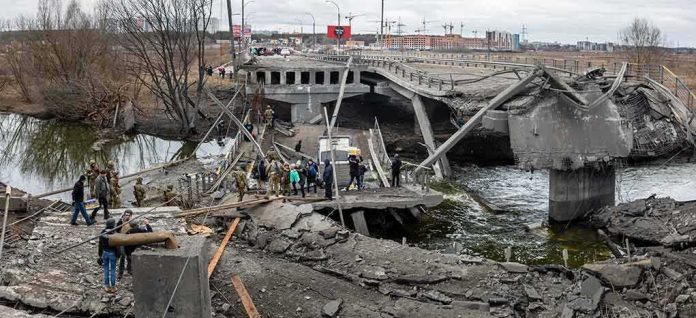
Ukraine’s strike came across November 16–17, and it followed prior Ukrainian attempts to degrade Russian supply routes in Crimea. Western and Ukrainian outlets described a large section of the bridge either heavily damaged or partly collapsed, prompting traffic stoppages and inspections. The attack’s timing mattered. It landed just before Russia launched a wide air and missile assault across multiple Ukrainian regions later that night and into the next day.
Putin’s Pledge And Russia’s Overnight Assault
President Vladimir Putin publicly vowed to retaliate and said the response would be “far more painful” for Ukraine. He rejected negotiations and stated there would be no pause in attacks on sea or energy facilities. Within hours, Russia launched a large-scale strike package. Air raid alerts sounded in Kyiv, Kharkiv, Dnipro, and Zaporizhzhia as missiles and drones targeted bridges, power assets, and urban areas, knocking out services in some districts.
Russian agencies framed the operation as payback for the bridge strike. Ukraine framed its bridge strike as part of a broader effort to disrupt Russian logistics used to hit Ukrainian cities. Reporting from the ground detailed explosions, intercepts by air defenses, and damage to critical sites. While the public statements established clear political intent to retaliate, officials did not release operational orders linking each target to the bridge incident.
Why This Pattern Matters For Civilians And Stability
The sequence follows a recurring wartime pattern: action, attribution, public warning, and punitive escalation. Analysts and policy briefs describe how political vows to respond often precede larger salvos that hit energy grids, bridges, and transport hubs. This pattern raises costs for civilians and shifts attention from the battlefield to daily survival. Heat, water, and transit disruptions grow when grids and bridges are struck in clusters during colder months.
Rise and shine, patriots. Here's what broke while you were sleeping:
🇺🇦 UKRAINE: Russia launched a major overnight missile and drone attack that killed at least eight people and hit three bridges in Kyiv, per BBC. Zelensky called it "one of the most massive strikes" of the war… pic.twitter.com/BjGAq27ef4
— 🇺🇸 MAGARon 🇺🇸 🫡:) 👀 🍿 🇺🇸 (@RonXilla) November 20, 2026
Americans watching this cycle see echoes of a larger problem at home and abroad. Powerful leaders promise strength yet leave regular people to bear the fallout when vital systems break. The pattern also shows how fast official messages can shape the story before fuller records are public. For readers on the right and left, the lesson is the same: when infrastructure becomes a weapon, families and workers pay first, while elites argue over blame and claim success.
What To Watch Next
Track three things now. First, whether Ukraine attempts more strikes on the Crimean Bridge or related supply nodes. Second, whether Russia continues mass attacks on power and transport networks as winter deepens. Third, whether any side signals limits on targeting civilian infrastructure. Clear public records tying orders to targets remain scarce. But the direction is visible: both sides are pressing logistics, and the people stuck in the middle face the greatest strain.
Sources:
dw.com, france24.com, english.nv.ua, bbc.com, osw.waw.pl, russiamatters.org, bbc.co.uk, rand.org