

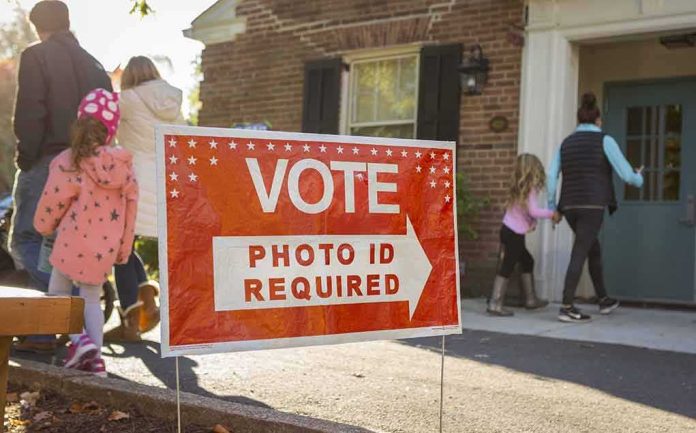
Alaska voters just approved a citizen-only voting measure by nearly 70%, signaling deep anxiety about election rules even where the law already says only citizens can vote.
Story Snapshot
- Measure 3 passed about 69.6% to 30.4%, according to official tallies.
- The measure changes wording to say “only” U.S. citizens may vote, matching current law.
- State lawyers said it does not change voter qualifications or election procedures.
- Opponents warned the push risks confusion and could chill eligible rural voters.
What Alaskans Approved And By How Much
Election results show Alaska’s Measure 3 passed by a wide margin. The Associated Press reported 142,991 votes in favor and 62,336 against, a 69.6% to 30.4% split, with the race called on November 4, 2026. The vote comes amid national fights over voter eligibility and confidence. Supporters argued the language should be crystal clear. They said the word “only” matters to guard the ballot box. Voters responded with strong approval across much of the state.
The ballot text tightened how the law states who can vote. Before, Alaska law said a person who is a citizen may vote. Now it states only a United States citizen may vote, with other normal rules still in place. The official ballot pamphlet explains the change but notes registration already requires citizenship, and noncitizens are not eligible to register in Alaska elections. The campaign framed the shift as clarification, not a wholesale rewrite of election law.
What Changes Now And What Does Not
The Alaska Department of Law said the measure does not change qualifications to vote. It does not set new checks, create new databases, or direct new enforcement steps. Coverage by state and local outlets echoed that point, calling the change symbolic or redundant since citizenship was already required to vote. In short, the words are now sharper, but the day-to-day rules to register and to cast a ballot remain the same, as officials have described them.
That gap between large public support and limited legal effect is the story. Many Americans worry about systems they do not trust. Alaskans are no different. Backers, including former state lawmakers, said the vote affirms a basic rule and can reduce gray areas in the law. Critics countered that the state had no record of widespread noncitizen voting and that the campaign solved a problem that had not been shown to exist in Alaska.
The Pushback: Redundancy, Rural Access, And Voter Confidence
Opponents raised two practical concerns. First, they said the measure could confuse voters by implying noncitizen voting had been allowed in Alaska. Second, they warned that tighter citizenship checks elsewhere have swept in eligible voters, including new Americans. One state report cited claims that more than 3,000 Alaskans were moved off the active list pending proof during heightened scrutiny, raising worries about fear and access for lawful voters.
alaska just voted to require citizenship to vote. common sense shouldn't need a ballot measure.
— Grant Hayes (@TheGrantHayes) November 6, 2026
Senator Lisa Murkowski and some state lawmakers backed the citizen-only principle but warned that strict in-person proof systems can hit rural Alaskans hardest. Many communities lack road access, and trips to an elections office can require flights. Murkowski argued such steps could disenfranchise residents living off the road system if future rules demand in-person proof at limited sites. These concerns did not block Measure 3, but they will shape debates over any future enforcement or registration changes.
Why This Vote Fits A Bigger National Pattern
Alaska’s decision tracks a broader wave of citizen-only ballot measures that voters often pass by large margins. National coverage shows similar measures have been popular in recent years, even when they restate current law rather than rewrite it. Observers say these votes act as signals about identity and trust in elections, not just legal text. On the same night, multiple states took up similar questions, with most approving and one rejecting a proposal, reflecting different local views.
What To Watch Next In Alaska
The next test is practical. Watch whether agencies issue new guidance, if any lawsuits cite the new wording, or if future legislation tries to add documentary proof rules. Track whether any voter registrations get challenged and how errors are fixed. Supporters will look for clearer prosecutions if fraud occurs. Opponents will look for signs of confusion or wrongful removals. For now, the vote is clear, the text is tighter, and the system Alaskans use tomorrow looks much like the one they used yesterday.
Sources:
alaskabeacon.com, nytimes.com, alaskapublic.org, cnn.com, stateline.org