

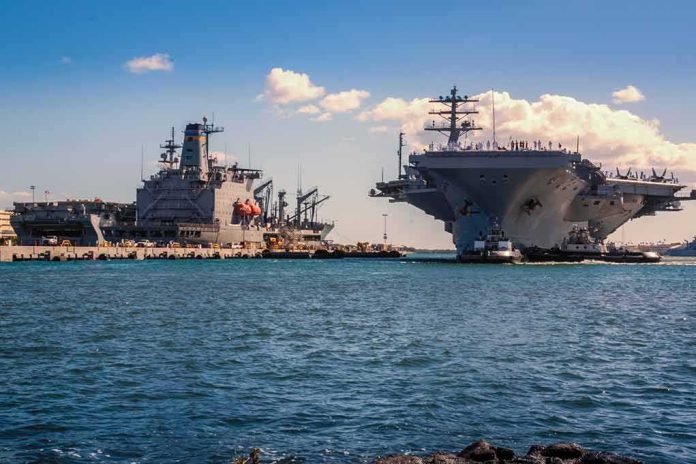
After a record 265 straight days at sea, the USS Abraham Lincoln finally came home to San Diego, closing one of the longest carrier deployments since the Cold War.
Story Highlights
- The carrier returned after more than 10 months at sea, with families crowding the pier for reunions.
- The deployment included 265 consecutive days without a port visit, a modern Navy record.
- Leaders tied the mission to combat operations linked to the war with Iran in the Middle East.
- Navy officials acknowledged severe strain on the crew, including eight suicide attempts.
Homecoming After A Historic Stretch At Sea
Reporters watched as the USS Abraham Lincoln steamed into San Diego Bay and thousands of sailors crossed the brow to meet families after more than 10 months away. The homecoming ended a deployment that news outlets counted at about 321 to 322 days, making it among the longest since the end of the Cold War. Crews set a modern record for 265 straight days at sea without a port stop, a number repeated across outlets covering the return. Babies met parents for the first time on the pier.
Defense leaders greeted the ship near the finish. Reports quoted Defense Secretary Pete Hegseth telling sailors he had twice signed orders to extend the deployment, adding he knew he was “the only thing standing” between the crew and home. The ship’s air wing and escorts supported Middle East operations tied to the war with Iran, part of a broader push to deter threats and protect shipping lanes during a tense year.
Record Days At Sea And A Heavy Operational Load
Multiple newsrooms reported the 265 consecutive days at sea as a record in modern United States Navy history, while noting the overall deployment ranked as the second-longest since the Cold War. The Los Angeles Times quoted leadership calling the tour “operationally intense,” reflecting sustained flight and escort tasks in contested waters. The total deployment length varied by a day in reports, but all agreed on the long duration and the lack of port calls that strained both gear and people aboard.
Officials and coverage tied the mission to operations against Iran-linked targets and threats in the region. Such tasks likely included air patrols, surveillance, and quick response to drones and missiles, the common mix during recent maritime flare-ups. These missions require long hours on the flight deck and in engineering spaces, where heat, noise, and constant motion test the body. The lack of liberty ports removed a key release valve for crews under that weight.
Mental Health Strain And Family Sacrifice
Reports said Navy leaders acknowledged eight suicide attempts within the Lincoln strike group during the deployment, underscoring the human cost of long tours without breaks. Sailors also described shipboard hardships, including tight supplies and maintenance challenges, in some outlets’ coverage. While not every detail has an official document in public view, the length of the at-sea stretch and the absence of port calls are well established in the reporting record.
US Navy's USS Abraham Lincoln Returns to San Diego After Record-Breaking 10-Month Deployment at Sea
Watch: https://t.co/Saa9zSBza8 pic.twitter.com/nKXuqCtsJo— India Today Global (@ITGGlobal) October 9, 2026
Families carried their own load at home, often juggling newborns, school, and bills alone for nearly a year. Their relief on the pier matched the crew’s, but many also voiced a shared worry: deployments keep getting longer. Analysts and historians have charted this trend as the Navy stretches to cover more hotspots with fewer carriers ready to sail. That pattern helps explain the Lincoln’s record at-sea run and why sailors and families want clearer limits and more predictable rotations.
Sources:
zerohedge.com, apnews.com, ocregister.com, fox35orlando.com, irishnews.com, crow.house.gov