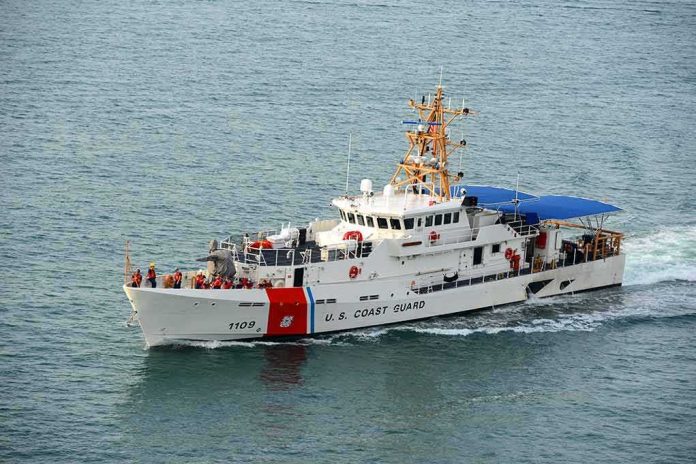
Coast Guard air and surface crews are sweeping waters off Nantucket after a Boston-bound Gulfstream jet with six people aboard stopped communicating early Saturday, underscoring how fast a routine flight can turn into a life-or-death rescue mission.
Story Highlights
- The Coast Guard launched a search after aviation officials reported lost contact with a Bermuda-to-Boston jet.
- The missing aircraft is a Gulfstream G100 with six people on board, last tracked near Nantucket.
- Search operations include air and surface assets combing the area off Massachusetts.
- No recovery or cause information is confirmed; officials are focused on rescue efforts.
What Officials Confirmed About The Missing Flight
U.S. Coast Guard units began searching early Saturday after the Federal Aviation Administration reported it lost contact with a Gulfstream G100 flying from Bermuda to Boston. Reports describe six people on board and place the search area off the coast of Nantucket, Massachusetts. The Coast Guard said it launched both air and surface crews to look for signs of the aircraft or survivors. As of the latest reports, officials have not announced any recovery, wreckage find, or cause of the incident.
Media accounts agree on key details: the aircraft type, the route, the number of people, and the general search location. Outlets cite Coast Guard updates that the loss of contact happened early Saturday morning, a common phrasing in the first hours of a search. These initial facts match a standard emergency pattern in aviation: confirm the missing status, define the search area, and mobilize assets fast while more precise data is still coming together.
How Search And Rescue Works Over The Ocean
Federal rules divide search roles by geography. The Federal Aviation Administration alerts rescue partners when a flight goes missing, while the U.S. Coast Guard leads rescue missions over the water. Coast Guard rescue centers and air stations then deploy planes, helicopters, and cutters to grid the last known area. The goal is simple and urgent: find the aircraft, debris, or survivors as quickly as possible, because time and sea conditions can decide outcomes.
In these cases, investigators and rescuers draw on radar tracks, radio logs, and Automatic Dependent Surveillance–Broadcast data to set a search box and update it as currents and wind shift. That process can take hours as teams align data from different systems. Early public updates often sound brief because responders put speed and accuracy first. The Federal Aviation Administration’s guidance explains that an alert notice triggers local search actions while agencies work in parallel to verify details.
Why Early Reports Sound Repetitive And Sparse
Early breaking news can repeat the same short list of facts because responders share only what they can confirm with confidence. That protects the rescue effort and avoids steering families, pilots, and boaters in the wrong direction. It also reflects how the system is designed: aviation controllers raise the alert, the Coast Guard searches at sea, and only later do investigators piece together a timeline, an owner, and causes, if any, that led to the loss of contact.
"Coast Guard Launches Urgent Search Off Nantucket After Boston-Bound Medical Jet Carrying 6 People Vanishes"
➡️ Emergency rescue crews with the U.S. Coast Guard have launched an urgent search operation over open water off the coast of Nantucket after a twin-engine medical jet…
— BreakinNewz (@BreakinNewz01) October 3, 2026
For readers, two things can be true at once. The confirmed facts are serious and urgent: a missing jet, six lives at stake, and a major search under way. At the same time, many specific details are not public yet, including a tail number, operator, and the exact last radio call. Those gaps are normal in the first phase of a maritime search and rescue case. Officials have not announced a discovery or a cause, and the focus remains on finding people alive.
What To Watch For Next
Expect the Coast Guard to post search updates, including asset counts, weather conditions, and any debris or signal finds. The Federal Aviation Administration may later release an incident summary with a time of last contact and flight plan notes. If crews locate wreckage or survivors, the National Transportation Safety Board would likely open an investigation to study what went wrong and why. Until then, families and the public will see measured updates centered on rescue, not blame.
Broader Stakes For Public Trust And Safety
Events like this strike a nerve because they test whether core public systems still work under pressure. People across the political spectrum worry about slow or unclear communication from large agencies. In aviation rescues, the design favors action first and detail later. That can feel thin in the moment, but it is meant to save lives. Clear, steady updates—and visible results—are what rebuild trust after the alarms stop.
Sources:
facebook.com, wcvb.com, nbcboston.com, nbcnews.com, faa.gov, pinkpillbox.com