
President Trump’s order to block Iranian port traffic is turning the Strait of Hormuz into a pressure point that could jolt energy prices and test America’s resolve to keep global trade moving.
Quick Take
- The U.S. Navy began enforcing a blockade on vessels entering or exiting Iranian ports at 10:00 a.m. ET on April 13, 2026, after Trump announced the action on Truth Social.
- U.S. officials described the operation as targeted: ships headed to non-Iranian ports can still transit the Strait of Hormuz.
- Weekend peace talks in Islamabad collapsed, setting the stage for a military move that raises the risk of retaliation and wider disruption.
- Iran condemned the blockade as “piracy” and warned Gulf ports could be targeted if Iranian facilities are threatened.
What the Navy’s blockade targets—and what it doesn’t
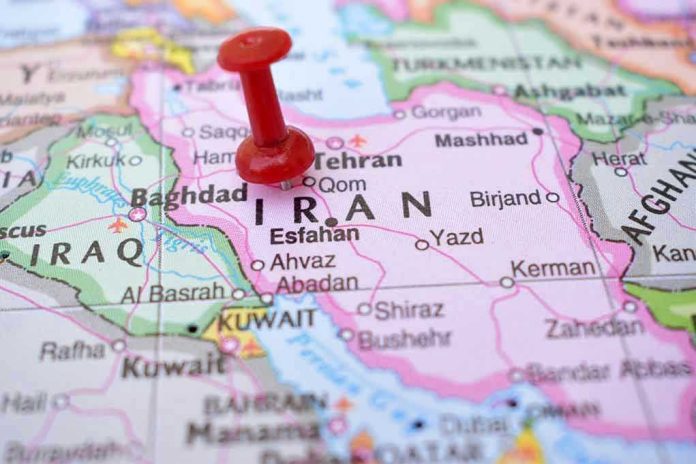
U.S. Central Command confirmed that, as of 10:00 a.m. ET Monday, U.S. naval forces began restricting maritime traffic tied to Iranian ports and coastal facilities across the Arabian Gulf, Gulf of Oman, and Arabian Sea. The operation has been described as a partial blockade affecting Iran-linked port activity rather than a blanket closure of the entire Strait of Hormuz. That distinction matters because it preserves a route for vessels not calling on Iranian ports.
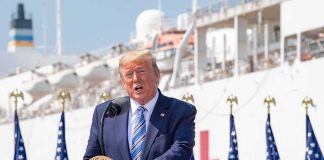
President Trump publicly telegraphed the move shortly after midnight ET, using Truth Social to announce the start time and frame the blockade as a response to Iran’s leverage over the strait during the ongoing war. Supporters see the clarity and speed of the directive as a contrast to years of cautious, process-heavy foreign policy. Critics argue that major actions announced on social media can compress decision cycles and increase miscalculation risk, especially in a chokepoint packed with commercial shipping.
Diplomacy broke down in Islamabad, then the pressure campaign began
The immediate backdrop was a weekend of marathon negotiations in Islamabad involving U.S., Iranian, and Pakistani interlocutors that ended without a peace deal. With talks stalled, the U.S. shifted from diplomacy to coercive maritime control aimed at Iranian port throughput and the practical ability to profit from regional shipping. Pakistan’s role as mediator remains relevant, but the public facts available so far emphasize that Washington acted quickly once negotiations failed.
Iran’s military command condemned the blockade as “illegal piracy” and issued threats that broaden the risk beyond U.S. and Iranian forces, warning that Gulf ports would not be safe if Iranian ports are threatened. That kind of warning is designed to force regional players—energy exporters, shippers, insurers, and foreign navies—into the crisis, even if they prefer neutrality. The strategic danger is that commercial ports and shipping lanes become bargaining chips in a conflict that spills across borders.
Allies signal caution, even as maritime advisories tighten
The United Kingdom publicly declined to participate in the blockade, with Prime Minister Keir Starmer’s government emphasizing efforts to reopen the strait rather than join the U.S. interdiction. At the same time, U.K. Maritime Trade Operations issued guidance reflecting the reality that ships engaging Iranian facilities face heightened restrictions and risk. A senior NATO official also described planning for a U.K.-led coalition—reported as involving roughly 40 nations—focused on protecting navigation.
Economic stakes: why Hormuz still hits American wallets
Even a “partial” blockade at Hormuz can move markets because the strait remains a global chokepoint for oil and other critical cargo. Reports tied the escalation to immediate fears of surging energy costs, higher insurance premiums, and shipping delays, with knock-on effects for prices at home. For conservatives already angry about inflation and high energy costs, this is the uncomfortable reminder that foreign crises can quickly collide with household budgets—regardless of who sits in Washington.
The most dramatic claim circulating came from Trump’s follow-up statement asserting Iran’s navy was “completely obliterated” and that 158 ships had been sunk, excluding fast attack craft. Available reporting treated that figure as a presidential assertion rather than independently verified data, and no public, third-party accounting was cited in the research provided. In an era of information warfare, separating confirmed operational rules from contested battle claims is essential for public trust.
What to watch next: retaliation risk and the “government competence” test
Iran’s stated threat against Gulf ports increases the odds that regional infrastructure, not just military targets, becomes part of the contest. The U.S. approach aims to restore freedom of navigation while constraining Iran’s ability to use the strait as leverage. The political reality at home is that many voters—right and left—doubt federal competence and transparency, especially during war. Clear rules, verified reporting, and congressional oversight will shape whether Americans see this as necessary defense or another open-ended escalation.
For now, the core confirmed development is straightforward: the blockade is active, it is targeted at Iranian port traffic, and it follows failed talks. The unresolved questions are the ones that usually decide whether crises expand or stabilize—how Iran responds, how broadly allies cooperate, and whether commercial shipping sees enough predictability to keep moving. With Republicans controlling Washington and Democrats eager to scrutinize every outcome, the next few days will quickly define the political narrative.
Sources:
https://www.cbsnews.com/live-updates/iran-war-us-iran-ports-blockade-strait-of-hormuz-trump/