

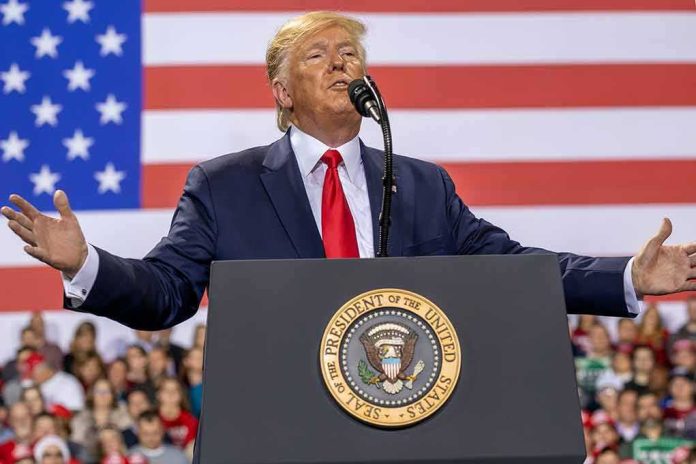
President Trump said he expects to meet Kim Jong Un later this year, signaling a fresh push to restart direct talks with North Korea.
Story Highlights
- Trump said he plans to meet Kim Jong Un later this year, reviving direct diplomacy.
- Reports describe the meeting as the first Trump–Kim encounter of his second term.
- Past Trump–Kim summits opened channels but delivered limited concrete results, analysts say.
- U.S. aims include reducing nuclear threats while keeping pressure on the regime.
Trump Signals New Meeting With Kim Jong Un This Year
President Trump told reporters he expects to meet North Korean leader Kim Jong Un later this year, marking a return to leader-to-leader talks. He framed the contact as a way to jump-start diplomacy and reduce risk on the Korean Peninsula. Coverage noted this would be the first direct meeting between the two in Trump’s second term if it occurs. The White House has not released a date or venue. Planning details will likely depend on security and talks with allies.
Trump’s remarks track with earlier signals across several outlets that he wanted a meeting within the year. Prior reports quoted Trump saying he would like to meet Kim and that he anticipated a suitable opportunity to do so. Some coverage floated possible timing around major regional gatherings, though nothing is set. The core point is clear: the administration is reopening a top-level channel to test what is possible with Pyongyang this year.
Why Leader-Level Talks Matter, And What Has Worked Before
Past Trump–Kim summits created direct lines that lowered tensions and paused the slide toward conflict, but they did not lock in firm nuclear rollbacks. Analysts describe a pattern where dramatic meetings can get attention and buy time, yet leave technical gaps for later talks to solve. That history informs current expectations. A new summit can reset the tone quickly. Lasting gains still require verifiable steps on weapons and missiles, with timelines and follow-through.
Policy experts argue a practical package can focus on stopping new bomb fuel and capping longer-range missiles in exchange for limited, reversible relief. That approach aims to reduce threats now while keeping leverage for bigger steps later. The logic is simple: freeze the most dangerous work first, then build toward deeper cuts with inspections. Any deal must be tested, verified, and enforced. That protects U.S. interests, our allies, and American troops in the region.
Conservative Priorities: Peace Through Strength, No Blank Checks
The administration’s job is to deter North Korea while exploring talks that serve the United States. Conservatives want peace through strength, not photo ops that hand out unearned rewards. That means holding firm on sanctions until action matches words, insisting on access for inspectors, and keeping missile defenses strong. Direct talks can be useful if they push Pyongyang to real limits on weapons. They fail if they trade away leverage for vague promises that fade.
Allies in South Korea and Japan watch these moves closely. Clear coordination matters because their cities sit within range of North Korea’s missiles. When Washington, Seoul, and Tokyo present a united front, pressure rises on Kim to deal seriously. When they split, Pyongyang exploits gaps. A disciplined process, backed by a credible military posture, keeps America safe and avoids costly missteps that would burden taxpayers and risk troops abroad.
What To Watch Next: Dates, Terms, And Verification
In the coming weeks, watch for signs of a date and location, plus signals from North Korea’s state media. Concrete progress will look like working-level meetings, a public framework that caps nuclear and missile advances, and a path to verify sites and stockpiles. Anything less is theater. The administration has tools, from sanctions to interdictions, to keep pressure high if talks stall. A single sentence matters less than an inspection schedule that can catch cheating.
Asked by a reporter at the White House if he expects to meet with Kim later this year, President Trump replied, "Yeah, I will be."
The White House has not confirmed plans for a meeting, nor has Pyongyang. https://t.co/frYasw5800
— CBS Mornings (@CBSMornings) August 19, 2026
Bottom line for readers: Trump says a meeting is coming this year. That opens a chance to cut risk and protect our homeland with firm, fair terms. But the United States should not pay up front or ease pressure without real steps from Pyongyang. Strong borders, strong defenses, and smart verification are common sense. If Kim wants respect, he must earn it with actions we can confirm, not slogans. That is how we defend families, allies, and the American way of life.
Sources:
facebook.com, reuters.com, koreatimes.co.kr, yahoo.com, biz.chosun.com, business-standard.com, bbc.com