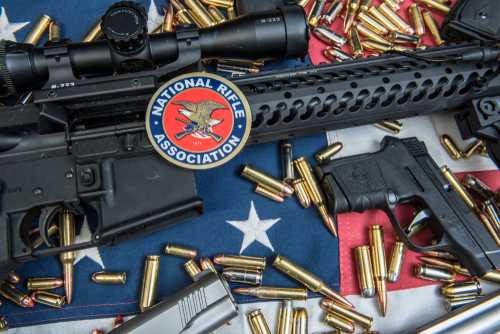
On a day built on liberty, the loudest fight was over who gets to define it.
Story Snapshot
- Gun-control advocates used July 4 messaging to push stricter laws as patriotic.
- Supreme Court rulings protect an individual right while allowing some regulations.
- The American Civil Liberties Union backs regulation tied to public safety goals.
- Courts and campaigns now battle under stricter history-based tests for gun laws.
What Actually Happened On Independence Day
Advocacy groups and allied officials marked Independence Day with calls for tighter gun laws. This pattern is not new. Groups have used July 4 to frame gun policy as a freedom issue for more than a decade, often centering on background checks, storage rules, and limits on certain rifles. The research here does not show a single, verified new campaign launch tied to one named group and one dated press release. The broader, recurring July 4 messaging push is the documented event.
Conservatives see this script as an annual attempt to move the goalposts on rights. That reaction is not paranoia; it rests on a real legal tug-of-war. The Supreme Court said the Second Amendment protects an individual right to keep and bear arms for self-defense in District of Columbia v. Heller, and extended that protection to the states in McDonald v. Chicago. Those cases still anchor how courts judge gun laws, and they set a hard line against outright bans on common self-defense tools.
The Court’s Line: Individual Right, Real Limits
Heller did not say no regulation ever passes. The opinion allowed for “longstanding” limits such as bans on guns in sensitive places and conditions on commercial sales, while striking down a handgun ban and a trigger-lock rule that blocked quick self-defense. After Heller, lower courts upheld several safety laws, including storage rules and some limits on certain rifles and large-capacity magazines, under intermediate scrutiny or similar tests, as cataloged by legal advocates. That mixed record shows both guardrails and green lights.
The American Civil Liberties Union takes a clear view on the government’s role. It supports regulations that are reasonably linked to public safety, urging courts to give some deference to lawmakers on health and safety grounds. That stance lines up with a long-running claim from constitutional interpreters that the Founders aimed to stop disarmament while still letting governments set reasonable rules for peace and order. Critics argue those “reasonableness” claims risk becoming a blank check; supporters say they are how plural nations live together.
The New Test Tightened The Screws
New York State Rifle and Pistol Association v. Bruen changed the game. Courts now test gun laws against the nation’s tradition of firearm regulation at the time of the Founding and early Republic. This history-and-analogue test makes states show a close fit between modern limits and older practices, not just public-interest goals. Legal guides and advocacy summaries note that, after Bruen, many modern laws face sharper scrutiny and some have fallen in court. Lawmakers now must build better historical cases, not just policy hopes.
Imagine calling for gun control the day after Independence Day https://t.co/bJsNv7b90X
— Ghost of the Ghost of a Renegade Marine (@chattergade) July 5, 2026
That shift explains the tone on July 4. Gun-control groups lean on patriotism and safety claims, while gun-rights advocates cite text, history, and tradition. One side says “freedom from fear” needs new limits. The other says “freedom to defend” needs firm protection. Both sides claim the mantle of 1776. Only one side, however, still bears the burden Bruen imposed: prove today’s rule matches yesterday’s tradition in more than spirit.
Where Common Sense Meets Constitutional Sense
Policy that respects the Court’s guardrails can still advance safety. Laws that target criminals, straw buyers, and truly dangerous individuals stand on stronger ground. So do measures that mirror historic rules on sensitive places or dangerous persons. Sweeping bans on popular arms will keep failing because they collide with the core of Heller and the history test that Bruen sharpened. If lawmakers want durable wins, they should chase proven enforcement and tight, tradition-backed rules, not broad symbolic bans that courts will strike.
Sources:
britannica.com, constitutioncenter.org, giffords.org, aclu.org, youtube.com, en.wikipedia.org, pmc.ncbi.nlm.nih.gov, shontelbrown.house.gov, bradyunited.org